Navigating Indiana’s Election Landscape: Key Races, Legal Battles, and Political Shifts
Explore Indiana's evolving electoral landscape, from critical statewide races and congressional contests to legal crackdowns on extremist organizations and GOP dynamics affecting the state's political future.
Additional reporting by Oliver Brown, Samira Brooks
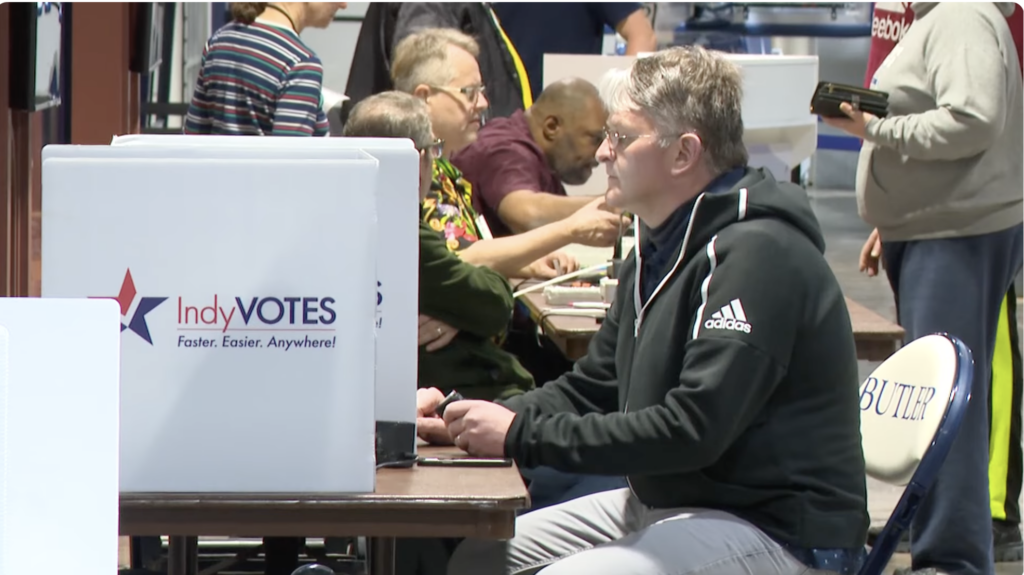
Indiana stands at a political crossroads with its general election looming and intensifying legal and legislative skirmishes shaping the electoral terrain. As voters prepare for the November 3 ballot, early voting began in early October, setting the stage for a consequential election cycle marked by contested races and significant policy debates. More than an ordinary election, this cycle reveals intraparty tensions within the GOP, challenges to Democratic strongholds, and conservative efforts to confront perceived security threats.
With the Secretary of State's office up for grabs and Indiana's 7th Congressional District drawing national attention, the stakes are high. Meanwhile, Attorney General Todd Rokita has aggressively pursued investigations under newly enacted state laws targeting groups accused of foreign terrorist links, signaling a broader conservative push to safeguard the state's security and political culture.
Competitive Races and Internal GOP Challenges
"Indiana’s political battles reflect a conservative drive to secure elections, purge extremist influences, and recalibrate GOP power amidst internal party fractures."
The Secretary of State election has emerged as one of the most hotly contested statewide races in Indiana’s recent history. Incumbent Republican Diego Morales, a figure well known within conservative circles for his hardline stances on election integrity, is now facing unexpected pushback from factions within his own party. These intra-party criticisms focus largely on Morales’ management of the voter rolls and transparency initiatives, areas perceived by dissenters as mishandled or insufficiently rigorous. The resulting fractures highlight an ideological rift between establishment Republicans and the more populist, Trump-aligned wing reshaping Indiana’s GOP landscape.
Such tensions are not new to Indiana but have become more pronounced following the 2026 primaries, where Trump-backed candidates secured surprising victories in several congressional and state legislative contests. This evolution marks a distinct shift toward nationalist and populist rhetoric, energizing grassroot activists while complicating traditional GOP strategy. Analysts suggest that these divides could influence voter mobilization rates and campaign messaging through the general election, as rival Republican factions jockey to define the party’s future.
Concurrently, Democrats are working diligently to fortify their base, especially in urban centers that remain Democratic strongholds. The 7th Congressional District, covering most of Indianapolis, is safely held by Representative André Carson, a seasoned lawmaker with roots in the district stretching back to 2008. However, demographic shifts and the changing national political atmosphere could render this seat more competitive. Urban voters’ concerns about economic opportunity, public safety, and educational policy are increasingly contested, offering opportunities for nuanced Democratic campaigning to either reinforce or risk erosion of their electoral support.
Legal Crackdowns Targeting Extremist Groups
Attorney General Todd Rokita has emerged as a pivotal player in Indiana’s conservative effort to confront what officials describe as foreign terrorist influences infiltrating local communities and campuses. Utilizing a newly enacted state law allowing for the investigation of organizations suspected of providing material support to terrorist groups, Rokita has launched probes into entities like the Council on American-Islamic Relations (CAIR) and Students for Justice in Palestine (SJP). These investigations aim to expose potential foreign ties and disrupt networks perceived to threaten Indiana’s security and social fabric.
This law enforcement initiative aligns with a growing conservative national trend emphasizing state-level vigilance and legal action against groups deemed extremist. Rokita’s aggressive approach has been framed as a necessary measure to protect public safety from covert influences operating under the guise of advocacy and education. The Attorney General’s stance reflects broader GOP priorities to enforce state sovereignty and counteract ideological movements perceived as hostile to American values and institutions.
Nonetheless, these efforts have sparked vigorous opposition from civil liberties organizations and left-leaning commentators who warn that such broad investigations risk chilling free speech and political activism. Some fear these measures could be weaponized against minority communities or dissenting voices under the cloak of security. Yet, from a conservative vantage, prioritizing protection against genuine terrorist threats supersedes concerns about potential overreach, especially amid rising concerns over radicalization both domestically and abroad.
Parallel to these probes, Indiana has witnessed legal affirmations of conservative social policies, such as the recent federal court rulings upholding the state’s ban on gender transition procedures for minors. These decisions illustrate the judiciary’s current tilt toward preserving traditional family and social norms, often championed by Republican lawmakers who see such rulings as victories for parental rights and public morality.
Election Law Reforms and Voter Procedures
Indiana’s election administration continues to be a focal point of intense partisan debate and legislative action. The Secretary of State’s office, responsible for overseeing election integrity, ballot access, and mechanized voting processes, stands at the center of these discussions. One significant development was the legislature's outright ban on ranked-choice voting, which has gained traction in some states as a purportedly more representative election method. Indiana lawmakers rejected this system on grounds that it complicates voter understanding, increases administrative burden, and potentially opens loopholes for fraud or manipulation.
This decision underscores the conservative preference for maintaining traditional first-past-the-post systems viewed as straightforward and transparent to the electorate. Opponents, however, argue that banning ranked-choice voting stifles democratic innovation and disenfranchises those seeking alternatives to the entrenched two-party system. Still, the prevailing GOP view prioritizes simplicity and security to stave off allegations of election irregularities, which have become a rallying point for many conservative voters nationwide.
Early voting, which commenced on October 6, broadens access for those seeking to avoid last-minute election day congestion. Nonetheless, debates around voter identification requirements, poll worker training, and ballot security remain influential topics. State officials have allocated resources toward comprehensive election administrator education to uphold rigorous standards and minimize errors or fraud, acknowledging the heightened scrutiny elections face amid national claims about vote integrity. These measures illustrate Indiana’s commitment to a voting process that reflects conservative concerns without sacrificing accessibility for lawful participation.
Redistricting Conflicts and Representation Concerns
Redistricting in Indiana has become a battleground that exposes both internal Republican divisions and tensions with Democratic lawmakers. The process of redrawing congressional boundaries is crucial in shaping legislative outcomes for years, and the stakes are particularly high given Indiana’s shifting population patterns and urban-rural political divides. Controversy erupted when the state Senate rejected a redistricting plan endorsed by the GOP majority, revealing fractures between hardline conservatives seeking to maximize partisan advantage and moderates advocating for fairer, more community-reflective maps.
Democrats and some Republicans have called for districts that genuinely represent the state’s populace, warning that excessive gerrymandering corrodes democratic principles and voter trust. At the same time, conservatives caution that concessions could weaken Republican competitiveness and cede political ground to Democrats, stressing the importance of maintaining balanced yet electorally viable districts. These debates have underscored the challenge of balancing political pragmatism with principles of electoral fairness.
Governor Eric Holcomb has emphasized the urgency of resolving the impasse by calling a special legislative session dedicated to revising and finalizing congressional maps. This extraordinary step highlights the significance of redistricting not only as a technical exercise but as a deeply political maneuver shaping Indiana’s voice in Washington and its broader political trajectory. The eventual maps will influence policy priorities and partisan control through multiple election cycles, covering contentious issues like immigration enforcement, economic development, and cultural education reforms.
The Broader Political and Policy Context
Indiana’s election landscape must be viewed in the larger context of policy debates and cultural battles shaping the state’s identity. The GOP’s legislative agenda has robustly targeted immigration enforcement, exemplified by recent bills that enhance border security measures and clamp down on alleged migrant trafficking networks. Attorney General Rokita’s subpoenas against major corporations and institutions accused of facilitating trafficking underscore the seriousness with which conservatives are pursuing these issues. These actions reflect a statewide effort consistent with national conservative priorities emphasizing law and order alongside controlled immigration.
In education, the focus has shifted toward rolling back diversity, equity, and inclusion (DEI) programs, alongside reforms to college general education requirements. Despite state audits revealing that DEI initiatives persist in some schools, lawmakers remain committed to reducing or eliminating such content, arguing that it fosters division and detracts from traditional academic rigor. These policy shifts align with the broader conservative worldview aiming to restore curriculum content centered on foundational knowledge and patriotic values rather than progressive ideologies.
This combination of stronger immigration enforcement, conservative education reforms, and strict oversight of election procedures paints Indiana as a laboratory for the GOP’s cultural and political agenda. The state’s approach offers insight into how conservatives aim to reclaim institutional influence and safeguard what they consider core American principles in the face of expanding liberal policies elsewhere.
That said, critics highlight the risk that such stringent policies may alienate growing minority populations and younger voters, potentially shrinking the Republicans’ electoral coalition over time. The party faces the challenge of balancing assertive governance with outreach efforts to maintain broad-based appeal and avoid deepening partisan polarization that could undermine legislative effectiveness and social cohesion.
Conclusion: Indiana’s Election Landscape as a Bellwether
As Indiana heads into its general election, the political and legal battles underway offer a microcosm of broader national trends. The internal GOP contests, the fight over electoral and voting laws, investigations into activist groups, and redistricting dilemmas all contribute to a complex environment where conservative principles and pragmatic governance intersect. These dynamics reflect how Indiana serves as a testing ground for conservative strategies to secure elections, defend public safety, and navigate party identity amidst evolving political realities.
The state's outcomes will not only shape Indiana's future but also set precedents with lasting influence on national politics. From election law reforms to legal actions against extremist organizations, Indiana embodies the broader ideological and policy conflicts that define contemporary America’s political landscape. Understanding this evolving terrain is essential for voters, activists, and policy watchers seeking to anticipate shifts in both state and national conservative movements.
To explore further on Indiana’s active legal probes against extremist ties, see the detailed coverage of Attorney General probes into CAIR and SJP and the conservative legal environment surrounding gender transition procedure bans in federal rulings upheld in Indiana.
Additionally, the legislative battles on election procedures are covered in our analysis of the ranked-choice voting ban and the internal GOP shifts after the primary election results.
For ongoing developments in redistricting and legislative sessions affecting Indiana’s representation, this report on the Senate’s rejection of redistricting plans and the Governor’s special session call provides valuable background.
Frequently asked questions
When is Indiana’s next general election and when does early voting begin?
Indiana’s general election is on November 3, with early voting starting on October 6.
Who is running for Indiana Secretary of State?
Incumbent Republican Diego Morales is seeking re-election and faces intraparty challenges within the GOP.
What significant federal district is up for election, and who represents it?
Indiana’s 7th Congressional District, mainly covering Indianapolis, is held by Democrat André Carson since 2008.
What is Attorney General Todd Rokita investigating?
He has launched probes into CAIR and SJP for alleged ties to foreign terrorist organizations under a new state law.
Has Indiana made changes to its voting systems recently?
Yes, the legislature banned ranked-choice voting, affirming traditional voting methods.
What challenges have emerged in redistricting efforts?
GOP divisions led the state Senate to reject a proposed redistricting plan, prompting a special session.
Are there any notable education policy shifts related to elections?
The state has moved to audit and restrict DEI practices in schools alongside changes in college requirements.
Timeline of our coverage
- 2026-10-08 — Indiana AG Probes CAIR, SJP for Possible Terrorist Ties Under New State Law
- 2026-09-15 — Federal Court Upholds Indiana Ban on Gender Transition Procedures for Minors
- 2026-09-14 — Iowa and Indiana Advance Overhauls of College General Education Requirements
- 2026-07-13 — Audit Finds DEI Practices Persist in Indiana Schools Despite State Ban
- 2026-05-06 — Trump-Backed Candidates Win Indiana Primaries, Signaling Shift in GOP Dynamics
- 2026-03-19 — Ohio and Indiana Ban Ranked-Choice Voting in New Legislation
- 2026-02-03 — Indiana Lawmakers Amend Immigration Bill to Enhance Enforcement Measures
- 2026-01-12 — Indiana Lawmakers Consider Ban on Ranked-Choice Voting Amid Activist Push
- 2025-12-15 — Indiana Senate Rejects Redistricting Plan Amid Internal GOP Divisions
- 2025-12-12 — Indiana Senate Rejects GOP Redistricting Plan Ahead of 2026 Midterms
- 2025-12-10 — 'Gold-Standard' Immigration Bill Slows In Indiana Amid Redistricting
- 2025-11-14 — Indiana Attorney General Subpoenas Amazon, Sues Indianapolis Schools Over Migrant Trafficking
- 2025-11-12 — Utah Ruling Exposes GOP Retreat On Redistricting Battle
- 2025-10-27 — IN Governor Calls Special Session To Redraw Congressional Maps
- 2025-10-16 — Indiana Lawmakers Urged to Redistrict Congressional Seats Amid Concerns Over Representation
- 2025-10-15 — Indiana Lawmakers Hear Call for Stronger Immigration Enforcement
- 2025-09-05 — Phonics Helped Indiana Kids Read Better Than Many Adults
The Bottom Line
- Indiana’s election outcomes will impact national political balance and conservative policymaking strategies.
- Legal actions against activist groups set precedents for security and free speech tensions across states.
- GOP internal divisions illustrate the evolving nature of conservative coalitions and party identity.
- Changes in election law and redistricting affect voter access, representation, and democratic legitimacy.
Sources
- Indiana Secretary of State Election Division
- Indiana Attorney General's Office
- Indiana Election Division: Candidate Information
- Indiana Election Division: Election Administrator's Portal
- FEC
- Combatantisemitism.org: Indiana Attorney General Launches State Investigation Of Cair And Sjp Over Potential Support For Foreign Terror Groups After October 7th
- En.wikipedia.org: 2026 Indiana Elections
- Axios.com: Register To Vote Indiana Early Voting Guide (Oct 05, 2026)
- Axios.com: 1 Minute Voter Guide Indiana Secretary Of State (Oct 06, 2026)
- Axios.com: 1 Minute Voter Guide Indiana 7 Congressional District Carson Mcauley (Oct 08, 2026)
- Thelibertytribune.com: Indiana Ag Probes Cair Sjp For Possible Terrorist Ties Under New State Law (Oct 08, 2026)