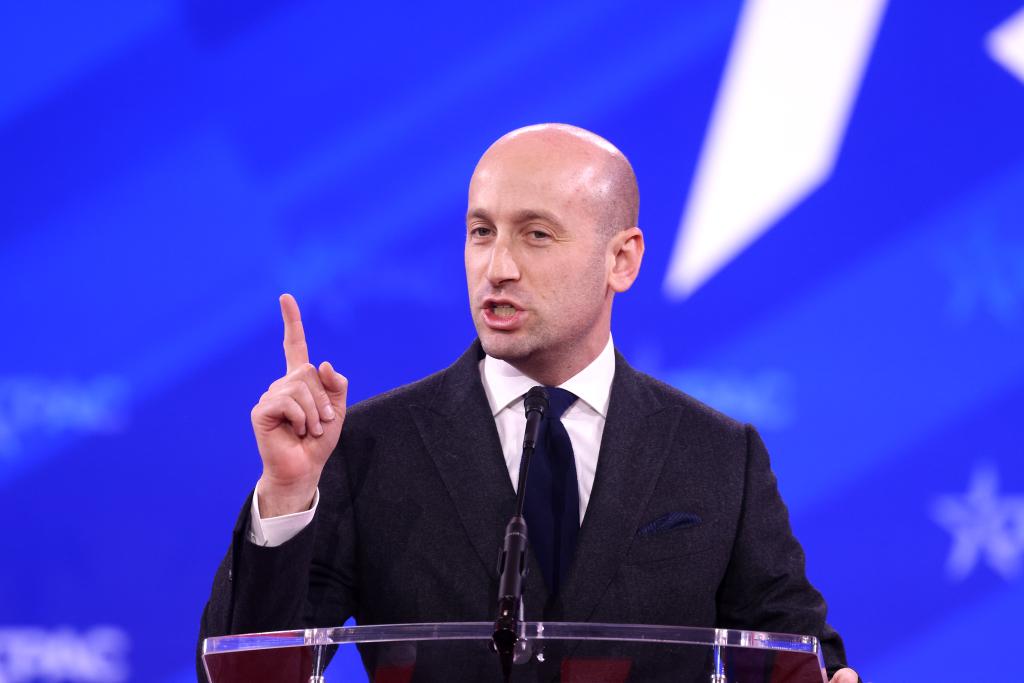
Stephen Miller is expected to play a central role in advancing President Trump’s agenda through executive authority after Democrats secured control of both chambers of Congress last week.
Explainer Understanding China’s Strategic Role in Global Politics and U.S. Relations
The main question is how Miller and the White House will use existing presidential powers to bypass a Democratic Congress and pursue policy goals without new legislation.
The shift comes as Trump’s legislative prospects have narrowed, with Democrats gaining subpoena power and the ability to block his proposals. However, the executive branch retains significant authority, especially in areas where Congress has already appropriated funds or delegated discretion to federal agencies.
Immigration Enforcement Tools
Immigration policy is likely to be a primary focus. Congress approved nearly $70 billion in additional Department of Homeland Security funding earlier this year, much of it available through 2029. This funding allows the administration to expand detention capacity, accelerate deportations, and increase cooperation with state and local law enforcement, even as Democrats threaten hearings or propose funding cuts. Undoing already-appropriated funds would require new legislation, which Trump can veto.
Miller could also direct enforcement efforts toward jurisdictions where Democratic leaders refuse to cooperate with federal immigration authorities, creating high-profile confrontations. The source notes that these actions could force Democratic officials to defend their positions publicly and shift political debates onto issues where Republicans have traditionally polled strongly.
Federal Grants and Regulatory Power
The administration is also looking to increase political appointees’ influence over federal grants. Russ Vought, Trump’s budget director, has sought changes to grant oversight, though Congress temporarily blocked these changes through December 11. Once that restriction expires, the White House could use existing grant authority to favor projects aligned with its priorities and impose stricter conditions on others, within statutory limits.
Regulatory authority is another area where the administration may act. The Supreme Court’s June decision expanded the president’s ability to remove officials at certain independent agencies, and Trump has moved to make thousands of policy-influencing positions easier to dismiss. These changes give the White House more leverage to shape federal policy through regulatory decisions on environmental permitting, energy production, and other industries. While Democrats can challenge these actions through the Congressional Review Act or in court, the administration can act quickly, and litigation may take months to resolve.
National Security and Personnel Moves
National security priorities, including energy projects and semiconductor manufacturing, could be advanced using existing authorities under the Defense Production Act, trade statutes, and emergency powers. While these powers have limits, a national security justification can make it harder for Democrats to dismiss new policies as mere political moves.
Personnel decisions also offer options. Although a Democratic Senate can block Trump’s nominees, the administration can use acting officials or recess appointments in some cases, allowing Miller to fill key roles even without Senate confirmation.
Congressional Oversight and Political Strategy
Democrats will have tools of their own, including subpoenas, hearings, investigations, and control of annual appropriations. The White House can contest demands it sees as overreaching, invoke executive privilege, and defend its interests in court. The administration may also use these confrontations to argue that Democrats are ignoring issues like affordability and public safety.
"They can pass bills until the printers run out of ink, but without the votes to override him, all they will have is a very expensive collection of paper."
— Colton Overcash, founder of Vertex Strategies
The recent reshuffle places Miller in charge of White House policy operations, while Susie Wiles leads Trump’s political operation. This division is intended to allow the administration to fight Congress on policy while maintaining influence within the Republican Party.
The source notes, however, that this strategy carries risks. Voters recently punished Republicans over concerns about prices, foreign policy, and Trump’s conduct. If the administration’s approach is seen as overly confrontational, it could reinforce the reasons voters turned away from the party.
The effectiveness of Miller’s strategy in producing lasting policy changes or provoking political backlash remains uncertain as Trump’s term continues.