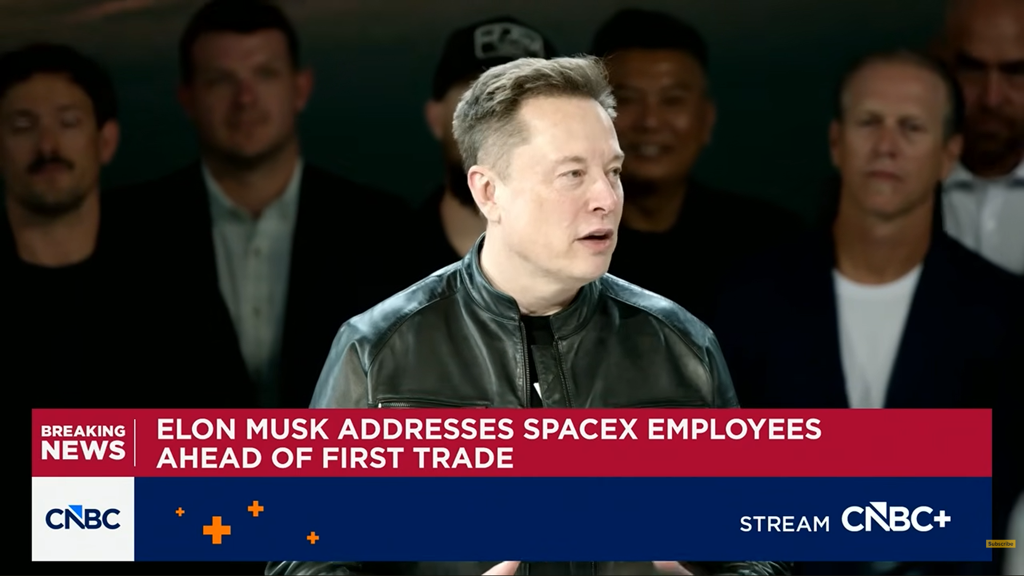
Elon Musk has officially become the world’s first trillionaire, following the successful trading debut of his aerospace company SpaceX. The company's shares began trading at $150 each, surpassing its initial listing price of $135. This remarkable milestone has ignited a wave of criticism from various Democratic leaders and commentators who have expressed concern over the implications of such wealth concentration in the hands of one individual.
The backlash highlights a growing tension between perceptions of wealth accumulation and the political discourse surrounding economic inequality. Critics argue that Musk's status exemplifies a capitalist system that favors the wealthy, while supporters contend that it reflects individual achievement and innovation. Musk's net worth is now estimated at approximately $1.1 trillion, bolstered by his stakes in Tesla and other investments. This achievement has drawn ire from notable figures such as Senator Elizabeth Warren, who took to social media to advocate for a wealth tax, stating, "We need to make sure that billionaires like Elon Musk pay their fair share."
Democratic candidate Graham Platner also weighed in, asserting, "Elon Musk just became the world’s first trillionaire. Let’s make sure he’s also the last." These comments reflect a broader sentiment among some Democrats who believe that extreme wealth should be addressed through taxation and redistribution, suggesting that the current economic landscape is not equitable.
Responses from the Political Sphere
California Governor Gavin Newsom criticized the current economic system, claiming, "The system is rigged," suggesting that it disproportionately benefits a select few at the expense of the broader population. Other prominent figures, including Representative Pramila Jayapal and former Obama advisor Jon Favreau, joined the chorus of criticism, emphasizing the need for systemic change to address wealth disparities. They argue that the concentration of wealth in the hands of a few individuals undermines the foundational principles of democracy and equality.
Supporters of Musk, however, argue that his success is a testament to the potential of entrepreneurship and innovation. They contend that his contributions to technology and space exploration have significant societal benefits, pushing the boundaries of what is possible. Some observers suggest that the backlash against Musk may be politically motivated, given his past support for various Republican initiatives, including his involvement in the Trump administration's efforts to reduce government waste. This connection has led some to question whether the criticism is based on his wealth or his political affiliations.
The Broader Debate on Wealth and Success
The discourse surrounding Musk's wealth raises fundamental questions about the nature of success and the role of government in regulating it. Critics of Musk's newfound status argue that it perpetuates a system where wealth is concentrated among a few, undermining the principles of equality and opportunity. They assert that policies aimed at wealth redistribution are necessary to create a more equitable society, where everyone has a fair chance to succeed.
Conversely, proponents of capitalism argue that individual success should be celebrated and that high achievers like Musk inspire others to pursue their ambitions. They assert that the ability to achieve financial success is a cornerstone of the American Dream, which encourages innovation and economic growth. This perspective holds that the achievements of individuals like Musk can lead to advancements that benefit society as a whole.
While the debate continues, it is clear that Musk's trillionaire status has become a flashpoint in the ongoing discussion about wealth, capitalism, and the responsibilities of the wealthy. As the political landscape evolves, the implications of such wealth concentration will likely remain a contentious issue, prompting further discussions about the balance between individual success and societal responsibility.
Conclusion
In summary, Elon Musk's ascension to trillionaire status has sparked significant political discourse, with many Democratic leaders calling for reforms to address wealth inequality. As the debate unfolds, the contrasting views on wealth and success will continue to shape the narrative around economic policy in the United States. The ongoing discussions reflect deeper societal values and the challenges of navigating a system that rewards innovation while also grappling with the consequences of extreme wealth concentration.