The U.S. Supreme Court on Friday issued a final order blocking Missouri from using its newly enacted, Republican-backed congressional map for the 2026 midterm elections. Instead, the state must proceed under its previous 2022 map. The unsigned per curiam decision came without any noted dissents from the justices. The Court emphasized that the election process for 2026 had already begun under the 2022 map, with ballots printed and absentee and overseas voting underway.
Explainer Redistricting Battles: How Maps Shape American Political Power
Background of the Dispute
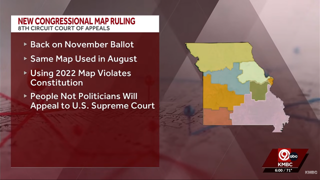
The legal dispute centers on whether Missouri could implement a new congressional map, passed by the Republican-led legislature last year, or must continue using the map adopted in 2022. The new map would have shifted the state's congressional delegation from six Republicans and two Democrats to seven Republicans and one Democrat. At stake is which map will govern Missouri’s congressional representation in the upcoming election cycle. The issue has been the subject of conflicting orders from both state and federal courts in recent weeks, creating uncertainty for voters and election officials.
The legal battle began after the Missouri Supreme Court ordered the state to use the 2022 map and required that a referendum on the new map appear on the 2026 fall ballot. This state court decision meant that the new map, referred to as the 2025 map, would not take effect unless and until approved by voters. Federal litigation soon followed. Chief District Judge Stephen Clark, acting under direction from the 8th Circuit Court of Appeals, issued a permanent injunction earlier this week that would have allowed the 2025 map to be used for the midterms. The 8th Circuit panel argued that requiring some voters to use different maps for the primary and general elections would violate Article I, Section 2 of the U.S. Constitution. The panel stated, “Missouri cannot deprive more than 1.4 million of its residents of their choice in half of [the election] process without violating Article I, Section 2.”
Supreme Court’s Reasoning and Order
The Supreme Court’s order explicitly referenced its prior stay from September 10, which had already paused the lower court’s attempt to implement the new map. The justices criticized the 8th Circuit for directing Judge Clark to issue an injunction contrary to the high court’s earlier orders. In the opinion, the Court wrote, “Given this Court’s two prior orders in this litigation, our conclusion that this was error should come as no surprise.”
The Court addressed the constitutional argument raised by the 8th Circuit, noting that its precedents “have not previously stated that Article I, Section 2 requires a state to use the primary election map in a general election.” The justices found that the equities “heavily favor staying this late-breaking intervention.”
The Supreme Court invoked the Purcell principle, which cautions against federal courts changing election rules close to an election. The opinion stated, “At this late date, ordering reversion to the 2025 map in the midst of an ongoing election would usher in electoral chaos. Purcell protects against such disorder.” The justices added that the Purcell principle “applies with even greater force here,” given the advanced stage of the election process.
Timeline and Responsibility
The opinion further noted that the Missouri Supreme Court “was not responsible for the late-breaking changes.” The state court had issued a May opinion indicating that the 2025 map would not take effect until approved by voters in a referendum. The Supreme Court faulted Missouri’s Secretary of State for proceeding with the 2025 map in the primary despite these risks, suggesting that state officials should have been aware of the legal uncertainties surrounding the new map.
Next Steps and Impact
The Supreme Court’s order remains in effect unless lifted by further action from the justices. The lower courts are now barred from enjoining or requiring the use of the 2025 map for the 2026 fall elections, and must not prohibit use of the 2022 map. This means that Missouri’s congressional elections in 2026 will be conducted under the 2022 map, unless the Supreme Court revisits the issue or voters approve a new map in a future referendum.
Missouri Secretary of State and other state officials have not publicly responded to the ruling. The decision brings at least temporary clarity to Missouri’s election process, ensuring that voters and candidates will know which districts apply as the 2026 election cycle moves forward. However, the underlying legal and political disputes over redistricting in Missouri are likely to continue, especially as the state prepares for the possibility of a referendum on the new map in the next general election.