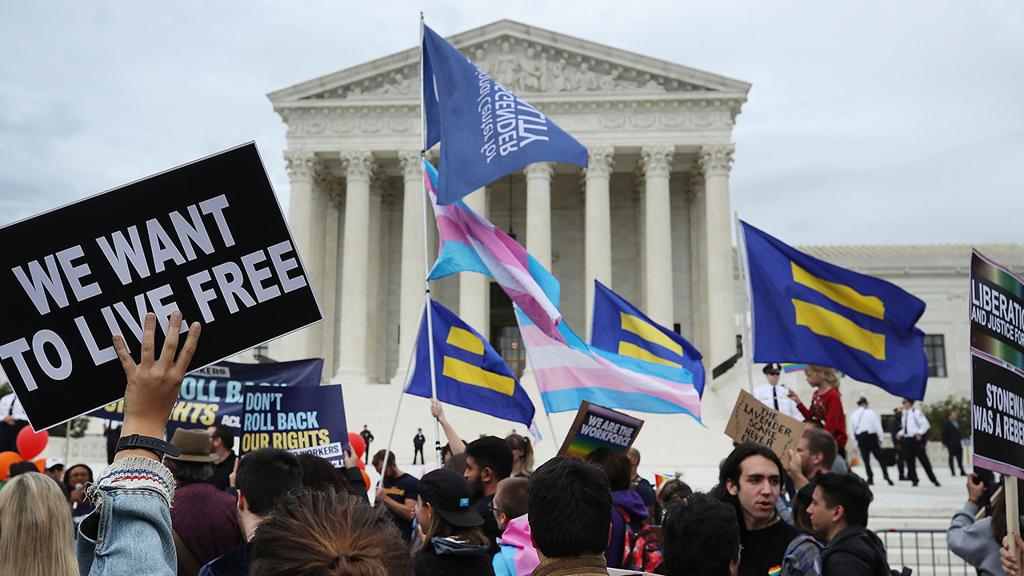
The LGBTQ+ Bar Association, the largest organization for LGBTQ+ legal professionals, has argued in a recent strategy memo that the Supreme Court has "muddied the doctrinal waters" on parental rights, particularly in cases involving transgender children. The memo, circulated in connection with a panel at the Lavender Law conference in Chicago from July 13-15, contends that recent Supreme Court decisions have left unclear guidance for lower courts and advocates.
Explainer Parental Rights in America: Defending Family Authority Amid Legal Challenges
The core dispute centers on whether the Supreme Court's recent rulings have clarified or complicated the legal landscape for parental rights, especially as they intersect with issues of gender identity and religious freedom.
This debate comes as legal battles over parental rights and transgender policies have intensified nationwide, with both sides seeking to leverage Supreme Court precedent in ongoing litigation. The Lavender Law conference, which drew about 2,000 attendees and support from major legal and government organizations, has become a focal point for strategizing among LGBTQ+ legal advocates.
Supreme Court Cases Cited
The memo specifically references Mahmoud v. Taylor and Mirabelli v. Bonta, two recent Supreme Court cases addressing parental rights in education and gender identity. In Mahmoud v. Taylor, the Court granted an injunction allowing parents from diverse faith backgrounds to opt their children out of a Maryland school district's mandatory LGBTQ+ book program. In Mirabelli v. Bonta, the Court upheld an injunction against a California policy requiring school staff to conceal a student's transgender identity from parents unless the student consented to disclosure.
The memo argues that these decisions have not provided "clear guidance" and have instead complicated the doctrine around parental rights. It also highlights a case where the Supreme Court declined to hear an appeal from parents seeking to block a Tennessee law banning sex-rejecting procedures for minors, a case linked to U.S. v. Skrmetti, in which the Court upheld states' authority to restrict "gender-affirming care."
Legal Criticism and Response
Noel Sterett, senior counsel at Alliance Defending Freedom, strongly disputed the LGBTQ+ Bar Association's characterization.
"It is false that the Supreme Court has reached ‘inconsistent conclusions’ in parental rights cases and ‘muddied the doctrinal waters,’"
— Noel Sterett, senior counsel, Alliance Defending Freedom
Sterett argued that both Mahmoud v. Taylor and Mirabelli v. Bonta reaffirm the fundamental right of parents to direct their children's religious upbringing and care, a principle recognized for over a century. She further stated that the Court's refusal to address parental rights in LW v. Skrmetti was not inconsistent, noting, "The court has never recognized a parental right to subject a child to experimental, harmful, or illegal medical treatments."
Strategic Implications for Advocacy
The LGBTQ+ Bar Association's memo frames the current moment as "crucial" for aligning legal strategies to protect transgender children and avoid what it describes as lasting harm in the parental-rights context. The document acknowledges that parental rights claims have been brought from both sides: parents seeking exemptions from bans on gender-affirming healthcare, and parents demanding notice and veto power over their children's use of different names, pronouns, or restrooms at school.
Critics argue that these cases raise fundamentally different legal questions, with the Supreme Court recognizing parental authority over upbringing and religious formation but declining to establish a constitutional right to sex-rejecting procedures for minors. The Department of Health and Human Services has released a peer-reviewed report finding "extremely weak evidence" supporting benefits of "gender-affirming care" for minors.
Conference and Broader Context
The Lavender Law Conference & Career Fair in 2026, organized by the LGBTQ+ Bar Association, attracted approximately 2,000 participants and was supported by prominent legal organizations, government law offices, and prosecutors' offices, according to the conference's sponsor list. The association did not respond to requests for comment on its legal strategy or its views on parental rights arguments as a challenge to transgender advocacy.
Materials from the conference offer insight into how LGBTQ+ legal advocates are preparing for future litigation over parental rights. Whether these arguments will prevail in court remains uncertain.