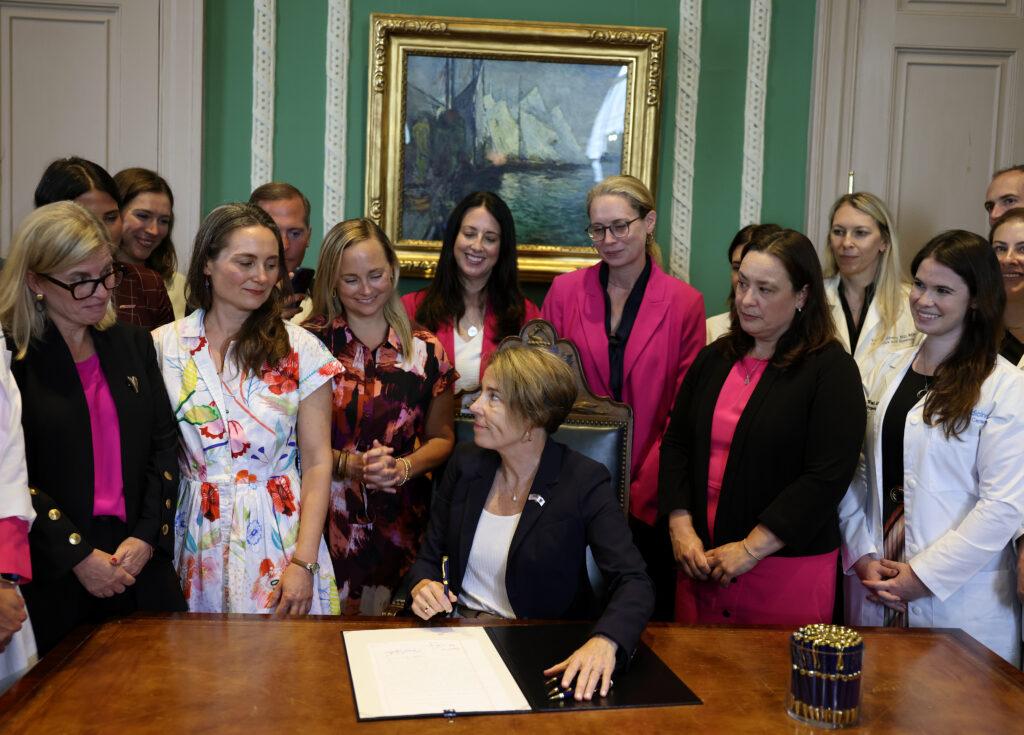
Massachusetts Gov. Maura Healey signed legislation on Aug. 10 that permits abortion at any stage of pregnancy, a move that supporters describe as closing gaps in abortion rights and opponents call an endorsement of abortion until birth.
Explainer Understanding Violence in America: Media, Rhetoric, and Reality
The new law has reignited debate over the extent of abortion rights in the state. Critics argue that the measure enables procedures on fully developed fetuses, while supporters frame it as a necessary protection for women’s health, especially in rare and critical medical situations. The legislation removes previous restrictions on late-term procedures, allowing abortions to be performed at any stage of pregnancy based on the professional judgment of a physician.
What the Law Changes
Under the new law, doctors in Massachusetts have the final say on whether an abortion should be performed late in pregnancy. This change eliminates earlier limitations that restricted late-term abortions to specific circumstances. The Associated Press reported that such cases are expected to be rare, but the law’s language has drawn attention from both advocates and opponents. The Kaiser Family Foundation has stated that less than 1% of abortions are considered late-term. However, with over a million abortions performed annually in the United States, this could amount to approximately 10,000 such procedures each year, according to the source.
Supporters of the law argue that it is essential to ensure women are not turned away by hospitals when facing critical health situations. They maintain that the decision to perform a late-term abortion should rest with medical professionals, who can assess the unique circumstances of each case. Advocates say the law closes gaps that previously left some women without access to care during emergencies or when severe fetal anomalies are detected late in pregnancy.
Opponents, however, have labeled the measure as legalizing "abortion until birth." They argue that the removal of nearly all restrictions on the timing of abortion goes too far and could allow procedures on fully developed fetuses. Some critics have expressed concern that the law does not include additional oversight or review for late-term cases, relying solely on the judgment of the attending physician.
"Opponents say that it would allow abortion until birth."
— Associated Press
Media Coverage and Public Reaction
Despite the significance of the legislation, the bill signing received little attention from major national media outlets. According to the source, networks such as ABC, CBS, NBC, PBS, and NPR did not cover the event. Print coverage was limited, with only brief mentions when the bill passed the state legislature. The Associated Press headline described the measure as giving doctors the final word on late-term abortions but did not highlight the broader scope of the law.
The lack of national media coverage has drawn criticism from those who argue that similar legislation on the other side of the abortion debate receives more scrutiny. Some contend that the media often highlights what it characterizes as extreme pro-life positions but downplays or ignores what critics call extreme pro-abortion measures. This perceived imbalance has become part of the broader conversation about how abortion legislation is reported and discussed in the public sphere.
Gov. Healey, who has identified as Catholic, signed the bill despite opposition from the Catholic Church. Some Catholics have called for her excommunication over her support for the legislation. The source notes that Healey received national media attention days earlier for signing a separate bill related to protections for people in the country illegally, but not for the abortion measure. This contrast has fueled further discussion about media priorities and the framing of controversial issues.
Ongoing Debate
Supporters of the new law argue that it is necessary to ensure women have access to abortion care when medically indicated and that hospitals should not turn away patients in need. They emphasize that late-term abortions are rare and typically involve complex medical or fetal conditions. Advocates maintain that the law protects both patients and doctors by allowing medical professionals to make decisions based on individual circumstances without fear of legal repercussions.
Opponents maintain that the law goes too far by removing nearly all restrictions on abortion timing. They argue that the measure could lead to more late-term procedures and that additional safeguards are needed to prevent potential abuse. Some have called for greater transparency and oversight in how the law is implemented.
Democratic officials and supporters of the bill have not responded to criticism regarding the scope of the legislation or the lack of national media coverage. The debate over the Massachusetts law reflects the broader national conversation about abortion rights, with both sides continuing to press their case in the public arena.
The Massachusetts law marks a significant development in the ongoing national debate over abortion rights. As other states consider similar or opposing measures, the discussion over access, restrictions, and the role of medical professionals in abortion decisions is likely to continue.