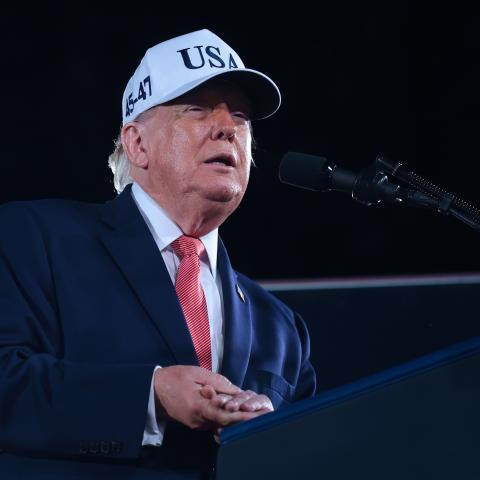
German automaker Audi will invest $4.2 billion to build a new manufacturing plant in Macon, Georgia, former President Donald Trump announced at a campaign rally Saturday night. The announcement is being positioned as a major development for the U.S. auto sector, with Trump describing it as the largest investment in the industry in modern history.
Explainer Understanding the 2020 U.S. Election Controversies and Legal Battles
Trump told supporters that Audi will begin construction on the facility next month, with plans to produce 200,000 vehicles per year. He characterized the project as a significant win for American manufacturing and job creation, emphasizing the scale and potential impact of the investment.
Details of the Audi Investment
During his remarks, Trump stated, "Audi has just committed to invest $4.2 billion in nearby Macon, Georgia to begin the construction next month on a massive plant that will produce 200,000 cars a year. Think of that. Think of that. 200,000 cars a year. That's incredible."
He further claimed, "This will be the single largest investment in U.S. auto industry history, modern history."
While Trump highlighted the size of the investment and its potential to transform the region, the announcement did not include specific details on the number of jobs expected to be created by the new plant or the particular Audi models that would be produced at the facility. As of Saturday night, Audi had not issued a public statement confirming the details of the investment or providing additional information about the project.
The lack of immediate confirmation from Audi leaves some questions about the timeline and scope of the project. However, Trump’s statements indicate that ground could be broken as soon as next month, suggesting an accelerated schedule for the start of construction.
Trump’s Framing and Economic Claims
Trump positioned the Audi deal as evidence of a broader resurgence in American auto manufacturing. He told the crowd, "Fifty-eight percent of our auto business was gone. It's all coming back. And then some $40 billion and 30,000 new jobs."
"Audi has just committed to invest $4.2 billion in nearby Macon, Georgia to begin the construction next month on a massive plant that will produce 200,000 cars a year."
— Donald Trump, former President
No independent confirmation of the $40 billion figure or the 30,000 jobs cited by Trump was available from Audi or other sources at the time of the announcement. The figures appear to reflect broader claims about the auto industry’s recovery rather than specifics tied directly to the Audi project.
Trump has frequently used such announcements to highlight what he describes as a revival of American manufacturing, particularly in the auto sector. He has pointed to foreign investment as a sign that policies aimed at encouraging domestic production are working, though critics often note that the long-term impact of such deals can depend on a range of factors, including market demand, automation, and the structure of any government incentives involved.
Context in U.S. Auto Industry
The announcement comes amid ongoing debates over the future of U.S. manufacturing and the role of foreign investment in the auto sector. The U.S. auto industry has experienced significant shifts in recent decades, with periods of decline in domestic production and job losses, followed by efforts to attract new investment and revitalize manufacturing hubs, particularly in the South and Midwest.
Supporters of large-scale investments by foreign automakers argue that such projects strengthen the economy, create high-paying jobs, and help maintain the United States’ position as a global leader in automotive production. They also point to the potential for technology transfer and the development of local supply chains.
Critics, however, sometimes question the long-term impact of these investments, noting that the number of permanent jobs created can be lower than initial projections, especially as automation increases in modern manufacturing plants. There is also ongoing debate about the use of government incentives, such as tax breaks or infrastructure support, to attract foreign companies.
Audi has not yet addressed the specifics of the deal or responded to requests for comment. The company’s plans for the new facility, including the types of vehicles to be produced and the expected timeline for hiring and production, remain unclear as of the time of Trump’s announcement.
The proposed plant in Macon, Georgia, would add to a growing list of major automotive manufacturing facilities in the southeastern United States, a region that has attracted significant investment from both domestic and international automakers in recent years. The area’s access to transportation networks, available workforce, and business-friendly policies have made it a popular destination for new manufacturing projects.
As more details emerge, attention will likely focus on the specifics of Audi’s investment, the number and quality of jobs created, and the broader implications for the U.S. auto industry. For now, Trump’s announcement signals a potentially significant development, but independent confirmation and further information from Audi and state officials will be key to understanding the full impact of the project.