Two families in Lincoln, Nebraska, have filed a lawsuit against state and local government entities, arguing that Nebraska's system of funding free education exclusively for public school students violates their First Amendment rights. The suit, brought by the New Civil Liberties Alliance (NCLA) on behalf of the Jacobsen and Menter families, claims that parents who seek alternatives to public schools are denied the financial benefits of a free education unless they accept the government’s curriculum and viewpoint.
Explainer Free Speech Battles: Navigating Rights and Censorship in Modern Society
The case centers on whether Nebraska’s education funding structure coerces families into accepting public school instruction by making them pay out-of-pocket for private or home-based alternatives.
Nebraska law requires children to be enrolled in some form of school—public, private, denominational, parochial, or homeschool—with noncompliance classified as a Class III misdemeanor, punishable by up to three months in jail and a $500 fine. However, only public school students receive the full benefit of state-funded education, while families choosing other options must cover all associated costs themselves.
Lawsuit Details and Allegations
The lawsuit argues that Nebraska’s lack of tax credits, scholarships, or education savings accounts for non-public education creates a viewpoint monopoly, effectively funding only the government’s preferred educational speech. The complaint cites examples from Lincoln Public Schools (LPS), where the Jacobsen and Menter families allege their children were exposed to policies and programming they found objectionable, including requirements related to transgender accommodations, use of pronouns, and curriculum elements described as critical race theory and climate change advocacy.
The Jacobsen family claims their daughter was told to accommodate transgender individuals in girls’ bathrooms and use pronouns that did not align with biological sex. The Menter family says they withdrew two children from LPS after encountering school-endorsed materials and recommendations promoting alternative sexualities and transgender ideology. Both families argue these experiences forced them to either accept the public school curriculum or incur the costs of alternative education.
"Nebraska cannot ban parents from teaching their own children their own values—so instead it penalizes them for exercising that recognized right. But the Constitution does not tolerate that abridgement of parents’ free speech rights."
— Christian Clase, NCLA counsel
The lawsuit seeks a court declaration that limiting public education benefits to public school attendees is unconstitutional and asks for damages equal to the per-pupil funding provided to LPS, which was about $17,432 per student in the 2024-2025 school year. The average private elementary school tuition in Nebraska is about $7,100, with high school tuition around $11,000, while homeschooling often requires a parent to leave the workforce.
Legal Arguments and Precedents
The plaintiffs cite the unconstitutional conditions doctrine, arguing that the state cannot indirectly coerce families to surrender their First Amendment rights by tying public benefits to acceptance of government speech. The complaint references the recent U.S. Supreme Court decision in Mahmoud v. Taylor, which held that the government cannot condition free public education on parents’ acceptance of instruction that violates their free-exercise rights.
NCLA general counsel Zhonette Brown stated, “That formal education is speech is largely undisputable. That parents have the primary right to provide educational speech to their children is legally established.”
State Response and Broader Context
Nebraska is among the states with the fewest options for parental choice in education, according to the NCLA. The lawsuit does not seek to change public school curricula but asks the court to rule that the current funding system violates constitutional free speech protections. State and local officials named in the suit have not publicly responded to the allegations.
The case comes amid ongoing national debates over school choice, parental rights, and the role of public education in shaping student values. The outcome could influence how states structure education funding and address parental concerns about curriculum and viewpoint diversity.
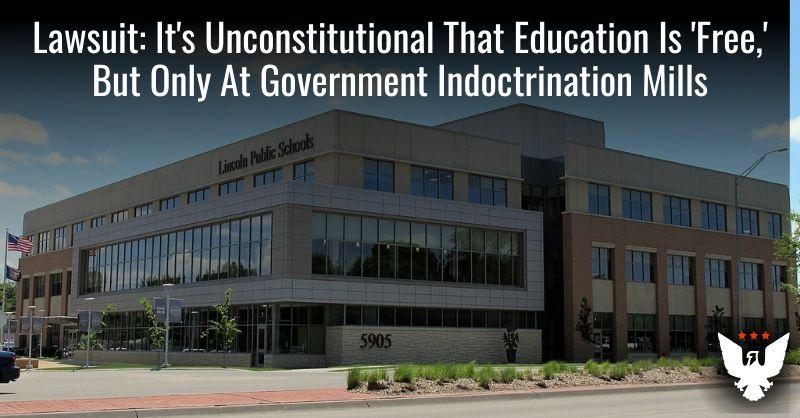
The Lincoln Public School District Office, located at 5905 "O" Street in Lincoln, remains the administrative center for the district, which is at the heart of the dispute between the families and the state.