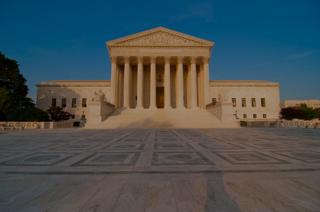
The U.S. Supreme Court has made the decision to decline hearing a significant case involving 98-year-old Federal Circuit Judge Pauline Newman. This case centers around ongoing efforts to suspend her from the federal bench, a situation that has raised serious concerns regarding judicial independence. The justices issued their decision without any noted dissents or explanations, which has left Newman and her supporters worried about the broader implications for the judiciary.
Explainer Understanding the Supreme Court’s Impact on Law and Liberty
Supreme Court Declines to Hear Case of Judge Facing Suspension
The core issue at hand revolves around the authority to suspend judges. Newman argues that the actions taken against her violate constitutional protections, as well as the Judicial Council Reform and Judicial Conduct and Disability Act of 1980. Critics of the suspension process have warned that it could set a dangerous precedent for the arbitrary removal of judges, which would undermine the integrity of the judiciary as a whole.
Background and Reactions
In 2023, Newman was suspended by Federal Circuit Chief Judge Kimberly Moore and the court’s Judicial Council. This suspension was based on alleged concerns regarding her mental and physical health. Despite her protests and those of her legal counsel from the New Civil Liberties Alliance (NCLA), the indefinite suspension has prevented her from participating in court cases, effectively sidelining her from her judicial responsibilities.
In her legal challenge, Newman contended that the actions taken by the Judicial Council are unconstitutional. She asserted that only Congress possesses the authority to remove judges from their positions. The NCLA emphasized that while the Disability Act allows for administrative suspensions, it requires these suspensions to have a definite end date. The Act explicitly prohibits the removal of judges from office without due process. In their petition, they stated, "This administrative removal of a judge who is famous for dissenting from her colleagues... undermines the judicial independence that is a vital foundation of our constitutional design."
In 2024, D.C.-based District Judge Christopher Cooper dismissed Newman’s arguments, ruling that federal courts lack jurisdiction over her case. He stated that she must seek relief from the U.S. Judicial Conference instead. This ruling was subsequently upheld by a three-judge panel on the D.C. Circuit Court of Appeals, all of whom were appointed by Democratic presidents, which has raised additional concerns about the impartiality of the process.
With no further legal recourse available, Newman petitioned the Supreme Court earlier this year. In her petition, she urged the justices to consider the broader implications of allowing judicial colleagues to effectively remove one another from the bench. She warned that such actions could create a chilling effect on judges who dissent from their peers, potentially stifling judicial independence and free thought within the judiciary.
Supporters of the suspension process have not publicly addressed the criticisms raised by Newman and the NCLA. Legal experts have noted that while the Judicial Council does have the authority to address concerns about judges' fitness for duty, the lack of a clear and transparent process raises serious questions about accountability and fairness in the system.
The Supreme Court's refusal to intervene leaves Newman in a precarious position, as she continues to challenge the legitimacy of her suspension. The case highlights ongoing tensions within the judiciary regarding the balance of power and the mechanisms in place to address judicial misconduct. As the legal community watches closely, the implications of this case could resonate beyond Newman’s individual situation, potentially affecting how judges are held accountable and the processes governing their conduct.
The decision not to hear her case may embolden similar efforts against judges in the future, raising concerns about the independence of the judiciary and the potential for political influence in judicial matters. Newman’s case underscores the need for clarity in the procedures governing judicial conduct and emphasizes the importance of safeguarding judicial independence. The ongoing debate over the balance of power within the judiciary is likely to continue as stakeholders assess the ramifications of this decision and the broader context of judicial accountability.