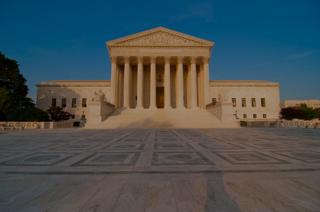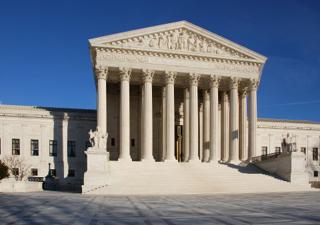
The U.S. Supreme Court is poised to consider whether to take up a significant case involving Judge Pauline Newman, who has been suspended from her duties on the Federal Circuit Court of Appeals. This case, known as Newman v. Moore, raises critical questions regarding judicial independence and the constitutional protections that are afforded to federal judges.
Supreme Court to Review Case Involving Federal Judge's Suspension
At the heart of this matter is the ongoing tension between the authority of judicial councils to investigate judges and the constitutional guarantee of lifetime appointments for federal judges. This guarantee stipulates that such appointments can only be revoked through impeachment by Congress. Critics of the actions taken against Judge Newman argue that these actions could set a dangerous precedent for judicial accountability, potentially undermining the independence that is essential to the judicial system.
Background and Reactions
Judge Newman, who was appointed by President Reagan in 1984, currently holds the distinction of being the oldest active federal judge in the United States at the age of 98. In early 2023, her colleagues, led by Chief Judge Kimberly Moore, initiated an investigation into her mental fitness, citing concerns regarding her cognitive and physical decline. In response, Newman’s legal team, the New Civil Liberties Alliance (NCLA), contends that the investigation and her subsequent suspension are unconstitutional. They argue that these actions violate the Judicial Council Reform and Judicial Conduct and Disability Act of 1980, which was designed to protect judges from arbitrary removal.
Newman’s counsel asserts that the Disability Act permits administrative suspensions but only when they have a defined end date. Furthermore, the Act explicitly prohibits the removal of a judge from office without due process. They maintain that the actions taken against her were not only premature but also lacked proper legal grounding. The petition filed by her legal team states, “The length of the suspension, the apparent intention to keep her off the bench permanently, and the refusal to transfer the matter to another circuit for neutral investigation are unprecedented.” This highlights the unusual nature of the proceedings against her.
In 2024, U.S. District Judge Christopher Cooper, who was appointed by President Obama, dismissed Newman’s challenge. He ruled that her claims could only be reviewed by the U.S. Judicial Conference and not by federal courts. This ruling was subsequently upheld by the D.C. Circuit Court of Appeals in August 2025. The three-judge panel asserted that the legislative history of the Disability Act indicated that Congress intended to limit judicial review of such cases, thereby reinforcing the authority of judicial councils in these matters.
Newman’s legal team has pointed out that no formal finding of disability has been made against her since the investigation commenced. They emphasize that she has undergone and passed three expert evaluations, which demonstrate her mental fitness. In her petition to the Supreme Court, Newman argued, “Every judge who gets crosswise with her chief judge or her colleagues must now worry whether similar tactics could be used to remove them.” This statement underscores the broader implications of her case for other judges facing similar scrutiny.
Supporters of the investigation into Newman, however, have not publicly commented on the specifics of her case. Legal experts note that while judicial independence is crucial, there must also be mechanisms in place to address legitimate concerns regarding a judge's fitness for duty. This balance is essential to maintain public confidence in the judicial system.
The Supreme Court's decision to hear the case will require at least four justices to agree to take it up. If the Court decides to hear Newman v. Moore, it could have far-reaching implications for the balance of power within the judiciary and the protections afforded to federal judges. The outcome of this case may not only affect Judge Newman but could also influence how judicial councils operate in the future, particularly regarding their authority to investigate and potentially suspend judges.
As the legal community awaits the Court's decision, the stakes for judicial independence and accountability remain high. The resolution of this case could redefine the boundaries of judicial authority and the protections that are in place for federal judges, making it a pivotal moment in the ongoing discourse surrounding judicial conduct and oversight.