Education Policy Reform: Accountability, Innovation, and School Choice in America
Explore how recent U.S. education policy reforms emphasize accountability, school choice, and workforce readiness amid ongoing ideological debates.
Additional reporting by Oliver Brown

The United States education system stands at a crossroads of reform and ideological conflict. Recent federal initiatives aim to improve accountability, affordability, and innovation, especially in higher education, while conservative activists push for expanded school choice and reduced federal control. At the same time, debate intensifies over curriculum content, transparency, and parental roles in education. This explainer unpacks the major facets of education policy reforms, the underlying conservative principles guiding them, and the ongoing battles shaping America's schools today.
Education policy does not exist in a vacuum; it reacts to broader political currents and economic realities. Rising college costs and student debt, stagnant K-12 test scores in many districts, and fiercely contested cultural issues have combined to fuel demands for change. Conservatives advocate for empowering parents, increasing competition through school choice, holding universities accountable for student outcomes, and resisting federal overreach. Meanwhile, progressives and education unions often emphasize social equity, centralized standards, and ideological diversity that frequently clashes with these conservative priorities.
Accountability and Transparency in Higher Education
"True education reform demands local control, accountability, and expanded choice to free families from bureaucratic and ideological grips."
One major development in education policy is the Department of Education’s implementation of rules aimed at holding colleges and universities accountable for the economic outcomes of their graduates. The Student Tuition and Transparency System (STATS) and Earnings Accountability rule requires undergraduate programs to demonstrate their graduates earn more than a typical high school diploma holder, while graduate programs must prove earnings above the average bachelor’s degree recipient for continued federal funding eligibility. Programs failing these benchmarks risk losing access to federal student aid, a powerful incentive for institutions to focus on career and financial outcomes rather than just enrollment.
This policy represents a conservative approach to combating the unchecked growth and rising costs of higher education. By tying federal funding to demonstrable labor market success, it challenges universities to justify their value proposition economically. Critics argue this reduces education to wage metrics and undervalues liberal arts or fields with slower paybacks, but supporters contend it curbs wasteful spending and misleading promises that have saddled the country with unsustainable debt. As we reported on the proposals shaping student loan protections, accountability reforms are intended to recalibrate the balance between access and quality.
Furthermore, the Department has eliminated the Grad PLUS loan program for graduate students, replacing it with reasonable loan limits and a new Repayment Assistance Plan designed to simplify repayment and reduce debt burdens. This rule aims to prevent graduate borrowing from ballooning unchecked — a significant concern for conservatives alarmed by ever-growing student debt and federal loan liabilities. This shift promotes fiscal responsibility, signaling a stronger hand in regulating federal education expenditures while encouraging students and institutions alike to consider economic outcomes more seriously.
In addition to financial accountability, the transparency component of STATS compels colleges to disclose key data on costs, graduation rates, and earnings outcomes publicly. This transparency helps parents and students make informed decisions while increasing institutional pressure to improve performance. Conservatives view this as a critical check on bureaucratic inertia and institutional opacity, encouraging competition and accountability similar to private-sector principles.
Embracing Workforce Readiness and Career Pathways
Recognizing that education must prepare students for a changing labor market, the Department of Education recently introduced a supplemental priority for grant programs emphasizing career pathways and workforce readiness. This reflects an effort to align schooling more closely with real-world economic demands, ensuring that graduates possess skills that employers actually need. It also represents a pragmatic reassessment of education beyond the classroom, championing vocational and technical training alongside traditional academic routes.
For conservatives, this shift underscores the importance of personal responsibility and economic self-sufficiency. Encouraging students to acquire marketable skills reflects the principle that education should serve as a bridge to employment and upward mobility. It also counters decades of progressive education policy that prioritized ideological goals or social engineering over tangible workforce outcomes. Programs promoting apprenticeship, STEM skills, and technical certifications have gained renewed prominence, advancing a model that prepares students to succeed without reliance on federal handouts or unnecessary credential inflation.
However, this does not come without resistance. Some educators and school unions remain skeptical of workforce-driven education priorities, fearing a devaluation of critical thinking and the humanities. Despite this, bipartisan momentum is growing to ensure curricula equip students for the realities of the 21st-century economy. The Department’s supplemental priority signals federal support for initiatives that improve student employability, a key point of conservative advocacy. This pragmatic emphasis on practical skills echoes long-standing conservative arguments for education as a foundation of individual responsibility and national economic strength.
Expanding workforce readiness programming includes partnerships between schools and private industry, allowing students to receive hands-on experience and direct exposure to employer expectations. These efforts also address economic inequality by offering viable alternatives to four-year degrees, which have become prohibitively expensive for many families. By promoting career pathways embedded in market demand, policymakers aim to reduce skills gaps while respecting parental choices and regional economic differences.
Advancing Technology: AI in Education
Among the more forward-looking reforms is the Department’s finalized priority on the use of artificial intelligence (AI) in education. This initiative encourages schools and universities to explore AI tools that can enhance teaching, personalize learning, and improve administrative efficiency. From adaptive learning software to predictive analytics on student performance, AI promises to transform educational delivery.
While the long-term impact of AI remains uncertain, conservatives generally welcome technological innovation as a driver of educational improvement and economic growth. Advancing AI in education resonates with broader conservative values of innovation, competition, and empowerment through new tools. However, vigilance remains necessary to guard against overreach, data privacy issues, and algorithmic biases that could embed unintended ideological agendas. Conservatives urge policymakers to adopt balanced AI integration with transparency and safeguards to protect families’ interests.
Public discourse around AI in education is just beginning, but its inclusion in policy signals an acceptance that technology must play a key role in meeting modern educational challenges. This approach marks a contrast with traditionalist resistance to change, emphasizing instead the potential of innovation to enhance learning outcomes. As we explored in our coverage of AI priorities finalized by the Education Department, integrating AI tools carefully can reduce administrative costs and tailor instruction to students’ needs, improving both quality and efficiency.
Yet, the use of AI also raises new questions about the role of human teachers, the protection of student data, and the risk of replacing critical educational values with algorithmic decision-making. Conservatives advocate for parental choice and local control to ensure AI adoption aligns with community values rather than centralized mandates. Oversight must prevent biased or politically motivated algorithms from influencing curriculum or evaluation unfairly.
The Conservative Push for School Choice
Beyond federal policy, conservative leaders have aggressively championed school choice — policies that expand alternatives to traditional public schools, such as charter schools, private voucher programs, and education savings accounts. School choice is heralded as a tool to empower parents, foster competition, and improve overall quality by breaking the monopolistic hold of public school districts.
Former President Trump’s spotlight on expanding school choice, as covered in our article about his Rose Garden event, embodies this conservative priority. Proponents argue that school choice reforms restore parental authority, dismantle bureaucratic inefficiencies, and promote educational equity by giving low-income families better options. This policy reflects a foundational conservative belief in the power of market competition to drive improvement and respect individual freedom.
Critics, including teachers unions, warn these policies drain resources from public schools and disrupt community cohesion. However, conservatives maintain that no system fixates children's futures so strongly as choice in their education. For many families, particularly minorities and those in underperforming districts, school choice represents a path to opportunity long denied by one-size-fits-all mandates. Expanded school choice also incentivizes public schools to innovate and improve to retain students.
This tension over school choice also intersects with issues of curriculum control and local governance. Parents demand transparency and influence over what their children learn, pushing back against uniform federal or state curricular impositions perceived as ideological or disconnected from community values. Conservative advocacy highlights that parental rights are foundational to a healthy education system, fostering environments where diverse perspectives and local sensibilities are honored rather than suppressed.
Culture, Curriculum, and Federal Overreach
A significant flashpoint in the education policy battle is curriculum content and cultural priorities in schools. Issues such as Critical Race Theory, sex education, and gender ideology provoke intense debate, with conservative parents and lawmakers pushing for bans or restrictions on what they view as politicized indoctrination. In many states, efforts to legislate curriculum transparency or prohibit divisive concepts have met resistance from teachers unions and progressive educators.
Our coverage of the persistent presence of DEI practices in Indiana schools despite state bans illustrates how enforcement of these policies remains contentious. Conservatives view such audit findings as evidence that local control must be strengthened and federal interference curtailed to protect educational integrity. This ongoing struggle highlights a broader conservative concern about ideological imposition under the guise of educational reform.
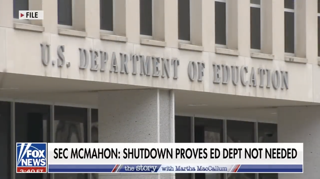
Conservative skepticism toward the Department of Education also arises from fears it acts as a tool of federal overreach, imposing uniform standards that undermine state sovereignty and parental rights. Efforts to dismantle aspects of the department have been part of broader conservative strategies, evidenced by moves documented in our piece about the Trump administration’s steps to reduce the department’s influence. These moves seek to restore decision-making authority to states, local communities, and families rather than distant bureaucrats.
Underlying this debate is a fundamental question: Who decides what children learn? Conservatives argue that families and local communities—not distant bureaucracies or activist teachers unions—are best positioned to answer. This principle drives both policy action and grassroots advocacy across the country, with many states enacting legislation to enhance curriculum transparency and parental notification. It is a battle over control that reflects wider cultural disagreements but is also rooted in constitutional and democratic principles.
The Role of Teachers Unions and Leftist Influence
Teachers unions often stand opposed to conservative education reforms, defending existing structures and promoting agendas aligned with progressive social policies. For example, the American Federation of Teachers' endorsement of gender-affirming care citing health equity reveals the intersection between education and broader cultural issues where conservatives often push back.
Similarly, union opposition to immigration enforcement policies seen in our item about the Teachers Union endorsing resistance to federal immigration enforcement underscores the broad sociopolitical influence unions wield, extending beyond classroom instruction to policy advocacy. Conservatives caution that these entanglements detract from schools’ core mission and insert divisive political agendas.
Efforts to regulate homeschooling, such as the bill discussed in Connecticut's education committee hearings, further highlight the cultural rift, where conservatives defend parental rights to direct education free from excessive state mandates. This battleground over education authority continues to shape legislative and political dynamics nationwide.
Teachers unions' political activism represents a comprehensive push that conservatives view as threatening educational neutrality and local values. Thus, conservative reformers advocate for reforming union powers, increasing transparency, and limiting political endorsements to refocus schools on core academic missions rather than ideological agendas.
Frequently asked questions
What is the Student Tuition and Transparency System (STATS)?
STATS is a federal policy that requires colleges to demonstrate their graduates earn more than high school graduates to maintain federal funding eligibility.
How has the federal government changed graduate student loans recently?
The Grad PLUS loan program has been eliminated, replaced with reasonable loan limits and a Repayment Assistance Plan to simplify repayment and reduce debt.
What role does the Department of Education see for artificial intelligence in schools?
The Department has finalized a priority encouraging AI integration to improve teaching efficiency and personalized learning.
Why is school choice important to conservatives?
School choice promotes parental empowerment, competition, and improved educational quality by offering alternatives to government-run public schools.
How do teachers unions influence education policy?
Unions often advocate for progressive social policies and resist conservative reforms, impacting curriculum, funding, and broader educational governance.
What controversies surround curriculum content and parental rights?
Debates include the inclusion of Critical Race Theory, gender ideology, and sex education in schools, with conservatives pushing for transparency and local control.
Are there federal efforts to regulate homeschooling?
While homeschooling is largely governed at the state level, some states are considering regulations, sparking concerns about parental rights versus state oversight.
Timeline of our coverage
- 2026-08-24 — Trump to Spotlight School Choice Expansion at Rose Garden Event
- 2026-08-02 — Teachers Union Endorses State Resistance to Federal Immigration Enforcement
- 2026-07-20 — AFT Endorses Gender-Affirming Care, Citing Health Equity at Annual Convention
- 2026-07-13 — Audit Finds DEI Practices Persist in Indiana Schools Despite State Ban
- 2026-05-08 — Democrats Propose Repeal of Trump-Era Student Loan Protections
- 2026-03-23 — Connecticut Education Committee Considers Bill to Regulate Homeschooling
- 2025-11-20 — It's Past Time Red States Work To Topple SCOTUS' 'Plyler' Ruling
- 2025-11-19 — Trump Administration Takes More Steps To End Department Of Education
The Bottom Line
- Education shapes the nation’s economic future by preparing the workforce of tomorrow.
- Federal funding tied to educational outcomes ensures responsible use of taxpayer dollars.
- Expanded school choice empowers parents and challenges government-run monopolies.
- Curriculum battles reveal deeper cultural conflicts affecting community autonomy.

Sources
- U.S. Department of Education Issues Final Rule to Hold All Colleges and Universities Accountable for Low-Earning Programs
- U.S. Department of Education Finalizes Landmark Rule to Lower College Costs and Simplify Student Loan Repayment
- Secretary's Supplemental Priority and Definitions on Career Pathways and Workforce Readiness
- The US Department of Education Just Finalized Its AI in Education Priority. Here's What It Means.
- Highereddive.com: 813410
- Nixonpeabody.com: Department Of Education Sets 2026 Higher Ed Rule Agenda (Jul 14, 2026)