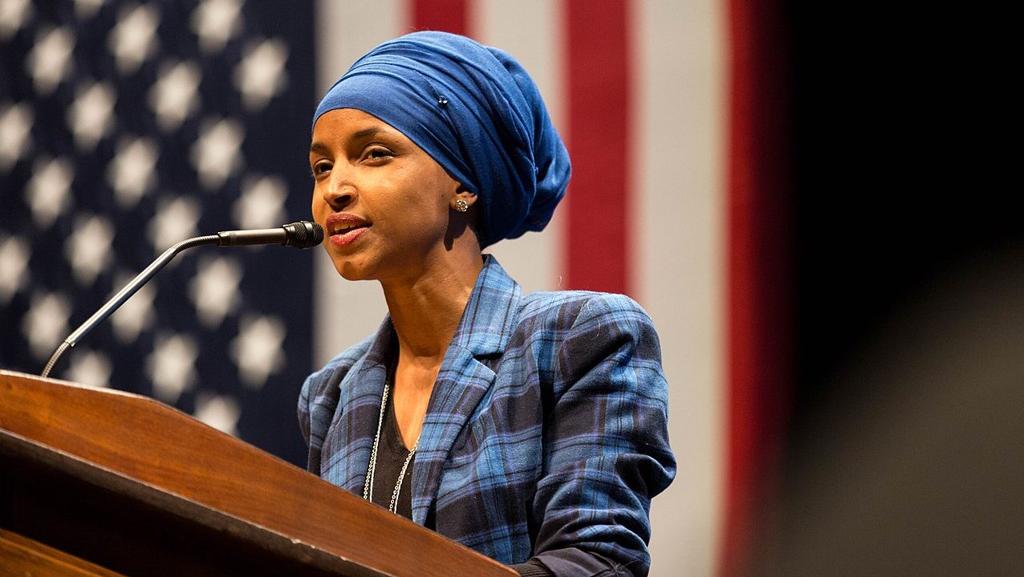
Federal authorities are conducting an investigation into Rep. Ilhan Omar (D-Minn.) for alleged immigration fraud, according to recent reports and court filings. The New York Post has revealed that court documents list her legal name as Ilhan Nur Said Elmi. In response, the New York Times editorial board has issued a sharply worded editorial criticizing the federal probe, describing it as a 'chilling example' of government overreach and labeling it an 'affront to free speech, the rule of law and American ideals.'
Explainer U.S. Immigration Enforcement and Law Enforcement: Balancing Security and Community Tensions
The central issue in this case is whether the investigation into a sitting member of Congress for alleged immigration violations is a legitimate exercise of law enforcement or if it constitutes political retaliation. The probe has sparked a debate about the appropriate boundaries of federal investigative power, especially when it involves high-profile political figures.
According to the New York Post, the investigation is focused on whether Rep. Omar used an alias and whether she may have married her brother to obtain a green card. Federal court documents reportedly refer to her as 'Ilhan Nur Said Elmi, a/k/a Ilhan Abdullahi Omar.' A source familiar with the case told the New York Post that Elmi is her birth surname, which matches that of her ex-husband and alleged brother. The Times editorial board, in its recent statement, argued that such an inquiry 'should disturb all Americans, regardless of whether they agree with Ms. Omar’s political views.'
NYT Editorial Board’s Position
In its editorial, the New York Times warned that 'the revocation of a political opponent’s citizenship has long been a tool of authoritarian repression.' The board stated, 'The investigation of her is a chilling example of the federal government using its immense power to silence a critic.'
"It is an affront to free speech, the rule of law and American ideals."
— The New York Times editorial board
The editorial board acknowledged that the merits of the allegations against Omar remain uncertain. 'We do not pretend to know whether the allegations have merit. Yet as tempting as it may be to focus on them, they are not the main issue,' the board wrote. Instead, the Times argued that the existence of the investigation itself, regardless of its outcome, is problematic and raises concerns about the use of federal power against political opponents.
The Times further suggested that such investigations can have a chilling effect on dissent and free expression, warning that they set a dangerous precedent for how the government treats critics and members of the opposition. The editorial concluded that Americans should be wary of the potential for abuse of investigative powers, especially when directed at elected officials.
Details of the Federal Probe
Federal filings in the case reportedly describe Omar as using multiple names, including Ilhan Nur Said Elmi and Ilhan Abdullahi Omar. The New York Post has reported that officials and legal experts view this as evidence in the ongoing immigration fraud investigation. The case is said to examine whether Omar’s father misrepresented her age during her naturalization process and whether she entered into a marriage with her brother to facilitate his immigration status.
Omar has not definitively addressed these allegations in recent interviews, and her representatives have not publicly responded to the latest developments. It remains unclear what specific charges, if any, could result from the alleged use of an alias or other potential violations. Legal experts note that the use of multiple names or questions about familial relationships can be relevant in immigration cases, but proving intent or fraud can be complex and requires substantial evidence.
The investigation has drawn attention because of Omar’s high-profile status and her history as a vocal critic of both domestic and foreign policy. The case comes at a time when scrutiny of politicians’ backgrounds and personal histories is intense, and debates over the politicization of law enforcement are ongoing.
Contrasting Editorial Stances
The New York Times’ current position on the Omar investigation stands in contrast to its previous editorials regarding investigations and prosecutions of former President Donald Trump. In March 2023, the board wrote, 'Even Donald Trump Should Be Held Accountable,' arguing that 'no one is above the law, including politicians.' At that time, the editorial stated, 'A healthy respect for the legal system also requires Americans to set aside their politics when forming judgments on these cases.'
Critics of the Times argue that the editorial board applies different standards depending on the political affiliation of the subject. They point to the board’s support for legal action against Trump as evidence of inconsistency. The Times editorial board has not directly addressed these criticisms, maintaining its focus on the principles of free speech and the dangers of government overreach in the Omar case.
The investigation into Rep. Omar is unfolding against a backdrop of heightened scrutiny of high-profile politicians and ongoing national debates over the role of law enforcement in political matters. As the case develops, it is likely to remain a flashpoint in discussions about the balance between legitimate law enforcement and the protection of civil liberties for all Americans, regardless of political affiliation.