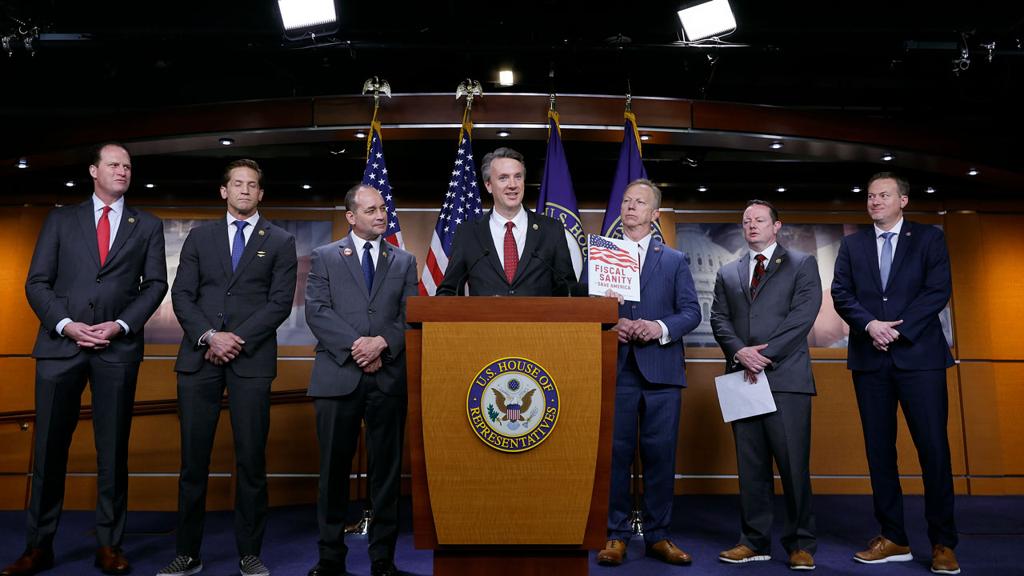
The Republican Study Committee (RSC), now the largest caucus in Congress, marked its 53rd anniversary this week, with Chairman August Pfluger highlighting the group’s transformation into a key legislative force. Pfluger, a Texas Republican, credited the RSC with advancing major conservative priorities, including tax cuts, border security, and federal spending reductions.
The RSC’s leadership says its growing influence has made it central to turning conservative ideas into law, intensifying debates over the direction of Republican policymaking and the scope of federal reforms. The group’s evolution from a small conservative bloc to a major legislative player has shaped the Republican agenda in the House and influenced national policy debates.
Founded in 1973 by Rep. Phil Crane of Illinois, the RSC began as a small group of conservative lawmakers seeking to coordinate policy and messaging. Over the past five decades, it has expanded to 190 members, making it the largest ideological caucus in Congress. The RSC has been chaired by several current and former House leaders, including Speaker Mike Johnson, Majority Leader Steve Scalise, Judiciary Committee Chairman Jim Jordan, former Vice President Mike Pence, and Sen. Jim Banks. Its leadership roster reflects the committee’s role as a training ground for prominent Republican figures.
In the 119th Congress, the RSC has played a prominent role in shaping legislation, particularly in efforts to codify elements of former President Donald Trump’s agenda. The committee’s influence has been evident in debates over spending, border security, and social policy, with members often at the forefront of negotiations and public messaging.
Pfluger and Cline on RSC’s Role
Chairman Pfluger described the RSC as “the conservative conscience of the House,” and said its members have “redefined what the RSC can be, transforming it into a governing force that turns conservative ideas into law while being the leading voices of the Republican message across America.”
"Serving alongside them has been the honor of my life, and I am confident the RSC will remain a steadfast voice for the American people for generations to come."
— August Pfluger, Chairman, Republican Study Committee
Vice Chair Ben Cline of Virginia, who has been endorsed by Pfluger to lead the caucus in the next Congress, echoed this sentiment. Cline stated, “I am proud to celebrate the Republican Study Committee’s legacy of conservative leadership and its commitment to advancing the American Dream.”
Both Pfluger and Cline have emphasized the committee’s dual role: shaping legislation and serving as a communications hub for conservative ideas. The RSC’s leadership regularly coordinates messaging across its large membership, aiming to present a unified conservative front on major policy issues.
Legislative Initiatives and Media Strategy
The RSC claims credit for driving several provisions in the One Big Beautiful Bill, including work requirements for Medicaid and SNAP, as well as increased border security funding. The caucus also cites its efforts to combat waste, fraud, and abuse in federal programs, pointing to a framework aimed at codifying Trump administration anti-fraud initiatives. These legislative priorities reflect the committee’s focus on fiscal conservatism and government accountability.
Earlier this month, RSC members were among the first to join Vice President JD Vance’s pledge to protect Americans from fraud. The committee also launched the Rescissions Working Group, which worked to codify President Trump’s $9 billion rescissions package. That package, passed by Congress in July 2025, cut more than $1 billion from public broadcasting and nearly $8 billion from international aid, including refugee and humanitarian assistance. The RSC’s involvement in these efforts highlights its role in shaping spending decisions and advancing conservative budget priorities.
In 2025, the RSC established the first New Media Row, a recurring event that brings together new media hosts and Republican lawmakers to communicate directly with the public. The event has featured figures such as Sean Spicer, Scott Jennings, Tim Young, Bannon’s War Room, The Daily Wire, Benny Johnson, The Daily Caller, the Washington Reporter, and the Daily Signal. Through New Media Row, the RSC has sought to amplify its message and engage with a broader audience, reflecting the growing importance of digital media in political communication.
Leadership Transition and Future Direction
With Pfluger set to step down, Ben Cline is expected to take over as chairman in the 120th Congress, following an endorsement from Pfluger. Cline emphasized the committee’s ongoing mission to “champion the common-sense conservative principles that make our country stronger.”
The RSC’s prominence has drawn both praise and criticism. Supporters argue the caucus has provided a clear conservative vision and legislative results, while critics contend its approach has intensified partisan divides. The committee’s influence on the Republican agenda has made it a focal point in debates over the party’s direction and legislative strategy.
Democratic leaders did not immediately respond to requests for comment on the RSC’s anniversary or its legislative record. As the RSC enters its 54th year, its future direction will likely continue to shape the Republican Party’s approach to governance and policy in Congress.