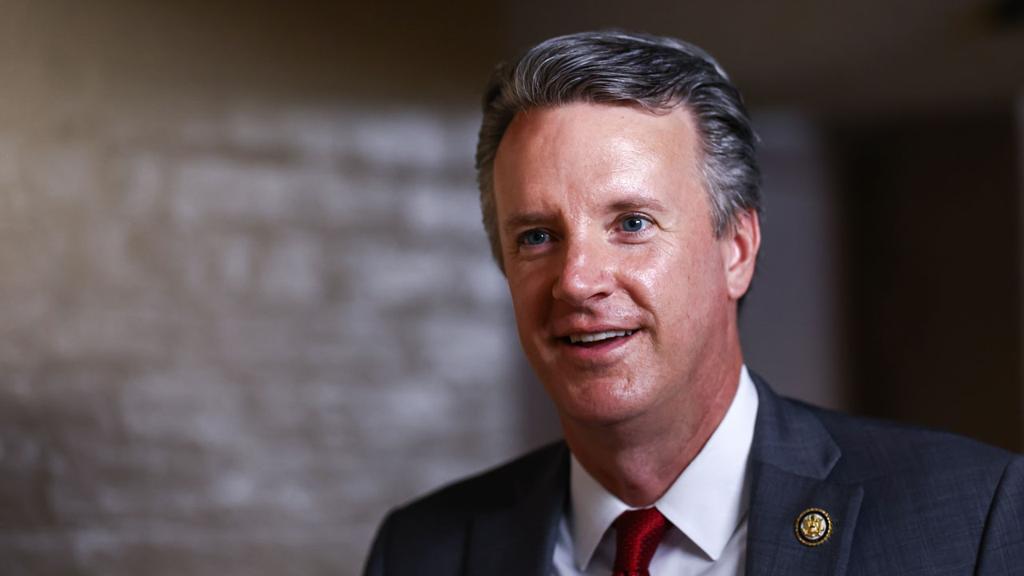
Rep. Ben Cline of Virginia has received the unanimous endorsement of the Republican Study Committee (RSC) Executive Committee to serve as the next chairman of the influential House GOP caucus, according to a statement released Friday.
The endorsement positions Cline as the leading candidate to head the RSC, but he must still win a formal vote by the full membership in mid-November. If elected, Cline would take the helm of the largest Republican caucus in Congress, which plays a central role in shaping conservative policy and legislative strategy in the House of Representatives. The RSC is known for its influence on the direction of the Republican agenda and its ability to rally support for key legislative initiatives.
Cline, who currently serves as the RSC vice chair, was the only member to seek the chairmanship after current Chairman August Pfluger of Texas offered his support earlier this year. This clear path to leadership reflects Cline’s standing within the caucus and the confidence his colleagues have in his ability to guide the group through the next Congress.
Executive Committee’s Support
The Executive Committee, which includes Chairman August Pfluger, House Majority Leader Steve Scalise, and Reps. Kevin Hern, Virginia Foxx, and Tom McClintock, met with Cline earlier this week to hear his vision for the 120th Congress. In a written statement, the committee praised Cline as a “trustworthy voice in the Republican Conference” and highlighted his commitment to the RSC’s founding principles, which emphasize limited government, fiscal responsibility, and a strong national defense.
"Ben’s vision reflects the caliber of leadership the RSC requires to remain at the forefront of the fight in the House, deliver victories for hardworking Americans, and help President [Donald] Trump advance the conservative agenda."
— RSC Executive Committee statement
The committee said its members were “elated” to have Cline, the current vice chair, as the sole candidate for chairman. Cline presented his plan to both the Executive Committee and the full RSC membership during the group’s weekly lunch on Wednesday, outlining his priorities for the upcoming Congress and discussing how the RSC can continue to be a driving force for conservative policy. The endorsement from the Executive Committee is seen as a significant step, as it signals broad support from key House Republican leaders and influential members of the caucus.
Upcoming Election and Cline’s Prospects
Although Cline has secured the Executive Committee’s backing, he must still be formally elected by RSC members. The vote is scheduled for mid-November, after the midterm elections. This process is standard for the RSC, which holds leadership elections every two years to coincide with the start of a new Congress. Cline represents a safely Republican district in western Virginia and is expected to retain his House seat, making his path to the chairmanship likely barring any unforeseen developments.
The RSC expressed confidence in Cline’s leadership, stating, “With Mr. Cline at the helm, we are confident this organization will remain among the most consequential on Capitol Hill.” The committee’s statement underscores the importance of continuity and experienced leadership as the House GOP prepares for the next legislative session. If elected, Cline would be tasked with uniting the caucus around shared priorities and working closely with House leadership to advance the Republican agenda.
Recent RSC Initiatives
Under Chairman Pfluger, who took over in January 2025, the RSC has focused on legislative priorities such as work requirements for Medicaid and SNAP, tax certainty for small businesses, and increased border security funding. These initiatives reflect the committee’s longstanding commitment to conservative economic and social policies. The RSC has also opposed Democratic efforts to make Affordable Care Act subsidy insurer payouts permanent, arguing that such measures raise health insurance costs and increase government spending.
In addition to its legislative work, the RSC recently hosted its first New Media Row, bringing influencers and creators to Capitol Hill for interviews with nearly 100 House and Senate Republicans. This event was designed to expand the committee’s outreach and engage new audiences in the conservative movement. The committee is now working with the White House Task Force to Eliminate Fraud, drafting legislation to combat fraud in federal programs—a priority that aligns with the RSC’s focus on government accountability and fiscal discipline.
No Democratic leaders or outside critics have publicly responded to Cline’s endorsement or the RSC’s current agenda. The lack of public comment from the opposition reflects the internal nature of the RSC’s leadership process, which is determined by its own members. As the mid-November vote approaches, Cline is expected to continue meeting with RSC members and outlining his vision for the caucus, seeking to build consensus and ensure a smooth transition of leadership.
The outcome of the upcoming vote will determine the direction of the RSC as it prepares to play a key role in shaping Republican policy and legislative strategy in the next Congress. With the unanimous support of the Executive Committee and no other declared candidates, Cline is widely expected to be elected as the next chairman, positioning him to influence the House GOP’s approach to major issues in the years ahead.