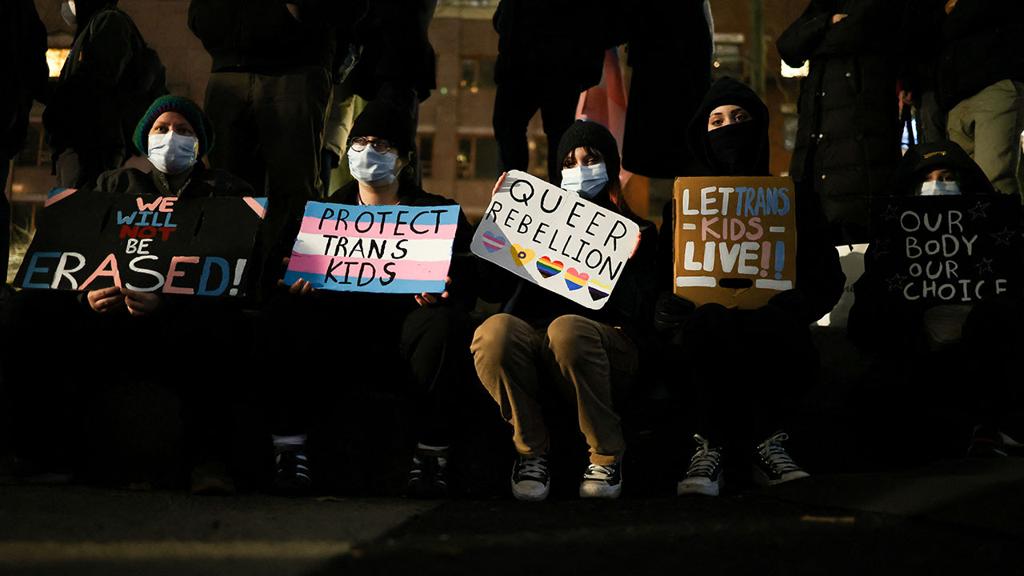
Transgender activists are increasingly shifting from aggressive legal strategies to more defensive arguments, as recent court cases and cultural developments signal a decline in their ability to shape public debate and policy.
Explainer Understanding the Supreme Court’s Impact on Law and Liberty
The core tension centers on whether legal and cultural institutions will continue to expand recognition of transgender rights, or whether growing skepticism and legal setbacks will limit the movement’s influence in areas such as sports, health care, and education. This debate has become more prominent as both legal and societal attitudes toward transgender issues have evolved over the past decade.
After years of rapid gains following the Supreme Court’s Obergefell v. Hodges decision, which redefined marriage, and Bostock v. Clayton County, which extended Title VII protections to sexual orientation and gender identity, activists now face a less favorable environment. The Human Rights Campaign, once a powerful force in corporate and political advocacy, is reportedly losing corporate allies. Meanwhile, the Trump administration has launched investigations into medical billing practices for gender transition procedures, signaling increased scrutiny of transgender health care.
Legal Arguments in Recent Cases
Recent court cases illustrate the shift in legal arguments. During oral arguments in West Virginia v. B.P.J., a case about whether males can compete in women’s sports, the American Civil Liberties Union acknowledged that fairness concerns are legitimate. The ACLU argued that medical interventions for transgender athletes reduced, but did not eliminate, competitive advantages—marking a departure from earlier claims that there is no meaningful difference between transgender women and biological women in sports. This concession suggests a move toward more nuanced and defensive legal positions, as opposed to the broad assertions of equality that characterized earlier advocacy.
The World Professional Association for Transgender Health, which was frequently cited as an authority on transgender medicine during the Biden administration, recently described its Standards of Care in a legal filing as representing medical opinion on a topic of “medical and scientific uncertainty.” The group stated that these standards are not the kind of definitive truth claims that government can regulate as consumer fraud, effectively conceding that multiple rational positions exist on the issue. This acknowledgment of uncertainty contrasts with previous efforts to present transgender health care standards as settled science.
Cultural Shifts and Loss of Allies
Hiram Sasser, executive general counsel for First Liberty Institute, said the shift reflects a broader cultural change. Sasser argued that activists previously sought to silence dissent, but now face a society more willing to debate transgender issues openly. He pointed to the loss of high-profile allies such as Martina Navratilova and J.K. Rowling, who have publicly disagreed with aspects of transgender advocacy. The willingness of prominent figures to voice dissent has contributed to a more open public discussion.
"The social and cultural permission gatekeepers on the Left have sort of lost the battle on whether or not you can speak out on these issues and have a different opinion than the Left and continue to function in civil society."
— Hiram Sasser, executive general counsel, First Liberty Institute
Sasser also credited religious groups, including Christians and Muslims, for raising public awareness by fighting for the right to opt out of endorsing transgender ideology on religious grounds. He predicted that the pendulum could swing further, with judges who once supported preferred pronouns reconsidering their positions in future confirmation battles. The involvement of religious organizations has added another dimension to the debate, highlighting the intersection of civil rights and religious liberty.
Defensive Strategies and Ongoing Debate
Transgender activists now accuse the government of trying to silence them and threaten their access to health care benefits, a shift from earlier efforts to expand legal recognition. The Human Rights Campaign has argued that there is an “epidemic” of violence against transgender people and that critics contribute to this environment, but some former allies have distanced themselves from these claims. This distancing reflects a broader trend of declining influence and shifting alliances within the movement.
Supporters of transgender rights have not publicly addressed the recent legal and cultural setbacks described by critics. The movement’s evolving legal arguments reflect a broader debate over the boundaries of civil rights and the role of government in regulating medical and social standards. As legal strategies become more defensive, activists are increasingly focused on protecting existing rights rather than pursuing new expansions.
A decade ago, activists sought to expand legal recognition for transgender people across schools, workplaces, sports, and health care. Today, disagreement with transgender ideology is increasingly accepted in public discourse and courtrooms, signaling a significant shift from the movement’s earlier dominance. The future of transgender rights remains uncertain, as both legal and cultural debates continue to evolve.