The World Professional Association for Transgender Health (WPATH) has told a federal court that its widely cited standards of care for transgender treatment should be understood as professional opinions rather than definitive scientific mandates. This clarification comes as WPATH seeks dismissal of a lawsuit brought by the Federal Trade Commission (FTC) and several states, which challenges the organization's role in shaping transgender medical care policies.
Explainer California Elections: Low Turnout, Vote Counting Controversies, and Political Implications
The case raises questions about whether WPATH's guidelines, which have been used by states such as California to set insurance coverage and regulatory policy, represent settled science or simply one perspective within an ongoing medical debate. The outcome could have significant implications for how medical guidelines are interpreted and enforced in the context of transgender health care.
WPATH’s Court Statement
In its motion to dismiss the FTC lawsuit, WPATH stated that its Standards of Care—now in their eighth version, known as SOC-8—are intended to be flexible guidance rather than binding rules. The organization told the court that its recommendations reflect "one side of an unsettled scientific debate marked by uncertainty," emphasizing that physicians and organizations relying on WPATH must exercise their own independent judgment when treating patients.
WPATH's court filing further clarified that its guidelines are not prescriptive. The organization stated that doctors are encouraged to "modify" recommendations based on each patient's unique "anatomic, social, or psychological situation." In the court brief, WPATH explained:
"We’re just offering some opinions. In this excerpt from the brief, SOC-8 is a reference to the eighth adopted version of WPATH’s standard of care: SOC-8 rejects a ‘one-size-fits-all’ approach and states that individual transgender patients ‘may need to undergo all, some, or none of these interventions’ depending on their unique circumstances."
This position marks a notable clarification, as WPATH's standards have often been treated as authoritative by regulators and insurers.
Regulatory Use and Policy Impact
Despite WPATH's statements in court, health care regulators in California and other states have cited the organization's standards as the basis for requiring insurance companies to cover a wide range of transgender-related procedures. These include not only surgeries but also cosmetic interventions associated with gender transition.
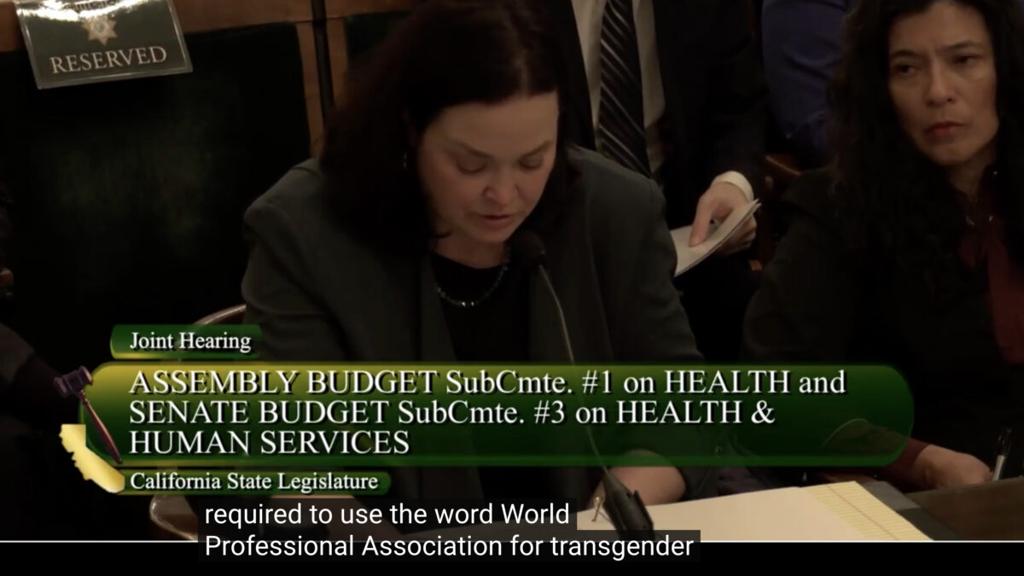
According to testimony at a California legislative hearing, state health plans are required to use clinical criteria developed by nonprofit associations such as WPATH when determining medical necessity for gender dysphoria treatments. This reliance on WPATH's guidelines has shaped insurance coverage decisions and expanded access to transgender medical care in the state.
Reports indicate that California regulators have used administrative tools such as the All-Plan Letter (APL) and Independent Medical Review (IMR) to enforce these requirements. This approach has led to expanded public funding for transgender medical care, with critics arguing that it treats WPATH's guidelines as settled science. However, WPATH's own court filings now characterize its standards as opinions within an ongoing scientific debate.
Lawsuit and Broader Debate
The FTC's lawsuit, filed in June, alleges that WPATH engaged in deceptive practices by promoting its standards as scientifically established, even though the evidence base for transgender medical interventions—especially for minors—remains contested and evolving. The FTC and attorneys general from Alaska, Iowa, Nebraska, and Texas are seeking to hold WPATH accountable for what they describe as misleading claims about the safety and effectiveness of transgender medical interventions for children. FTC press release
In response, WPATH has argued that its standards are not definitive and that clinical decisions should be made by individual providers, who must weigh the unique circumstances of each patient. The organization maintains that its guidelines are intended to offer one perspective in a complex and developing field, rather than to serve as binding rules for all practitioners.
Supporters of WPATH and its standards have not issued public statements addressing the FTC's allegations or the organization's recent court arguments. The broader debate over transgender medical care continues, with the outcome of the lawsuit likely to influence how medical guidelines are used in state policy and insurance coverage decisions for transgender health care.
As the case moves forward, it highlights the tension between evolving medical standards and the regulatory frameworks that rely on them. The court's decision could set important precedents for how professional guidelines are interpreted and enforced in the context of contentious and developing areas of medicine.