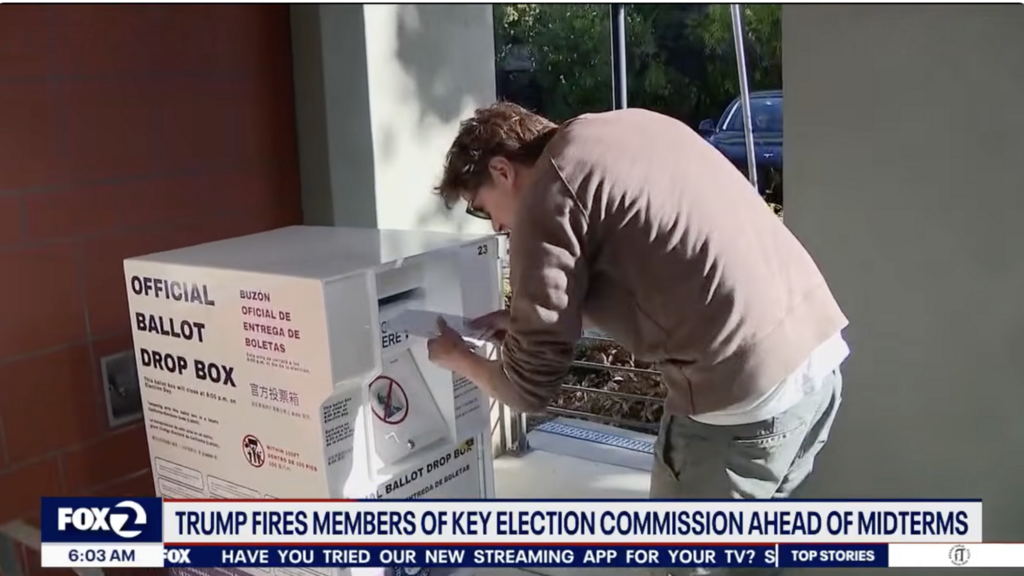
President Donald Trump has removed two Democratic members of the U.S. Election Assistance Commission (EAC), Thomas Hicks and Benjamin Hovland, leaving the federal agency without any commissioners or a quorum. The firings, communicated by the White House in early July, follow a recent Supreme Court decision that expanded presidential authority to dismiss members of independent federal commissions.
Explainer Election Integrity in America: Safeguarding Voter Trust and Ballot Security
The move has sparked debate over the extent of presidential power and the future of federal election oversight, with critics warning of political interference and supporters citing legal precedent.
The EAC, established under the Help America Vote Act of 2002, is tasked with assisting state and local election officials, distributing federal grants, and certifying voting systems. Hicks, who had served as commission chairman, and Hovland, a former chair, were both confirmed by unanimous Senate consent and had overseen the agency during recent election cycles, according to EAC records and biographical information.
Supreme Court’s Impact on Firings
The White House cited the Supreme Court’s 6-3 ruling in Trump v. Slaughter as the basis for the firings, arguing that the decision allows the president to remove members of independent commissions at will. The ruling overturned the longstanding precedent set by Humphrey’s Executor v. United States, which had limited presidential authority to dismiss such officials without cause.
Legal experts say the decision leaves little ambiguity. William Messenger, Vice President and Legal Director at the National Right to Work Foundation, told The Federalist, “The court decision found presidents can remove these officials if they want to. It will be very hard for agencies to get around [the ruling].”
"I don’t think it left a whole lot of wiggle room there."
— William Messenger, National Right to Work Foundation
Rachel Bovard, vice president of programs at the Conservative Partnership Institute, said former commissioners could attempt to challenge their removal in court but would likely face immediate injunctions given the new precedent.
EAC Left Without Commissioners
The departures of Hicks and Hovland, along with the earlier resignation of Republican Christy McCormick and the April exit of Don Palmer, leave the EAC without any sitting commissioners. McCormick, who was nominated by President Obama and confirmed in 2014, has not commented publicly on her resignation. Palmer, a Trump nominee, left to join the Heritage Foundation as Senior Legal Fellow for Election Integrity.
Despite the lack of a quorum, the EAC’s staff continues to operate the agency’s programs and resources, according to the commission’s website. The EAC’s statutory responsibilities include maintaining the national mail voter registration form, providing guidance to states, and overseeing federal grant distribution for election administration.
Criticism and Political Tensions
Democratic officials and some media outlets have accused Trump of interfering with election administration. Hicks told PBS he is considering his legal options following his removal. The White House responded that the president “reserves the right to remove individuals that may not be totally aligned with the important task of securing America’s elections and ensuring every legal vote is counted.”
Republican critics have long questioned the EAC’s effectiveness, with some calling for its dissolution and arguing its functions could be absorbed elsewhere in government. Conservative advocates, including former commissioner Cleta Mitchell, have accused Democratic appointees of opposing election integrity reforms such as voter ID and proof of citizenship requirements.
Bovard argued that Trump’s actions reflect a desire to appoint commissioners who prioritize election integrity. “He’s got to have confidence in the people overseeing our elections, that they are not rank partisans but committed to the carriage of their duty,” she said.
What Comes Next for the EAC
The EAC’s future remains uncertain as it awaits new presidential appointments. The commission has faced operational challenges in recent years, including delays in updating voting system guidelines and criticism over its handling of election security. According to The Federalist, the Trump administration spent more than a year scrutinizing the EAC’s performance and security protocols.
While critics warn of increased politicization, supporters of the firings argue that the president is acting within his legal authority. Hicks and Hovland have not announced any formal legal action as of Monday.