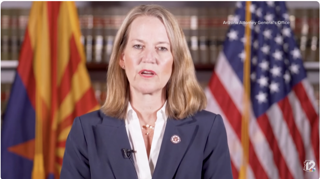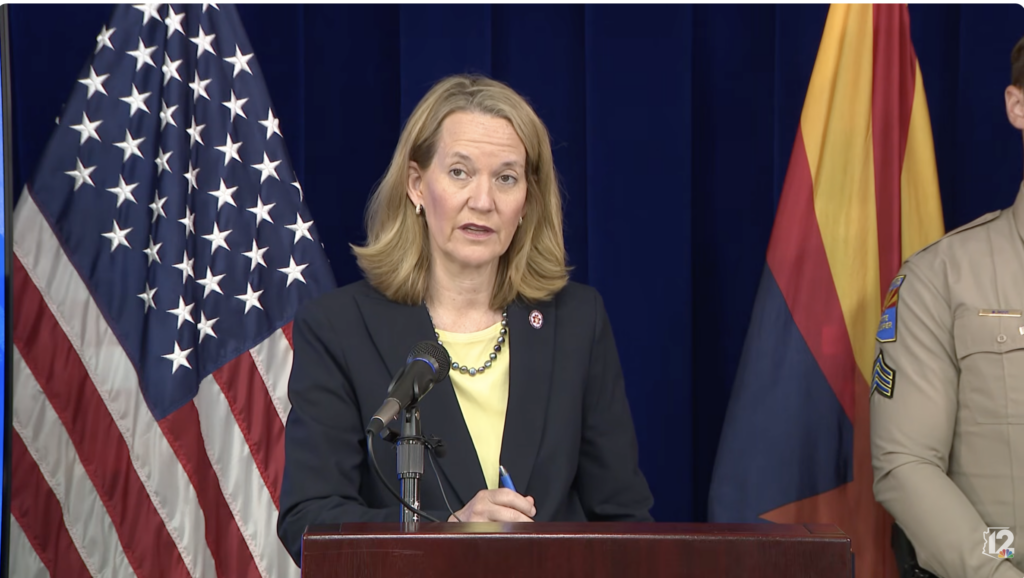
Arizona Attorney General Kris Mayes announced on Thursday that she is dismissing charges against several allies of former President Donald Trump, a move that comes amid allegations of prosecutorial collusion with left-leaning organizations. Critics argue that Mayes' actions represent a politically motivated effort to undermine Trump and his supporters, raising questions about the integrity of the legal process.
The core tension revolves around claims that Mayes and other Democratic attorneys general coordinated with the States United Democracy Center, a group accused of orchestrating legal actions against Trump’s allies across multiple swing states. Supporters of the dismissed defendants assert that the prosecutions are part of a broader campaign to target political opponents.
The charges against Trump’s allies stemmed from a grand jury indictment in May 2024, which accused 18 individuals of participating in a “fake electors” scheme following the 2020 presidential election. Mayes' decision to dismiss the case comes after the Arizona Supreme Court rejected her attempts to revive the indictment, citing procedural issues and a lack of legal basis for the charges.
Allegations of Collusion
Attorneys for Christina Bobb, a former Republican National Committee Counsel for Election Integrity, filed a motion to disqualify Mayes from the case, alleging that she collaborated with the States United Democracy Center to pursue partisan interests. Bobb's legal counsel, Thomas Jacobs, described the situation as a coordinated effort by a “small group of politically motivated lawyers.” He stated, “The available evidence seems to indicate that many of these political cases, both civil and criminal, are created and pushed by States United Democracy Center.”
The motion also claims that the Democratic Attorneys General Association contributed $200,000 to Mayes' legal defense fund, raising further concerns about conflicts of interest. Mayes has not publicly addressed these allegations, and her office did not respond to requests for comment.
Legal Challenges and Political Implications
The legal challenges against Trump’s allies have faced significant hurdles, with courts in other states also dismissing similar cases. In Michigan, a district court judge recently dismissed felony charges against 15 Republicans, stating they were exercising their constitutional rights. In Wisconsin, charges against Trump campaign attorneys have been criticized as politically motivated, with evidence suggesting that the Department of Justice found no wrongdoing in their actions.
Arizona GOP chairwoman Gina Swoboda criticized Mayes for her focus on the 2020 election, stating, “This obsession is not justice — it’s politics.” She called for Mayes to redirect her efforts toward pressing issues such as crime and drug trafficking in Arizona.
Future of the Prosecution
Despite the dismissal of charges, Mayes indicated that she may seek to revive the case. KTAR News reported that her legal maneuver is intended to circumvent a deadline for starting new grand jury proceedings. Prosecutors described the case as complex, requiring substantial evidence and time to accommodate the defendants' requests to testify.
The Arizona Supreme Court's recent ruling has put Mayes in a challenging position, as she must convince a new grand jury to indict the defendants again. The court previously found that her indictments were invalid due to her failure to inform jurors about the 1887 Electoral Count Act, which is central to the defendants' defense.
As the legal battles continue, the political ramifications are significant. The allegations of collusion and politically motivated prosecutions have raised concerns about the impartiality of the legal system and the potential for weaponization of the law against political opponents.
While critics of Mayes argue that her actions represent a misuse of prosecutorial power, supporters of her efforts maintain that holding Trump and his allies accountable is necessary for upholding the rule of law. The ongoing developments in this case will likely continue to fuel political debates as the 2024 election approaches.