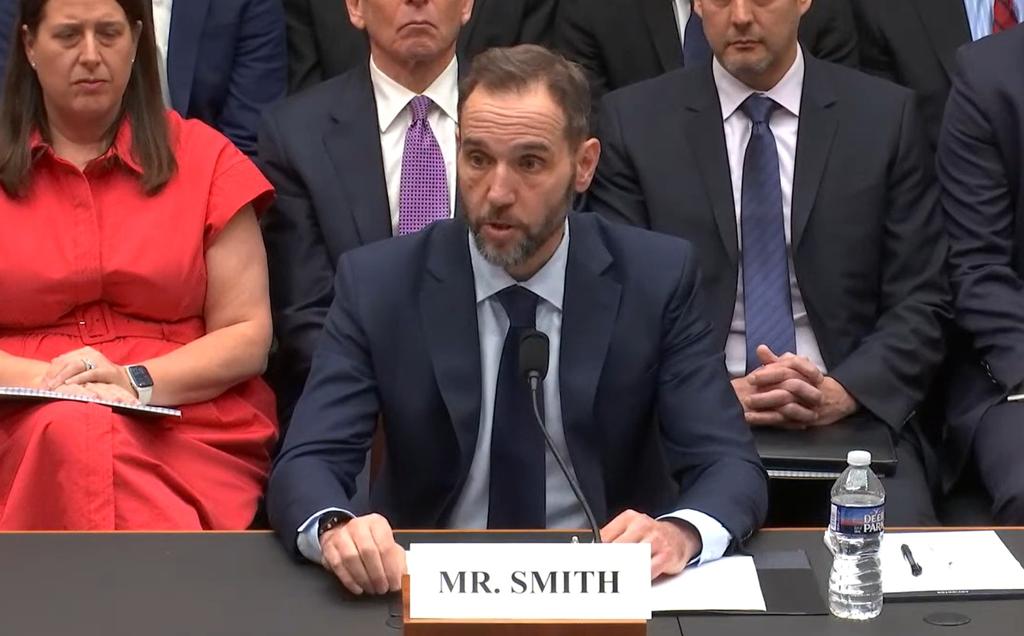
Democrats are signaling a renewed commitment to pursue legal action against former President Donald Trump and his allies once he leaves office. During a recent House Judiciary Committee hearing, Rep. Hank Johnson, D-Ga., directly questioned former special counsel Jack Smith about the possibility of reviving previously dismissed charges against Trump. Johnson's inquiry reflects a broader Democratic strategy to hold Trump accountable for his actions while in office.
The core tension lies in the potential for legal actions to be perceived as politically motivated, raising questions about the implications for the rule of law and the integrity of the judicial system. Critics argue that such moves could undermine public trust in legal proceedings, while supporters contend that accountability is essential for democracy.
The hearing featured Smith, who has been involved in multiple legal cases against Trump, including two high-profile indictments. Johnson noted that the charges against Trump were dismissed without prejudice, which means they could be refiled in the future. Smith did not confirm or deny the possibility but acknowledged the legal framework that allows for such actions.
Calls for Accountability
Democratic representatives at the hearing expressed a strong desire to hold Trump accountable for his actions, particularly regarding the events surrounding the January 6 Capitol riot. Rep. Pramila Jayapal, D-Wash., emphasized the importance of accountability, stating, "How would you describe the toll on our democracy if we do not hold a president accountable for attempting to steal an election?" Smith echoed her concerns, warning that failing to hold powerful individuals accountable could have catastrophic consequences for the rule of law.
The discussion extended beyond Trump to include individuals pardoned by him during his presidency. Ranking Member Jamie Raskin, D-Md., criticized Trump for pardoning those he described as "extremists" and "insurrectionists," suggesting that their release has led to further criminal activity. Raskin's remarks highlight a growing sentiment among Democrats that accountability should extend to all individuals associated with Trump’s administration.
Future Legal Actions
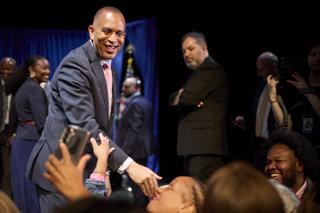
The prospect of future legal actions against Trump and his allies has garnered attention from various Democratic figures. House Minority Leader Hakeem Jeffries, D-N.Y., warned members of the Trump administration that they could face legal repercussions for their actions. He stated, "To all members of the Trump administration, the incitement and engagement in state violence against the American people is a serious crime."
Additionally, Illinois Governor J.B. Pritzker remarked that Trump is "not going to be president forever," suggesting that legal actions could be forthcoming once he leaves office. Other Democratic representatives, including Delia Ramirez, D-Ill., and Jasmine Crockett, D-Texas, indicated that they would pursue investigations and potential prosecutions if they regain control of Congress.
Concerns Over Political Motivations
While Democrats express a commitment to accountability, critics raise concerns about the potential for politicization of the legal system. Constitutional law professor Jonathan Turley has criticized Smith's approach, suggesting that it stretches criminal statutes beyond their intended limits. Rep. Kevin Kiley, R-Calif., echoed this sentiment during the hearing, noting that such interpretations could undermine the integrity of the legal process.
Supporters of the Democratic approach argue that accountability is necessary to uphold the rule of law and prevent future abuses of power. However, they have not directly addressed the criticisms regarding potential political motivations behind these legal actions. As the political landscape evolves, the implications of these discussions will likely continue to resonate in the public sphere.
The ongoing dialogue among Democrats about pursuing legal action against Trump and his associates raises significant questions about the intersection of politics and the law. As the 2024 election approaches, the stakes surrounding accountability and legal proceedings are likely to intensify, shaping the narrative for both parties in the coming months.