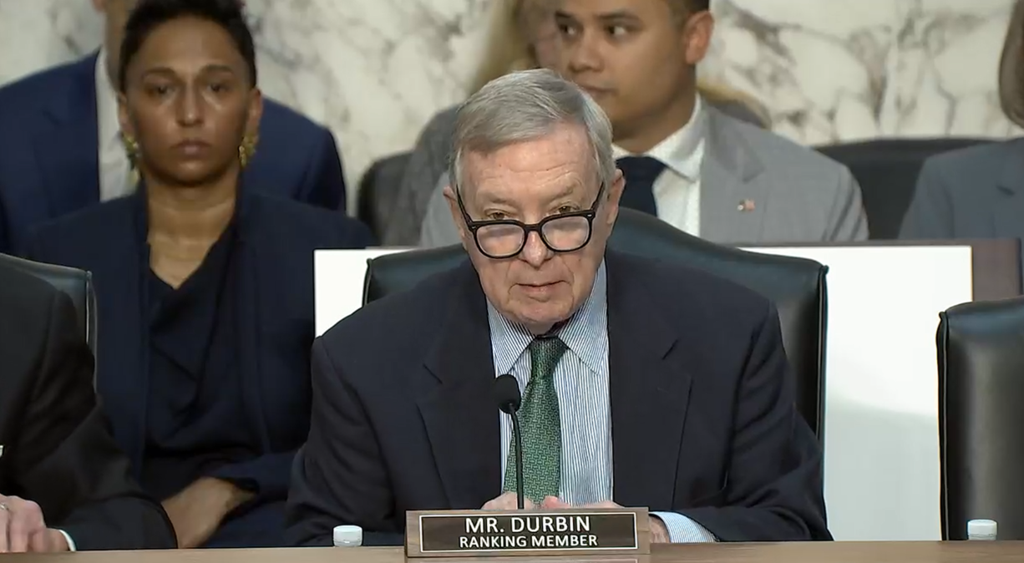
Senator Dick Durbin, D-Ill., has come under scrutiny for remarks made during an oversight hearing of the Department of Justice (DOJ) on October 7, 2025. Durbin alleged that Immigration and Customs Enforcement (ICE) agents zip-tied children during a raid in Chicago, a claim that has been disputed by officials from the Department of Homeland Security (DHS).
In his opening statement, Durbin described a scenario where federal agents allegedly entered homes at night, forcibly removing women and children from their beds. He claimed, "In the middle of the night, federal agents pulled women and children out of their beds, crashed down the doors to their homes, destroyed their apartments, zip-tied children and others, and detained immigrants and U.S. citizens alike for hours in vans." (Judiciary Senate)
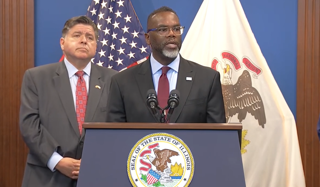
Durbin's comments echoed similar statements made by Illinois Governor J.B. Pritzker, who has repeatedly highlighted this narrative in public appearances. Pritzker characterized the alleged actions of ICE as part of a broader pattern of misconduct.
However, Tricia McLaughlin, Assistant Secretary of the DHS, refuted Durbin's claims, stating, "Children were never zip-tied. This is a shameful and disgusting lie." (Judiciary Senate) McLaughlin emphasized that the current administration is committed to protecting children from exploitation and trafficking.
The controversy intensified when a woman, who claimed to have witnessed the incident, reported that she heard an ICE agent use a derogatory phrase regarding children. Critics have pointed out that the details of her account are unclear, as she described children being "zip-tied to each other," (Judiciary Senate) a statement that lacks specificity.
Legal experts have raised concerns about the implications of such actions, noting that detaining individuals with zip ties for extended periods could constitute an unlawful arrest. Jessie McGrath, a legal analyst, remarked, "Each apartment in that building is a separate residence requiring probable cause to enter and search and requiring a warrant to do so. Detaining individuals by zip-ties for a lengthy period of time is wrong." (Judiciary Senate)
The narrative surrounding the alleged misconduct has been met with skepticism by some media outlets. Bill Melugin of Fox News reported on a widely circulated photo that purportedly showed an ICE officer zip-tying a child. Upon investigation, it was revealed that the image depicted a father jokingly posing with his child, not an instance of abuse.
Durbin's remarks during the oversight hearing have drawn criticism from various quarters, with some accusing him of inflating the situation to incite anti-ICE sentiment. Critics argue that such statements can undermine the credibility of legitimate concerns regarding immigration enforcement practices.
Despite the backlash, Durbin did not address the allegations directly with Attorney General Pam Bondi, who was present at the hearing. Instead, he focused on advancing his narrative regarding ICE's actions.
The ongoing debate highlights the contentious nature of immigration policy in the United States, with both sides leveraging emotional narratives to support their positions. As the situation develops, the accuracy of claims made by public officials will remain a focal point in discussions about immigration enforcement and the treatment of vulnerable populations.