Navigating LGBTQ Policies and Free Speech: Legal Challenges and Cultural Clashes
Explore the evolving landscape of LGBTQ rights and policies in the U.S. and UK, focusing on legal battles over identification, hate speech, and cultural expression.
Additional reporting by April Clark, Alex Monroe

The Shifting Landscape of LGBTQ Rights and Policy Conflicts
The discourse around LGBTQ rights remains one of the most polarizing and continually evolving areas of legal and cultural debate in Western societies. Across the United States and into the United Kingdom, governments and courts grapple with how best to balance modern conceptions of identity with constitutional protections, social stability, and long-held moral principles. Issues ranging from the legitimacy of gender self-identification to the boundaries of free speech in relation to sexual orientation and gender identity have entranced policymakers and citizens alike.
Recent policy reversals and high-profile legal cases provide key insights into the cultural fault lines and legal tensions that define this contentious arena. In Ohio, legislative codification and administrative rule changes concerning gender marker adjustments have radically tightened processes, aligning with a biologically anchored definition of sex. Across the Atlantic, the treatment of Finnish MP Päivi Räsänen by both Finnish and British authorities illustrates the international dimension of conflicts between religious freedom and anti-LGBTQ sentiment laws. The converging legal battles over identity, speech, and rights demonstrate how culture wars play out with real impacts on citizenship and social cohesion.
"The cultural and legal fights over LGBTQ issues are fundamentally about preserving truth and liberty in a society eager to redefine them on ideological grounds."
Gender Marker Policies and Legal Definitions of Sex in Ohio
Ohio’s shift in approach to gender marker changes is emblematic of a broader conservative legal movement to reassert biological definitions of sex in law and policy. Historically, many states allowed individuals who identify as transgender to update their gender on official documents via professional certification and a declaration process, emphasizing personal identity and privacy. Ohio's prior policy permitted changes with a Declaration of Gender Change submitted to the Bureau of Motor Vehicles (BMV), supported by a licensed professional’s attestation, without the necessity of an amended birth certificate or passport.
However, in a move aligning with the legislature's passage of Ohio Revised Code Section 9.05, effective September 2025, which explicitly recognizes sex as immutable and binary—male or female—the BMV in August 2026 ceased accepting those declarations. Now, applicants must present amended birth certificates or passports reflecting the desired gender marker to make changes. This policy has the effect of elevating procedural barriers, as birth certificate amendments require navigating complex legal and medical hurdles, often including surgeries and multiple certifications.
This regulatory tightening reflects a conservative legal philosophy insisting that state documents capture immutable biological facts for government integrity and public trust. Advocates argue that allowing gender marker changes on less rigorous evidence risks administrative error and ideological indoctrination. Critics, including transgender activists and civil liberties organizations, contend that the policy discriminates by making identity recognition unnecessarily difficult and invasive, marginalizing vulnerable populations. The debate crystallized in our detailed report on Ohio BMV tightening gender marker rules, highlighting ongoing disputes about administrative discretion and individual rights.
Taken together, Ohio’s position reflects a broader right-leaning push to secure traditional definitions of sex in law, countering progressive trends toward the legal recognition of gender fluidity and non-binary identities. This represents a significant cultural and legal flashpoint, with ramifications for access to services, civil rights claims, and the fundamental understanding of personhood within public policy frameworks.
Free Speech and Hate Speech: The Case of Finnish MP Päivi Räsänen
The global dimension of LGBTQ-related speech controversies is starkly illustrated by the case of Päivi Räsänen, a Finnish Member of Parliament whose religiously grounded statements have led to conviction for hate speech in her home country. In 2026, Finland’s Supreme Court upheld charges against Räsänen tied to a 2004 pamphlet that criticized homosexuality from a biblical perspective. Finnish authorities viewed the pamphlet as degrading and inciting hatred toward homosexuals — a ruling that ignited fierce debate over religious freedom, censorship, and the definition of hate speech.
Compounding the issue, the United Kingdom refused Räsänen a transit visa in July 2026, effectively barring her passage on the grounds of her foreign hate speech conviction. This move by the UK government demonstrates how policies designed to protect LGBTQ persons from discrimination intersect with immigration controls and international relations. The UK’s refusal reflects an increasingly common policy stance across Western democracies that views certain expressions as sufficiently harmful to justify restricting access and mobility.
This case starkly highlights the tension between free religious expression and evolving interpretations of hate speech laws that prioritize protection against perceived discrimination. Detractors of such convictions view them as undue limitations on speech and religious beliefs, forming a kind of ideological litmus test threatening dissenting worldviews. Supporters argue that societies must forbid speech that marginalizes and dehumanizes vulnerable groups to maintain civil peace and inclusion.
The legal and diplomatic fallout from Räsänen’s case illustrates how Western liberal democracies are wrestling with defining the contours of speech that offend but may claim protection under free expression. Our coverage of the UK blocking Räsänen’s transit visa sheds light on this rising trend in immigration control and free speech regulation extending beyond national borders.
Culture Wars in Sports and Education: Expression vs. Ideology
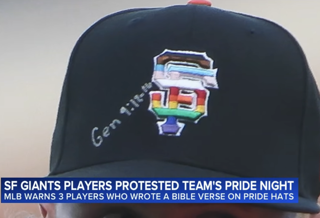
The collision of LGBTQ advocacy and conservative religious perspectives finds vivid expression in cultural institutions such as sports and education, arenas that often serve as proxies for wider political and moral battles. Major League Baseball's reprimand of San Francisco Giants players who stitched biblical verses on their caps during Pride Night demonstrates how faith-based expression clashes with institutional LGBTQ observance policies. The players’ actions were criticized as unsuitable for the event, spawning intense backlash and debates about the limits of religious and free speech in public and professional settings.
This incident feeds into ongoing cultural struggles over whether Christian and traditional values can coexist within environments celebrating LGBTQ identities, or whether expression of such beliefs constitutes intolerance. It highlights the delicate balance organizations face in fostering inclusion without alienating substantial constituencies who hold different worldviews. Our analysis of the Giants players’ expression conflict underscores the broader implications for religious liberty in the workplace and public life.
Similarly, education systems have become battlegrounds, with controversies over the inclusion of LGBTQ-focused materials and programs. For example, California’s legislative mandate requiring Trevor Project hotline information on student IDs exemplifies state efforts to embed LGBTQ advocacy in youth services. Critics argue such policies transcend support into ideological imposition on impressionable students and undermine parental rights. Debates on curriculum content, library materials, and resource accessibility reflect a fundamental struggle over childhood education's moral and intellectual ownership.
These flashpoints in schools and sports exemplify how cultural contests over LGBTQ issues are less about individual rights and more about competing worldviews and the proper role of government and institutions in shaping public norms. Conservative insight, as featured in our California law coverage, reveals the strategic importance of asserting traditional values in educational policy debates.
The Legal Quest to Redefine Marriage and Family Structures
Legal recognition of marriage and family has emerged as a pivotal arena where conservative and LGBTQ advocates confront each other over the definition of social institutions fundamental to societal cohesion. The landmark ruling of Obergefell v. Hodges legally enshrined same-sex marriage across the United States, but conservative legal challenges continue, petitioning the Supreme Court to reconsider the decision. Such efforts argue that reinterpreting marriage undermines biological reality and the social functions historically linked to marital union—chiefly procreation and stable child-rearing environments.
Internationally, similar disputes arise, such as Quebec’s recent court ruling recognizing non-traditional family structures, which spurred debate around the legal implications for children's welfare and the preservation of social norms. Critics assert that expanding family definitions may lead to legal ambiguities and social destabilization, risking harm to children by diminishing parental and societal roles.
Advocates see these legal adaptations as progress toward equal recognition and protection for diverse families, promoting inclusion and civil rights. Conservatives caution against rapid social engineering with insufficient attention to potential unintended consequences.
Our coverage of the petitions to revisit Obergefell and the family structure debate in Quebec provides key perspectives on how these legal battles shape long-term policy and cultural trajectories.
The Broader Implications for American Conservatism and Cultural Identity
As LGBTQ issues gain prominence in public policy and cultural institutions, they pose profound strategic questions for American conservatives. How to protect religious freedom, parental rights, and traditional social norms in an era of rapid ideological shifts is at the heart of ongoing political mobilization. Ohio’s gender marker restrictions and pushbacks in educational spheres indicate that conservative legal and grassroots activism can achieve meaningful policy outcomes.
These developments prompt a reemphasis on constitutional fidelity, biological reality, and the free exercise of religion as defensive bulwarks against expansive identity politics. By framing the conversation in terms of dignity and liberty grounded in fact, conservatives aim to assert a coherent alternative to the perceived ideological overreach shaping cultural institutions. The success of initiatives like Cracker Barrel standing for traditional values exemplifies how principled resistance can gain traction and galvanize supporters.
Ultimately, the crossroads presented by LGBTQ legal and cultural conflicts will help define the American narrative on individual rights, social order, and the boundaries of freedom for years to come. Navigating these waters demands vigilance and articulate, morally clear leadership from conservatives committed to preserving a free and stable society.
Frequently asked questions
Why did Ohio require amended birth certificates or passports for gender marker changes?
Ohio aligned its policy with Revised Code 9.05, which defines sex as immutable and mandates documentary proof of gender reflecting male or female at birth before changing markers.
What was the basis of Finnish MP Päivi Räsänen’s hate speech conviction?
Räsänen’s 2004 pamphlet was deemed degrading to homosexuals by Finnish courts, leading to a hate speech conviction interpreted by some as restricting religious expression.
How does the UK justify denying visas based on hate speech convictions abroad?
UK immigration rules allow refusal of entry to individuals with convictions deemed grounds for refusal, including hate speech offenses that conflict with public policy.
What controversies surround LGBTQ content in schools?
Critics argue states sometimes impose materials and hotlines that promote LGBTQ ideology, potentially infringing on parental rights and exposing children to inappropriate content.
Are there ongoing legal challenges to same-sex marriage rulings?
Yes, petitions asking the Supreme Court to revisit or overturn rulings like Obergefell v. Hodges especially target the redefinition of marriage and family legality.
How have sports organizations handled LGBTQ and religious expression conflicts?
Instances such as MLB reprimanding players for expressing Christian faith during Pride events illustrate tension between inclusion efforts and religious freedoms.
What impact do these cultural battles have on conservative politics?
These issues energize conservative voters and leaders to promote policies preserving traditional values, legal clarity, and religious liberties.
Timeline of our coverage
- 2026-08-20 — Ohio BMV Tightens Gender Marker Policy, Citing State Law
- 2026-07-12 — UK Blocks Finnish MP Päivi Räsänen’s Transit Visa After Hate Speech Conviction
- 2026-06-22 — Rebecca Cooke Secures Endorsement from Wisconsin Teachers Union Amid Controversy
- 2026-06-17 — MLB Reprimands Giants Players for Biblical Verses on Pride Night Caps
- 2026-06-15 — Giants Players Face Backlash for Expressing Christian Faith on Pride Night
- 2026-03-16 — State Department Spent $72,000 on LGBTQ-Focused Map Project
- 2025-10-13 — California Law Mandates Inclusion of Trevor Project Hotline on Student IDs
- 2025-10-10 — Concerns Rise Over LGBT Content in Children's Programming
- 2025-10-02 — Quebec Court Ruling Sparks Debate on Family Structures
- 2025-09-17 — Can We Finally Admit The T In LGBT Stands For Terrorism?
- 2025-09-17 — ABC Reporter Fabricates Text To Make Kirk Assassin Look Better
- 2025-09-13 — GLAAD Criticizes Charlie Kirk Following His Death
- 2025-09-12 — Concerns Rise Over Violent Themes in Recent LGBTQ+ Literature for Teens
- 2025-09-09 — Cracker Barrel's Cave Shows The Right Can Win The Culture War
- 2025-09-02 — I Watched Transgenderism Ruin My Friends' Lives
- 2025-08-13 — Docs: CA School District Spent $500K On 'Anti-Racist' Program
- 2025-08-12 — Petitioner Asks SCOTUS To Overturn Its Obergefell Decision
The Bottom Line
- LGBTQ policy battles reveal tensions between biological realities and cultural ideologies influencing law.
- Free speech issues related to LGBTQ topics highlight challenges in balancing religious liberty versus anti-discrimination.
- Government actions on gender markers affect not only identity recognition but also legal consistency and civil rights.
- These controversies reflect wider cultural wars over moral values, family structures, and educational content.


Sources
- Ohio Revised Code Section 9.05
- UK Home Office Guidance on Visa Refusals
- Thelibertytribune.com: Ohio Bmv Tightens Gender Marker Policy Citing State Law (Aug 20, 2026)
- Thepinktimes.com: Ohio Changes Id Gender Marker Policy Drawing Alarm From Trans Advocates
- Care.org.uk: Finnish Mp Accused Of Hate Speech Barred From Entering The Uk
- Christiandaily.com: Uk Denies Travel To Finnish Lawmaker Paivi Rasanen Following Hate Speech Conviction
- Thepostathens.com: Bmv Gender Change Form Transgender Ohio
- Brusselssignal.eu: Finnish Mp Paivi Rasanen Barred From Transiting Through Heathrow After Hate Speech Conviction