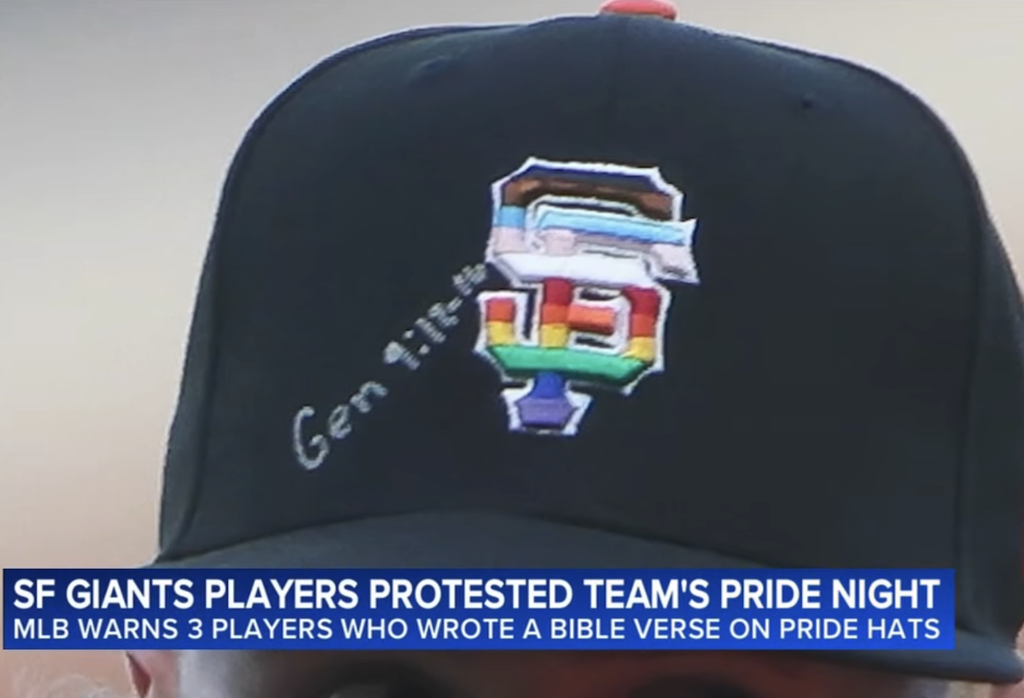
Major League Baseball (MLB) reprimanded several San Francisco Giants players for inscribing biblical verse references on their caps during a recent Pride Night game. The league stated that the inscriptions violated team rules, which it described as necessary for maintaining a welcoming environment for all fans.
Explainer Christianity in American Culture: Faith, Conflict, and Freedom of Expression
The incident highlights ongoing tensions surrounding LGBTQ representation in sports and public life, as some argue that expressions of faith should not conflict with celebrations of sexual identity. Critics of the players' actions contend that such displays undermine the progress made in LGBTQ acceptance.
During the Pride Night event, the Giants wore caps featuring the rainbow colors associated with the LGBTQ community, a move that has become common in professional sports. The MLB's decision to reprimand the players for their biblical references has sparked discussions about the balance between personal beliefs and corporate inclusivity.
Background and Reactions
Eddie Scarry, a columnist for The Federalist, criticized the players' actions, stating, "No gay has a right to be outraged over anyone, let alone random pro baseball players, subtly protesting all the gag-worthy rainbow nonsense that the LGBT military has been pushing down the public’s collective throat for years." Scarry argues that public sentiment is shifting against overt displays of LGBTQ pride, suggesting that many people are fatigued by the emphasis on sexual identity in public spaces.
In contrast, Grant Brisbee, writing for The New York Times’ Athletic subsection, described the inscriptions as a signal "to ignore the humanity" of LGBTQ individuals. He emphasized that many fans simply want to enjoy baseball without being reminded of the players' personal lives. This perspective underscores the complexity of the issue, as it raises questions about the intersection of personal beliefs and public expression.
Public Sentiment Shifts
Recent polling indicates a decline in support for LGBTQ issues, with approval of same-sex relations dropping nearly 10 points since 2022. Support for same-sex marriage is also trending downward, reflecting a potential backlash against what some perceive as excessive displays of LGBTQ pride. Critics argue that the visibility of LGBTQ culture has become overwhelming, leading to a growing sentiment that such expressions should be more subdued.
Scarry's commentary suggests that the LGBTQ community may have overstepped in its quest for visibility and acceptance. He asserts that many people are now resentful of what they perceive as an imposition of LGBTQ culture on the broader public. He states, "It’s long past time that gays settle down. Stop asking the nation to indulge your preoccupations and preferences. They’ve come to resent it."
The Role of Corporations
The MLB's actions reflect a broader trend among corporations navigating the delicate balance between supporting diversity and responding to public sentiment. In recent years, many companies have embraced LGBTQ pride events, often facing backlash from those who feel that such initiatives are excessive or politically motivated. The MLB's reprimand of the Giants players may signal a shift in how organizations approach these issues, prioritizing a more neutral stance to avoid alienating segments of their fan base.
While the MLB did not provide a detailed explanation for its decision, the league's history of supporting social justice initiatives, such as the Black Lives Matter movement, suggests a complex relationship with activism. In 2020, the MLB allowed players to display messages related to social justice, indicating a willingness to engage with contemporary social issues.
Looking Ahead
As the debate over LGBTQ representation in sports continues, the MLB's reprimand of the Giants players may serve as a catalyst for further discussions about the role of personal beliefs in public life. The incident raises questions about how sports organizations can navigate the competing interests of inclusivity and individual expression.
Supporters of LGBTQ rights have not publicly responded to the MLB's decision, leaving some aspects of the conversation open for further exploration. As public opinion evolves, the dynamics between personal beliefs, corporate policies, and societal expectations will likely remain a contentious issue in the coming years.