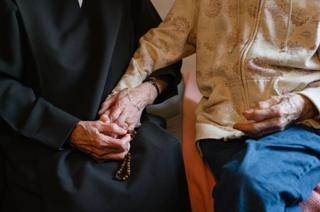
Archbishop Ronald Hicks of New York has joined a federal lawsuit that challenges New York State’s assisted suicide mandate, arguing that it infringes on religious freedom. The legal action, which also includes four Catholic religious orders and several Catholic healthcare ministries, centers on whether the state can require religious healthcare providers to participate in or facilitate assisted suicide procedures for terminally ill patients—a requirement the plaintiffs say violates their deeply held faith.
Explainer Religious Freedom in America: Navigating Rights and Government Limits
The lawsuit, titled Carmelite Sisters for the Aged and Infirm v. James, was filed in the U.S. District Court for the Northern District of New York. The nonprofit law firm Becket is representing the plaintiffs, who include the Carmelite Sisters for the Aged and Infirm, the Dominican Sisters of Hawthorne, the Missionary Sisters of St. Benedict, the Little Sisters of the Poor, Bishop John O. Barres, the Diocese of Rockville Centre, Catholic Health, ArchCare, and now Archbishop Hicks and the Archdiocese of New York.
Lawsuit Details and Arguments
According to Ben Fleshman, counsel at Becket, the state’s law requires healthcare providers to present assisted suicide as an option to terminally ill patients. Providers must also assist patients in finding other providers willing to prescribe lethal medications and are required to record deaths as resulting from the underlying illness, not from the drugs themselves. Fleshman explained that while the law allows religious or conscience-based exemptions for refusing to prescribe or administer the drugs on their own premises, it does not exempt providers from other actions mandated by the law, such as referring patients or facilitating access to assisted suicide.
Fleshman warned that forcing religious providers to act against their beliefs could set a precedent for overriding religious conscience in healthcare. He argued that this could drive faith-based ministries out of the healthcare sector, ultimately impacting vulnerable populations who rely on their services. As an example, he cited the Dominican Sisters of Hawthorne, who provide care for incurable cancer patients who cannot afford other options. The lawsuit contends that these ministries are at risk if forced to comply with the state’s requirements.
Archbishop Hicks emphasized the religious commitment to caring for the sick and dying, stating, "We refuse to allow New York to force us to harm the very ones we’ve been called to care for." Adele Keim, senior counsel at Becket, echoed this sentiment, saying that assisted suicide "is completely incompatible with the compassionate care that the Sisters and ArchCare offer." She urged the court to protect the ability of these ministries to serve patients in accordance with their faith.
Temporary Protection and State Response
On July 30, New York State agreed to a temporary order that blocks enforcement of the assisted suicide mandate against the nuns and Catholic ministries involved in the lawsuit while the case proceeds. This temporary protection was secured according to Becket, and now Archbishop Hicks is seeking similar relief for Catholic healthcare providers within the Archdiocese of New York.
The office of New York Attorney General Letitia James referred questions about the lawsuit to Governor Kathy Hochul’s office. A spokesperson for the governor responded by emphasizing that participation in the law is voluntary and that religious facilities have the option to opt out. The spokesperson also noted that the law is designed to allow terminally ill patients with less than six months to live to make an informed and voluntary decision about their end-of-life care, following years of public debate and legislative planning.
Context and Broader Implications
Catholic healthcare ministries have a long history of providing end-of-life care in New York, guided by religious principles that reject assisted suicide. The current lawsuit highlights ongoing national tensions between efforts to expand end-of-life options for patients and the need to protect religious liberty for faith-based healthcare providers. The outcome of this case could have implications beyond New York, potentially influencing how similar mandates are enforced and challenged in other states.
Neither ArchCare, Catholic Health, Bishop Barres, nor the Diocese of Rockville Centre provided comment by the time of publication. The next steps in the court process will determine whether the temporary protections for the Catholic ministries remain in place as the case moves forward. The decision could shape the balance between state healthcare mandates and religious freedom in the context of end-of-life care.