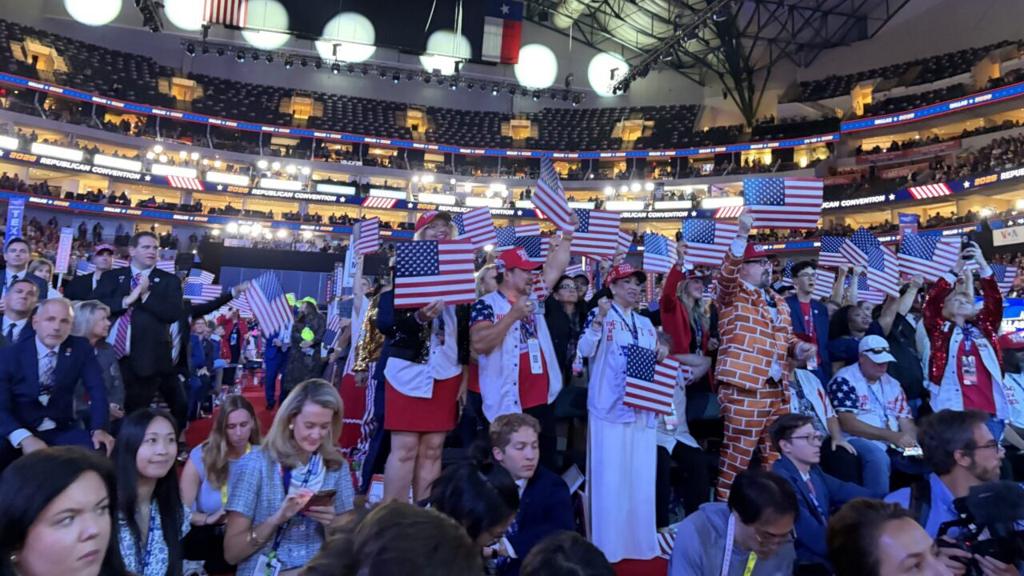
Texas Republican officials and activists are urging swift legislative and federal action in response to the rapid growth of Islamic institutions across the state, with calls for investigations and new policies dominating discussion at the Republican National Committee’s Midterm Convention in Dallas.
Explainer Attorney General Ken Paxton’s Legal Impact on Texas Policies and Public Safety
The debate centers on whether the expansion of mosques, Islamic schools, and development projects poses a threat to Texas’s identity and security, or reflects religious freedom protected by law.
Concerns about Islamism and Sharia law have become a focal point for conservative lawmakers and candidates. State Rep. Brian Harrison said he is pushing for a special legislative session, warning that Texans are "very concerned" about the potential for developments seen in Europe to occur in Texas. Harrison argued that lawmakers should not wait to act, stating, “This is a threat this year, and we should deal with it right now.”
Legislative and Federal Responses
Harrison also criticized state grant programs that could be funding organizations with alleged ties to groups advocating the violent overthrow of government, calling this "the bare minimum" of what should be addressed. In Washington, U.S. Rep. Keith Self introduced a resolution "Denouncing Sharia Law in the United States," emphasizing the duty of elected officials to protect citizens’ liberties. Rep. Chip Roy sent a letter to federal officials requesting an investigation into a planned Islamic development near Camp Bullis Military Training Reservation in San Antonio, asking whether any laws had been violated in the project’s expansion.
Brandon Herrera, Republican congressional candidate for District 23, echoed these concerns, warning that the rise of Islam in Texas could "completely change the identity of the state." Herrera called for action at all levels of government and said, “One of the things we need to prioritize is making sure we don’t import hordes of people who hate Western civilization.”
Rep. Brandon Gill and Rep. Self also criticized Dallas Fort Worth International Airport’s plan to install wudu, or ablution, stations, with Self describing the move as a "conquest."
Expansion of Islamic Institutions
Islamic institutions have expanded rapidly in Texas, with the Muslim population estimated between 300,000 and 500,000, up from 140,000 in 1990, according to the Texas State Historical Association. The Allied Special Intelligence Group, led by veterans John Bennett and Matt Shea, has held presentations for Texas pastors warning that Sharia law is incompatible with the U.S. Constitution and that churches are a primary target for Islamists. Their presentation argued that Islamists seek the destruction of Western civilization.
A documentary shown to pastors, "Remember the Alamo: Don’t Sharia My Texas," claimed there is a coordinated effort to introduce Sharia law in America, with Dallas described as the "Mecca of the West." The Allied Special Intelligence Group reported at least 314 mosques operating in Texas, with 48 opening in the Dallas-Fort Worth area in the past two years, and the RAIR Foundation USA has highlighted the rapid rise in mosques and Islamic centers.
One major project, EPIC City, is a planned development by the East Plano Islamic Center on 402 acres in Josephine, including homes, a mosque, a school, and community facilities. The Texas Attorney General’s office said it found evidence of securities law violations related to the project and referred the matter to the Texas State Securities Board. Gov. Greg Abbott has ordered a halt on construction while legal issues are reviewed.
In McKinney, the City Council unanimously approved a mosque relocation project for the McKinney Islamic Association, sparking a recall petition against the mayor and several council members. In Richardson, an Islamic academy purchased a former church to convert into a school, mosque, and seminary.
Grassroots and Community Reactions
At the RNC convention, attendees voiced a range of views. Roma Daravi, vice president of public relations at The Kennedy Center, said, “Texas particularly has a massive problem when it comes to radical Islam. A lot of people don’t know, but there is a new mosque popping up in Texas every single week. Those numbers are astounding.” She called for greater involvement in government and schools to uphold Judeo-Christian values.
"Texas particularly has a massive problem when it comes to radical Islam. A lot of people don’t know, but there is a new mosque popping up in Texas every single week. Those numbers are astounding."
— Roma Daravi, vice president of public relations at The Kennedy Center
Other attendees offered different perspectives. One woman from Georgia said she was not concerned, believing local communities would decide and that "everybody has a right to believe in their own religion." Another attendee, who moved from Europe, argued that Islam is "not compatible with Western values" and called for stricter border controls to prevent "Islamification."
The debate over Islamism and the growth of Islamic institutions is drawing increased attention from grassroots activists, elected officials, and community leaders, with legislative and legal responses likely to shape the political landscape in Texas and beyond.