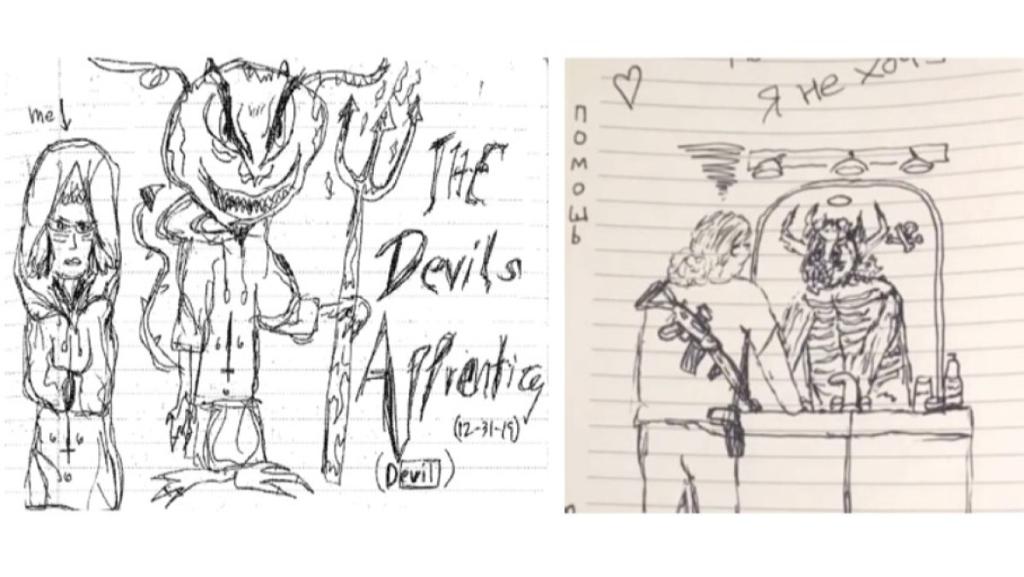
The FBI has released 525 heavily redacted pages of writings from Audrey Hale, the individual responsible for the March 2023 shooting at the Covenant School in Nashville, Tennessee. These documents, made public on September 8 following a lawsuit by the Wisconsin Institute for Law and Liberty, include disturbing references to demons and the shooter’s self-identification as “the Devil’s apprentice.” (Vault Fbi)
Hale's writings, which span several years, feature drawings of upside-down crosses and the number “666.” The documents suggest a complex psychological state, with Hale expressing thoughts of revenge and a desire to commit mass murder. One entry, dated December 31, 2019, includes a drawing of Hale as “the Devil’s apprentice,” (Vault Fbi) stating, "The Devil is the king of Evil. I have become his secret apprentice... If I am to one day commit the most infamous school shooting, I will need the Devil's powers."
"The FBI's actions have raised questions about transparency and accountability in how such incidents are handled."
— Spokesperson, Wisconsin Institute for Law and Liberty
The Covenant School shooting resulted in the deaths of six individuals, including three children. In the aftermath, the FBI reportedly sought to keep Hale's writings sealed, a move that has drawn criticism from various quarters. Critics argue that withholding the documents obscured the shooter’s motives and the broader implications of the incident.
In a memo sent to local police shortly after the shooting, the FBI advised against releasing information that could negatively impact public opinion regarding LGBTQ+ individuals. This guidance has raised concerns among some lawmakers and advocacy groups about the potential for bias in the investigation and reporting of the shooting.
"The FBI's actions have raised questions about transparency and accountability in how such incidents are handled," (Vault Fbi) said a spokesperson for the Wisconsin Institute for Law and Liberty.
Hale's writings also reflect a troubled relationship with her identity, as she navigated feelings of gender dysphoria. The documents reveal a struggle with multiple personas, including a transgender identity that Hale described as an “imaginary boy.” (Vault Fbi) In one entry, she wrote, "I’ve been becoming more comfortable being myself through him."
The release of these documents has reignited discussions about the intersection of mental health, identity, and violence. Some experts emphasize the need for a nuanced understanding of the factors that contribute to such tragedies.
"It’s crucial to address mental health issues without stigmatizing any particular group," (Vault Fbi) said Dr. Emily Johnson, a clinical psychologist specializing in trauma. "We must focus on prevention and understanding the underlying causes of such violent acts."
The writings also contain references to other mass shootings, including a chilling comparison to the Sandy Hook Elementary School shooter. Hale expressed a belief that if others could commit such acts, she could do the same.
As the investigation continues, the release of Hale's writings may provide insight into the motivations behind the shooting, but it also raises broader questions about societal attitudes toward mental health and violence. The FBI has not commented on the implications of the newly released documents.
The Nashville shooting remains one of several incidents involving individuals identifying as transgender, prompting discussions about the relationship between identity and violence. Advocates for mental health awareness stress the importance of addressing these issues without resorting to generalizations about specific communities.