Understanding Antifa: Origins, Actions, and National Security Implications
An in-depth analysis of Antifa’s structure, its designation as a domestic terrorist organization, and the balance between security and civil liberties.
Additional reporting by Liam Walker, Theo Ramirez
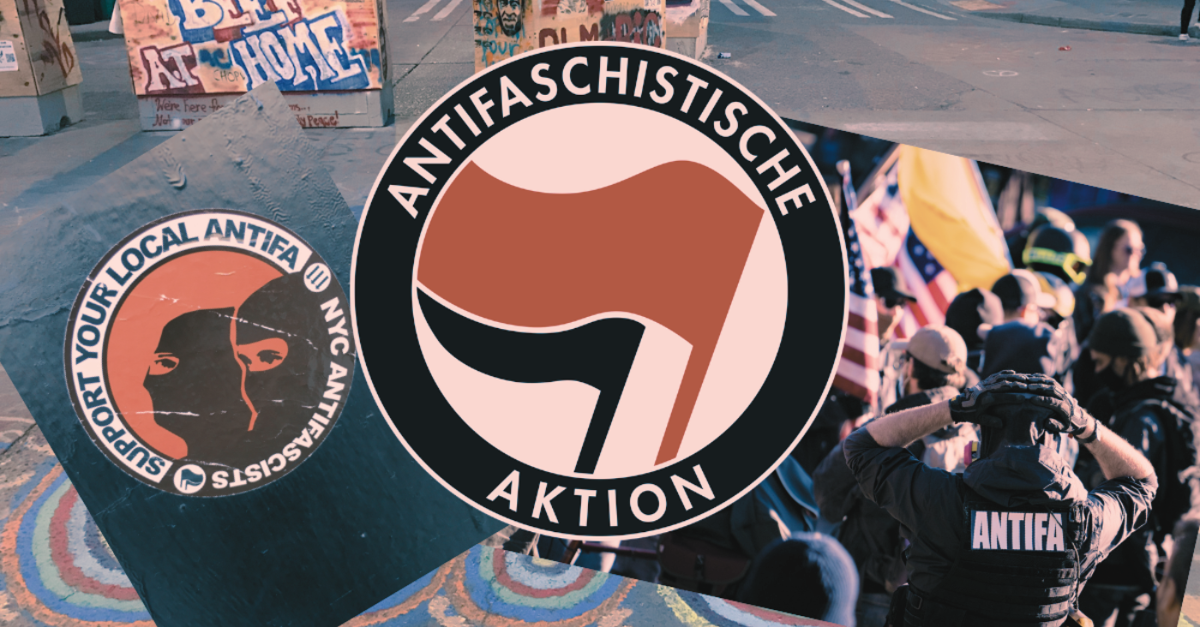
Antifa, short for "anti-fascist," has emerged as one of the most polarizing and controversial movements in recent American political discourse. What began as a loose coalition opposing fascism and white supremacy now represents a broader challenge to law enforcement and political stability due to its increasingly militant tactics and decentralized structure. This movement’s evolution underscores a critical tension in America’s culture wars between maintaining public order and defending civil liberties.
Comprised of autonomous groups with no central command, Antifa’s fluid organization has perplexed officials and civil rights advocates alike. The movement’s stated goal is to oppose fascism, racism, and authoritarianism, but its methods often involve direct confrontations with law enforcement and far-right entities, raising stark questions about violence, accountability, and the boundaries of political protest. With some cells engaging in property destruction and assaults, Antifa has become a focal point for federal counterterrorism efforts.
In a historic move, the Trump administration designated Antifa as a domestic terrorist organization, a decision that thrust the network into the national spotlight and initiated significant legal action against its militant factions. This federal designation broke new ground, challenging existing legal frameworks and sparking vigorous debate about executive authority and constitutional rights. The administration’s subsequent prosecutions aimed to decisively dismantle violent cells amid ongoing questions about how to contain political extremism without undermining free speech.
"Antifa's decentralized violence demands a firm national response to safeguard American order without sacrificing core liberties."
Antifa's Decentralized Nature and Ideological Foundations
Unlike traditional organizations with hierarchical leadership, Antifa operates as a decentralized amalgamation of activists united more by ideology than formal membership. This network structure makes it difficult to identify leaders or coordinate responses effectively. Local groups act independently, often self-radicalizing based on regional dynamics and social media influence. This absence of a centralized command hampers law enforcement's ability to disrupt the entire movement uniformly but also complicates the attribution of violence to the broader cause.
Antifa’s ideological blend centers on anti-fascist principles combined with radical critiques of capitalism, systemic racism, and institutional power. This ideological framework results in varied tactics: some activists focus on community education and nonviolent protest, while others adopt aggressive direct action, including street confrontations and sabotage. The movement's spectrum means that while many participants truly oppose violence, certain elements actively engage in tactics that cross legal boundaries, provoking criminal investigation and public condemnation.
The group's commitment to masked anonymity protects individual activists but also fosters a culture in which violent behavior can flourish without accountability. Critics argue that this environment enables intimidation tactics against political opponents and law enforcement, contributing to the portrayal of Antifa not as a defensive coalition but as an insurgent entity. For conservatives, understanding this structural decentralization is key to framing legal and security responses.
The Trump Administration's Domestic Terrorist Designation
In September 2025, President Donald J. Trump took the unprecedented step of signing an executive order labeling Antifa as a domestic terrorist group. This marked the first time a domestic political movement received such a designation from the White House. The action was based on documented attacks including organized riots, armed standoffs, and assaults on federal officers attributable to Antifa-affiliated militants. The president’s declaration authorized federal agencies to ramp up surveillance, prosecute violent offenders, and disrupt funding networks supporting the movement.
Following the executive order, the Department of Justice intensified investigations leading to significant prosecutions. Notably, a North Texas Antifa cell was dismantled with eight members convicted for violent assaults against an Immigration and Customs Enforcement (ICE) facility. The cell's leader received a 100-year prison sentence for attempted murder of law enforcement officers — a landmark conviction demonstrating the government's seriousness in addressing left-wing militant violence. These actions sent a strong message that the federal government would not tolerate politically motivated violence irrespective of ideological background.
Opponents of the designation challenge its legality, pointing out that existing statutes do not explicitly empower the president to brand domestic groups as terrorist organizations. These legal ambiguities highlight concerns about overreach and potential infringement on First Amendment rights, especially freedoms of speech and association. Critics warn that such sweeping labels risk chilling lawful dissent and may blur the lines between legitimate protest and criminal conduct. They also highlight the broader risk of politicizing terrorism statutes to suppress political opponents.
Nonetheless, advocates of the designation emphasize the necessity of confronting a real and growing threat to public safety. They argue that focusing exclusively on right-wing extremism ignores violent left-wing factions whose tactics have escalated in recent years. The Trump administration’s designation and prosecutions reflect a broader national security strategy: to treat domestic political violence with the same rigor and discipline as terrorism emanating from foreign or radical Islamist groups. This approach signals a shift in law enforcement priorities consistent with protecting communities from all extremist violence.
Implications for Law Enforcement, Civil Liberties, and Political Discourse
The move against Antifa spotlights complex tensions between national security imperatives and safeguarding constitutional liberties. Law enforcement agencies grapple with identifying violent actors amid Antifa’s lack of hierarchical leadership and covert communication. Investigators focus on individuals who commit violent acts or plan terror-related offenses rather than broad crackdowns on ideological groups. This nuanced approach attempts to avoid infringing on peaceful protest and political expression while neutralizing genuine threats.
Legal precedents established by cases like the North Texas Antifa cell prosecution provide templates for future domestic terrorism cases linked to political extremism. Yet these cases also raise concerns from civil liberties advocates about due process and free speech protections. Peaceful demonstrators often fear that mere association, or proximity to Antifa protests, could invite unwarranted scrutiny or prosecution. Conservatives argue the necessity of clear, evidence-based enforcement without casting an overly broad net that chills dissent.
The designation has also intensified cultural debates over political violence and censorship, especially within academic institutions sympathetic to leftist causes. For example, the "Global Antifa" course at CUNY sparked controversy over whether academic freedom is being deployed to promote radical activism rather than neutral scholarship. This blurring complicates efforts to confront violent elements without undermining honest academic inquiry and civil discourse.
At the same time, the discourse around Antifa intersects with concerns regarding federal surveillance and political targeting. Conservative voices highlight cases such as a Seattle FBI investigation into a conservative CEO accused of being "anti-Biden," illustrating fears of politically motivated probes that suppress conservative viewpoints. These developments underline broader mistrust among right-leaning Americans toward perceived partisan bias in federal law enforcement, fueling demands for transparency and reform.
The Broader Battle Against Left-Wing Extremism in America
Antifa represents a critical component of a wider left-wing extremist landscape presenting challenges across the United States. The Trump administration’s assertive posture aims to contain these militant groups to protect not only law enforcement and civilians but also mainstream political movements rooted in patriotism and constitutional governance. Some experts warn that failure to act decisively could embolden extremist factions intent on disrupting public order and undermining democratic institutions.
Conservative policymakers advocate for vigorous enforcement that extends beyond street-level militants to include far-left tech collectives providing material support and digital infrastructure. The administration’s sanctions against such technology groups illustrate recognition that combating extremism requires dismantling support frameworks as well as prosecuting violent actors. This broad approach seeks to choke off channels that enable recruitment, coordination, and funding for domestic terror activities.
The sustained rhetoric from conservative leaders underlines the stakes: the potential for Antifa and associated factions to supplant lawful political opposition with chaotic insurgency. Calls for former leaders like Trump to continue this battle reflect anxiety over the fragility of America’s political institutions amid increasing left-wing militancy. Meanwhile, left-leaning media and activists frequently downplay Antifa’s violence, framing it as mere protest rather than terrorism. Conservatives urge sober acknowledgment and a balanced yet firm response.
Looking ahead, the contest over Antifa and left-wing extremism will remain a defining issue in America’s political and legal landscape. The ongoing investigations, prosecutions, and policy debates highlight the challenge of addressing domestic terrorism that is rooted in competing visions for the nation's future. Success in this arena will require an unwavering commitment to the rule of law alongside strict protection of constitutionally enshrined liberties.
Navigating the Future: Balancing Security and Liberty
Finding the appropriate balance between enforcement and rights protection stands as a paramount priority for policymakers confronting Antifa’s threat. While the violent tactics of some militants are undeniable and must be addressed through criminal prosecution, indiscriminate or expansive measures jeopardizing lawful political activism undermine democratic principles. Conservative analyses promote targeting violent offenders specifically and avoiding guilt by association to preserve constitutional freedoms.
At the same time, efforts to identify and sanction entities providing material and logistical support to Antifa’s militant wings are crucial. This includes monitoring online platforms and tech collectives implicated in extremist organizing and financing, as seen in federal sanctions against far-left tech groups. Proper regulation and oversight must be matched with safeguards that prevent government overreach and maintain political neutrality in law enforcement.
Media and public education also play vital roles in clarifying the nature of the Antifa threat, emphasizing evidence over partisan distortion. Our coverage of the Department of Justice's terrorism prosecutions and the Trump administration’s targeted sanctions contributes to public understanding, holding all actors accountable. This transparency is essential for fostering informed debate and crafting balanced policies that respond effectively without surrendering freedoms.
Ultimately, a nuanced, principled approach that recognizes Antifa's ideological roots, decentralized structure, and violent tactics enables America to secure its citizens and institutions. The struggle against political extremism of any stripe must not come at the expense of the core values that define this nation. As the federal government and citizens weigh responses, the goal remains clear: preserve the constitutional republic by confronting lawlessness while upholding liberty.
For more about the DOJ's terrorism prosecutions and Antifa’s legal challenges, see our detailed coverage of terrorism charges against militant Antifa cells and the Trump administration’s sanctions on far-left tech groups.
To understand the political implications and broader conservative response, read how Trump must address Antifa terrorist networks and the executive designation of Antifa as terrorists.
Frequently asked questions
What does Antifa stand for?
Antifa stands for 'anti-fascist.' It is a decentralized movement opposing fascism, racism, and far-right ideologies.
Why was Antifa designated a domestic terrorist organization?
In 2025, the Trump administration designated Antifa as a domestic terrorist organization due to documented violent actions like riots, armed standoffs, and assaults on law enforcement.
Is it legal for the president to designate domestic groups as terrorist organizations?
This designation is controversial; critics argue the president lacks legal authority under current U.S. law to label domestic groups as terrorists, raising constitutional concerns.
How has the DOJ acted against Antifa since the designation?
The DOJ has brought terrorism charges against militant Antifa cells and successfully prosecuted members involved in violent attacks.
Does Antifa have a centralized leadership structure?
No, Antifa is decentralized with autonomous cells and activists acting independently without formal leadership.
Are all Antifa activists violent?
No, many engage in nonviolent protest and community organizing, but some factions have used violence and property destruction.
How does the Antifa designation affect civil liberties?
There are concerns it could suppress legitimate dissent and free speech if peaceful activists are unfairly targeted under anti-terror laws.
Timeline of our coverage
- 2026-08-28 — Trump Administration Sanctions Far-Left Tech Collective Supporting Extremist Groups
- 2025-11-12 — Trump Must Crush The Left's Antifa-Led Terror Network Or It Will Crush His Movement
- 2025-10-29 — Seattle FBI Probed Conservative CEO For Being 'Anti-Biden'
- 2025-10-16 — DOJ Brings Terrorism Charges Against 'Militant' Antifa Cell
- 2025-10-03 — DOJ Launches Investigation into Portland Police Practices Amid Antifa Protests
- 2025-10-03 — Portland Police Arrest Journalist Amid Protests, Prompting Investigation
- 2025-10-03 — Concerns Grow Over Political Violence and Censorship on the Left
- 2025-10-03 — Antifa's Historical Roots and Modern Actions Raise Concerns
- 2025-10-01 — This Legal Org Protects Antifa Terrorist Cells From Prosecution
- 2025-10-01 — CUNY's 'Global Antifa' Course Raises Concerns Over Academic Freedom and Activism
- 2025-09-29 — Brennan Questions Antifa Designation on Face the Nation
- 2025-09-25 — The Time For Talk Is Over, Trump Needs To Crush Antifa Now
- 2025-09-24 — Trump Designates Antifa as Domestic Terrorist Organization Amid Protests in Oregon
- 2025-09-22 — How To Take Down The Terrorist Left
- 2025-09-19 — The Economist Cites Study by Researcher with Antifa Ties Amid Violence Debate
- 2025-09-18 — Trump Announces Designation of Antifa as Terrorist Organization
- 2025-09-16 — Antifa Is Responsible For Charlie Kirk's Assassination
- 2025-09-13 — Charlie Kirk's Suspected Killer Didn't 'Act Alone'
The Bottom Line
- Antifa's actions directly challenge public safety and the rule of law in America.
- The designation as a domestic terrorist group sets a precedent for addressing violent political extremism.
- Balancing security with constitutional rights remains a complex and urgent national issue.
- Understanding Antifa's structure clarifies law enforcement and legal strategies to combat extremism.

Sources
- Designating Antifa as a Domestic Terrorist Organization
- Leader of Antifa Cell Members in North Texas Sentenced to 100 Years in Prison for Terrorist Attack on ICE Facility
- Trump Administration Delivers Another Crushing Blow to Antifa Terrorist Network
- Fact Sheet: President Donald J. Trump Designates Antifa as a Domestic Terrorist Organization
- En.wikipedia.org: Antifa 28United States 29
- Axios.com: Trump Antifa Terrorism Order (Sep 23, 2025)
- Axios.com: Prosecutors Charge 15 Minnesota Ice Demonstrators (Jun 16, 2026)
- Axios.com: Antifa Terrorism Charges Texas Ice Facility Attack (Oct 16, 2025)