Federal Funding in America: Navigating Priorities, Politics, and Policy Impact
Explore how federal funding shapes healthcare, technology, and education amid political battles and shifting priorities in America’s governance.
Additional reporting by Oliver Brown, Samira Brooks
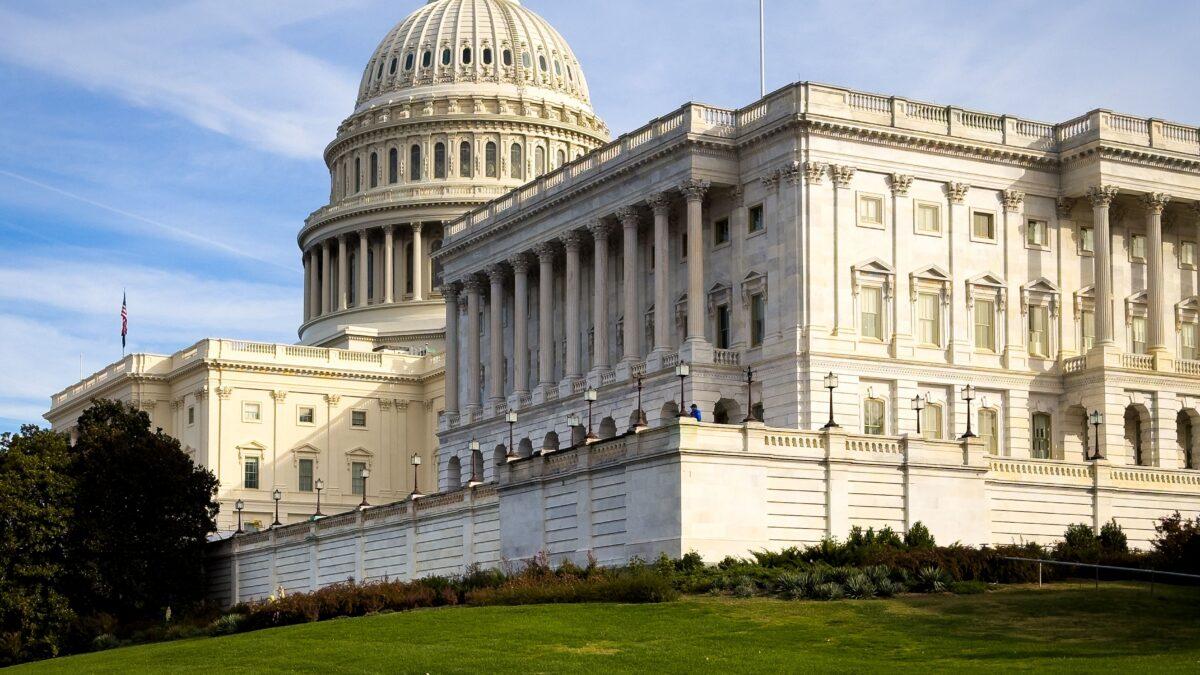
Federal funding forms the backbone of numerous public programs and initiatives across the United States, underpinning critical sectors such as healthcare, education, infrastructure, and law enforcement. Disbursed through Congress-approved appropriations and executive actions, these vast sums influence state policies and day-to-day governance at every level, often dictating priorities and practices in significant ways. Yet, federal funding is far from a neutral conduit; it embodies the priorities and ideological battles of elected leaders and bureaucrats, shaping outcomes in contentious social, economic, and technological arenas.
In recent years, federal funding allocations have mirrored the nation’s heated policy debates—ranging from expanding social welfare programs to regulating cutting-edge technologies—often reflecting deep partisan divides. Conservatives emphasize the need for fiscal discipline, local autonomy, and protections for parental rights, pushing back against what they see as federal overreach masked as social progressivism. Progressives advocate for broader federal action to drive social equity and innovation. Understanding the mechanics and implications of federal funding, especially from a conservative viewpoint, is essential to grasp the ongoing policy struggles that define American governance today.
Federal Funding and Social Policy Enforcement
"Federal funding is less a neutral resource and more a battleground where ideological control and taxpayer accountability collide."
A central arena for funding battles lies in the federal government’s use of money as leverage over state and local social policies. Federal grants, Medicaid reimbursements, and education funds often come with conditions that states must meet, intertwining fiscal policy with ideological aims. Conservatives have raised alarms over federal directives attached to funds that conflict with parental rights or traditional values, such as mandates involving gender identity issues in schools or medical treatments for minors.
For example, the recent GOP bill seeks to block federal funds for states penalizing parents in gender identity disputes underscores parental sovereignty as a red line for many conservatives. The law hints at a growing conservative resistance to federal funding conditions perceived as hostile to family authority and state discretion. This resistance is not merely cultural but reflects a broader constitutional concern about the federal intrusion into traditional spheres of parental and local control.
Likewise, healthcare funding signals significant ideological conflict. The Centers for Medicare & Medicaid Services’ move to end Medicaid and CHIP funding for pediatric gender procedures resonated particularly with conservative groups advocating protection of childhood and parental roles from what they view as irreversible and experimental interventions. Here, federal funds do more than pay bills—they become a checkpoint enforcing certain medical ethics and policies. This efficacy, however, also draws critique about using fiscal inducements to compel policy uniformity across diverse states, highlighting debates over federalism and consent.
Federal funding as a policy instrument thus embodies an intrinsic tension: it both guarantees minimum standards nationwide (e.g., civil rights, child welfare) and risks becoming a tool for federal overreach that overrides local preferences and parental authority. From a conservative lens, safeguarding that balance means resisting funding conditions that force cultural or social agendas on communities and families.
Federal Funding’s Role in Emerging Technology Oversight
Another growing sphere of conflict is the allocation of federal funds toward emerging technologies, notably artificial intelligence (AI) and surveillance systems. The rapid expansion of AI applications offers tremendous opportunities but also raises concerns about privacy, civil liberties, and government overreach. Federal funding and regulatory frameworks thus play a critical role in setting boundaries.
The Biden administration’s Executive Order 14110, issued in late 2023, sought to establish a federal strategy for developing AI in a “safe and trustworthy” manner. The order aims to balance encouraging innovation with protecting society from potential harms. Conservatives, while not opposed to innovation, remain cautious about expansive public funding supporting technologies that could erode individual freedoms or pave the way for intrusive surveillance.
Reflecting bipartisan unease, the recently introduced “Flock-Off Act” seeks to block federal funding for specific AI-enabled surveillance tools including automated license plate readers and biometric cameras. The bill articulates concerns that federal dollars should not subsidize systems that amplify governmental monitoring capabilities beyond reasonable limits. This initiative underscores a conservative priority: federal funding must neither enable nor normalize surveillance states threatening constitutional safeguards on privacy and free association.
These contested funding decisions reveal the broader challenge of managing rapid technological change within our constitutional order. Conservatives emphasize the need for prudent, narrowly targeted federal investments that preserve personal liberties and state autonomy rather than broad subsidization of unchecked AI applications.
Infrastructure and Public Spending Priorities
Federal infrastructure grants represent some of the most concrete examples of how taxpayer funds directly impact American communities. Yet, the politics of these allocations is fraught with ideological disputes that reveal wider battles over federal spending priorities.
Conservative lawmakers have criticized the infusion of funds into projects coupled with ideological strings such as Diversity, Equity, and Inclusion (DEI) programs. A widely noted instance involves Rep. Duffy’s effort to redirect $1.73 billion in transportation grants away from DEI-related projects, exemplifying a conservative push to keep federal dollars focused on tangible infrastructure improvements rather than progressive social engineering.
Such redirecting efforts also come with political leverage. For example, threats to pull $75 million in road funding from Pennsylvania illustrate how federal funds can be wielded to enforce compliance or punish deviations from preferred policies. These maneuvers represent both the power and pitfalls inherent in federal funding—it enables critical infrastructure development but often at the cost of local autonomy and priorities.
Consequently, conservatives advocate for using federal spending tightly and responsibly to enhance essential public services without becoming a vehicle for partisan agendas. Ensuring that infrastructure funding respects fiscal discipline and local input remains a core conservative principle, seeking to maximize benefits without ideological strings attached.
Healthcare Funding and Federal Influence
Healthcare stands as one of the largest categories of federal funding, especially through programs like Medicaid, CHIP, and Medicare. These allocations carry heavy political and cultural weight, often clashing with conservative values related to family, immigration, and government scope.
The [Consolidated Appropriations Act of 2023] provided hundreds of millions of dollars annually to support programs such as the Money Follows the Person demonstration, maternal and child health initiatives, and community-based care transitions. While these efforts address vital health needs, they frequently spark debates on the appropriate role and limits of federal influence in health delivery.
Conservatives have voiced concern that Medicaid and CHIP funding sometimes overstep, particularly when it pays for services that contradict family-centered values or extend benefits to undocumented immigrants. The controversy over federal funds being allocated to undocumented immigrants exemplifies worries over taxpayer burdens and the integrity of lawful immigration policy. From this perspective, unchecked growth in federally funded healthcare risks undermining both fiscal sustainability and moral clarity.
The healthcare funding arena thus stands as a persistent front where conservatives seek to limit federal overreach, reinforce state discretion, and promote programs aligned with family values and constitutional governance. It underscores the broader imperative to scrutinize federal funds not merely for quantity, but for the cultural and ethical implications of their allocation.
Education Funding and Guardrails on Federal Influence
Education is another sector heavily impacted by federal funding’s conditional presence. Federal dollars come with strings that shape curricula, policies, and educational standards, sparking conservative concerns about local control and parental rights.
For instance, moves by the U.S. Department of Education to limit funding for low-return college programs reflect growing conservative demands for fiscal responsibility and practical education outcomes. Conservatives advocate that federal funds incentivize programs preparing students for real economic success rather than inefficient or ideologically driven initiatives.
In addition to academics, cultural issues play a significant role. Several school districts, including five Virginia schools threatened with federal funding cuts over transgender policies, illustrate how federal funding is used to influence local policies on gender identity. These cases raise profound questions about parental rights to oversee their child’s education and the limits of federal intervention in classroom matters.
Conservatives champion a vision where federal funding respects local governance, empowers parents, and aligns with traditional values while ensuring responsible stewardship of public monies. This approach underscores the ongoing drive to rein in what is perceived as federal overreach in shaping education beyond agreed constitutional roles.
The Pro-Life Movement and Federal Funding Controversies
Federal funding of organizations involved in abortion services remains a focal point of conservative activism. The expiration of Congress’s ban on federal funding for Planned Parenthood sparked immediate political backlash and protests from pro-life advocates who view taxpayer money supporting abortion providers as morally objectionable.
Despite the renewal of funds to Planned Parenthood, as covered in our report on renewed federal funding, the episode illustrates the deeply held conservative conviction that federal spending must reflect respect for life and uphold constitutional principles. The persistent efforts to block funding are not just about policy but about insisting that public dollars do not support practices opposed by a large portion of the American populace.
This funding conflict highlights how federal expenditures become a proxy for national moral debates, reinforcing the conservative argument that fiscal choices must involve ethical considerations and reflect community standards and constitutional protections.
Federal Funding As Political Leverage: Balancing Authority and Autonomy
A persistent theme in federal funding discourse is the tension between federal authority and state or local autonomy. The federal government’s enormous fiscal power often translates into political leverage, compelling compliance through conditional funding or threats to withhold money.
Frequent controversies arise when federal funds are redirected, threatened to be cut, or saddled with politically charged conditions—whether related to DEI programs, education, or social welfare rules. These dynamics create a battleground over the reach of federal power, with conservatives frequently warning that such use of federal funds infringes upon the federalism established by the Constitution.
These challenges are not merely about money but about the philosophical question of governance in a diverse and decentralized union. Conservatives advocate a restrained federal role where funding supports key national functions without imposing cultural mandates or political ideology on states and communities.
The struggle over funding conditions thus crystallizes the broader conservative principle of limiting federal reach to preserve local self-determination and protect constitutional boundaries.
Federal funding is less a neutral resource and more a battleground where ideological control and taxpayer accountability collide.
Conclusion: The Future of Federal Funding Debates
Federal funding remains an endlessly complex and politically charged mechanism, shaping the character and direction of American public policy. Conservatives see in it both an opportunity to defend constitutional principles and family values and a challenge to combat the expansion of federal scope beyond rightful limits.
By scrutinizing federal appropriations through the lens of fiscal responsibility, parental rights, and individual liberties, conservatives strive to recalibrate funding priorities consistent with the Founders’ vision of restrained governance. Meanwhile, the evolving landscape of technology, healthcare, education, and social policy will keep federal funding at the center of ideological conflict and political strategy.
Understanding these forces—and the specific cases where federal funds influence local lives—empowers citizens who seek to hold their government accountable for spending that respects both taxpayer interests and constitutional freedoms. For more on how state and federal authorities are clashing over funding priorities, see how transportation grants were redirected away from DEI projects or how the federal government plans to expand border patrol infrastructure.
Ultimately, vigilance and engagement around federal funding decisions will remain crucial for conservatives striving to ensure taxpayer money supports policies aligned with American values and constitutional limits.
Frequently asked questions
What is federal funding and how does it influence states?
Federal funding consists of money allocated by the U.S. government to support programs across states and localities, often with conditions that can influence state policy decisions.
Why do conservatives often oppose certain federal funding conditions?
Conservatives argue that conditional funding can become federal overreach, infringing on state rights, parental authority, and fiscal responsibility.
How has federal funding impacted healthcare policies recently?
Federal funds support Medicaid, CHIP, and other programs, but debates exist over funding controversial procedures, including gender transition treatments for minors.
What role does federal funding play in technology oversight?
Funding decisions affect the development and use of AI and surveillance technologies, raising concerns about privacy and civil liberties.
How are federal funds used in education, and why is this contentious?
Funds often come with mandates affecting curriculum and policies, especially around gender identity, causing pushback from conservatives who defend parental control and local governance.
What is the significance of blocking federal funds for certain programs or states?
Blocking or redirecting funds is a political tool to enforce compliance with federal priorities or to protest policies deemed inappropriate by some lawmakers.
How does federal funding intersect with social issues like abortion?
Funding decisions about organizations such as Planned Parenthood ignite debate over whether taxpayer money should support abortion services.
Timeline of our coverage
- 2026-10-04 — GOP Bill Seeks to Block Federal Funds for States Penalizing Parents Over Gender Identity Disputes
- 2026-09-26 — Federal Government Plans Three New Border Patrol Stations, Two Checkpoints in Arizona
- 2026-09-08 — Bipartisan Bill Seeks to Block Federal Funding for AI Surveillance Cameras
- 2026-08-12 — CMS Ends Medicaid, CHIP Funding for Pediatric Gender Procedures
- 2026-08-01 — PBS and NPR Remain Operational After Federal Funding Cut, Rely on Surge in Private Donations
- 2026-07-21 — Planned Parenthood Regains Federal Funding After Congressional Ban Expires
- 2026-07-20 — Pro-Life Groups Protest Resumed Federal Funding for Planned Parenthood
- 2026-07-12 — Duffy Redirects $1.73 Billion in Transportation Grants Away From DEI Projects
- 2026-04-17 — U.S. Education Department Proposes Rule to Limit Federal Funding for Low-Return College Programs
- 2025-11-20 — Duffy Threatens To Pull $75M In Road Funds For Pennsylvania
- 2025-10-31 — Five States and D.C. Allocated $1.4 Billion in Federal Medicaid Funds to Undocumented Immigrants
- 2025-10-14 — Blue States Lack Evidence in Birthright Citizenship Lawsuit Against Trump Administration
- 2025-09-04 — Judge Blocks Trump Administration's Funding Freeze on Harvard University
- 2025-08-20 — Five Virginia School Districts Face Federal Funding Cuts Over Transgender Policies
- 2025-08-20 — Red State Institutions Are As Left-Wing As Their Blue Counterparts
- 2025-08-13 — D.C. Circuit Court Affirms Trump’s Authority Over USAID Funding
The Bottom Line
- Federal funding decisions shape critical social, technological, and infrastructure policies nationwide.
- Federal funds often influence state and local policies, raising questions of federal overreach versus local autonomy.
- Conservatives see funding as a tool to defend parental rights, fiscal responsibility, and constitutional governance.
- Emerging technologies and healthcare funding have become flashpoints in debates over privacy and moral values.



Sources
- Executive Order 14110—Safe, Secure, and Trustworthy Development and Use of Artificial Intelligence
- Federal Appropriations, Fiscal Year 2023
- Congress.gov
- Ccf.georgetown.edu: Consolidated Appropriations Act 2023 Medicaid And Chip Provisions Explained (Jan 05, 2023)
- Aha.org: 2023 02 28 Maternal And Child Health Provisions Enacted Fy 2023 Omnibus Appropriations Package
- Police1.com: Bipartisan Flock Off Act Would Block Federal Funding For Alpr Systems
- Insideprivacy.com: U S Tech Legislative Regulatory Update Third Quarter 2023
- Ccf.georgetown.edu: House Passes Bipartisan Medicaid And Chip Behavioral Health Provisions Senate Committees Act Heres A Breakdown (Dec 18, 2023)
- Ccf.georgetown.edu: New Brief Where Things Stand On The Medicaid And Chip Provisions Of The Bipartisan Safer Communities Act (Aug 23, 2023)
- Everycrsreport.com: R47821
- En.wikipedia.org: National Defense Authorization Act For Fiscal Year 2023