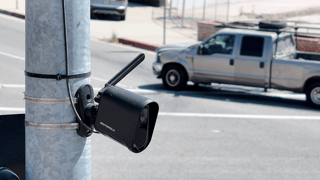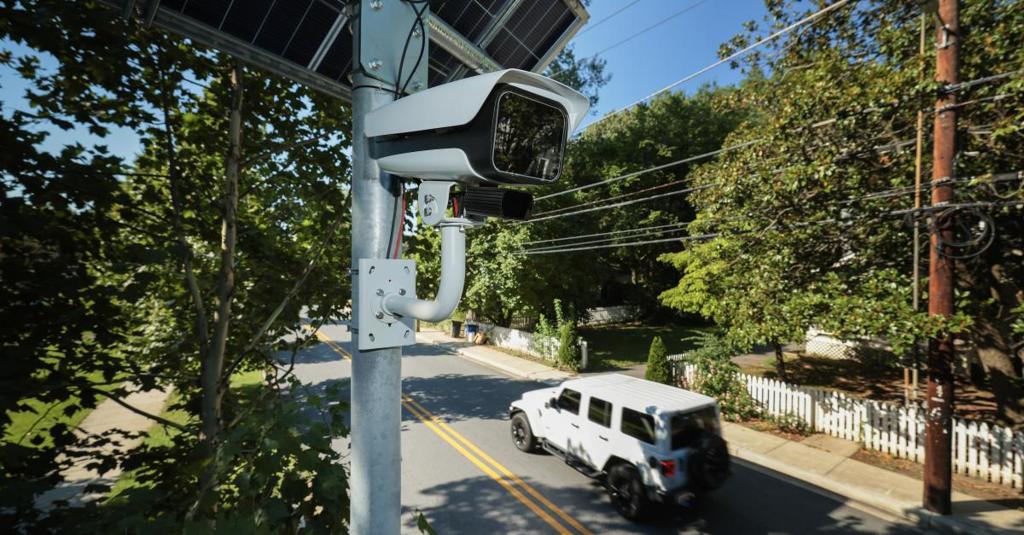
A bipartisan group of U.S. House lawmakers has introduced the FLOCK OFF Act, a bill designed to prevent state and local governments from using federal funds to purchase, operate, or maintain artificial intelligence-powered surveillance cameras. These systems include those equipped with automated license plate recognition (ALPR) and biometric data collection features, which have become increasingly common in communities across the country.
Explainer Understanding Public Safety Trends: Crime Declines and Rising Challenges for Law Enforcement
The introduction of the FLOCK OFF Act comes at a time of heightened debate over the proliferation of surveillance technology. Lawmakers and privacy advocates have raised concerns about government overreach, the erosion of civil liberties, and the use of taxpayer dollars to monitor law-abiding citizens. The bill is cosponsored by Representatives Thomas Massie (R-Ky.) and Eric Burlison (R-Mo.), who have both voiced strong opposition to the expansion of surveillance infrastructure funded by federal grants.
The legislation specifically targets camera systems produced by companies such as Flock Safety, Axon Enterprise, and Motorola Solutions. According to independent mapping by Finding Flock, as of September 2026, nearly 140,000 ALPR cameras have been documented across the United States. Flock Safety hardware alone accounts for over 80% of those identified, highlighting the company’s significant presence in the market.
Bill Provisions and Exceptions
Under the FLOCK OFF Act, any government agency or entity that receives federal funds would be prohibited from using that money—either directly or indirectly—to acquire, install, operate, or maintain covered camera systems. The bill also seeks to prevent the renewal of contracts or the reimbursement of third parties for the use of such technology. This means that both government agencies and surveillance technology providers currently benefiting from taxpayer funds would be required to remove and cease operating these cameras within 180 days of the bill’s enactment.
Despite its broad restrictions, the bill does include certain exceptions. The U.S. Border Patrol would be permitted to use these cameras within one mile of the northern or southern border for border security purposes. Additionally, the legislation allows for the continued use of surveillance cameras as part of toll collection systems, which are considered essential for transportation infrastructure rather than general surveillance.
Lawmakers Cite Privacy Concerns
Supporters of the bill have emphasized the importance of protecting Americans’ constitutional rights, particularly the right to privacy. Rep. Massie argued that federal grants should not be used to support what he described as a “surveillance state.” He stated, “The federal government shouldn’t provide ‘security’ grants to cities and police departments that have gone beyond the pale and turned their communities into a version of 1984.”
Rep. Burlison echoed these concerns, highlighting the potential for abuse and the need to safeguard civil liberties:
"The Fourth Amendment protects Americans from unreasonable searches, and advances in surveillance technology should not come at the expense of our privacy and liberty. The federal government should not use taxpayer dollars to build a surveillance state that tracks law-abiding Americans. Our rights are unalienable, and Congress has a responsibility to protect them."
— Eric Burlison, U.S. Representative (R-Mo.)
Privacy advocates and critics of surveillance technology have pointed to documented cases in which these cameras have been used to harass or stalk individuals. There are also concerns that the federal government can purchase data collected by private companies, raising constitutional questions about the outsourcing of surveillance and the potential circumvention of legal protections.
Industry Growth and Lobbying Efforts
The use of ALPR cameras has grown rapidly in recent years. According to Finding Flock, there has been a nearly fivefold increase in mapped cameras over the past year alone. This surge reflects both the growing demand for surveillance technology and the aggressive expansion strategies of companies in the sector.
Flock Safety, one of the leading providers of these systems, has invested heavily in lobbying efforts. Since 2025, the company has spent $2 million on federal and state lobbying, according to an analysis by OpenSecrets. This spending underscores the high stakes involved as lawmakers consider new regulations that could impact the industry’s business model and future growth.
Supporters of surveillance cameras, including some law enforcement agencies, argue that the technology is a valuable tool for public safety and crime prevention. They contend that ALPR systems and AI-powered cameras can help solve crimes, recover stolen vehicles, and enhance community security. However, as of the publication of this article, industry representatives have not publicly responded to the proposed legislation or addressed the specific concerns raised by lawmakers and privacy advocates.
Broader Debate Over Surveillance
The rapid expansion of AI-powered surveillance cameras has fueled a national debate over the appropriate balance between security and privacy. Lawmakers behind the FLOCK OFF Act say their proposal is intended to protect constitutional rights as technology evolves and becomes more deeply integrated into daily life. They argue that without clear limits, the unchecked spread of surveillance technology could undermine fundamental freedoms.
The progress of the FLOCK OFF Act will be closely watched by privacy advocates, law enforcement agencies, technology companies, and members of the public. The outcome of this legislative effort could set important precedents for how surveillance technology is funded and regulated in the United States, and may influence similar debates at the state and local level.
As the conversation continues, the central question remains: how should society balance the benefits of advanced security technology with the need to protect individual privacy and civil liberties? The answer may shape the future of surveillance policy for years to come.