A group of U.S. senators and several media organizations have filed amicus briefs urging the Supreme Court to review journalist Catherine Herridge’s appeal to protect her confidential sources, as scrutiny intensifies over national security reporting and the recent Nvidia espionage investigation.
Explainer Understanding the Supreme Court’s Impact on Law and Liberty
The case highlights the tension between privacy laws and press freedom, with lawmakers warning that forcing journalists to reveal sources could chill whistleblower disclosures vital to congressional oversight.
The push comes as Nvidia CEO Jensen Huang faces an internal probe and congressional interest following reports of his relationship with Alice Huang, an executive described by the New York Times as a Chinese intelligence asset. Two House committees have requested Huang brief them on his interactions with Alice Huang and Nvidia’s security protocols. Nvidia’s board has launched an independent investigation, and Huang has publicly admitted to an extramarital affair and apologized for his conduct.
Herridge’s Legal Battle
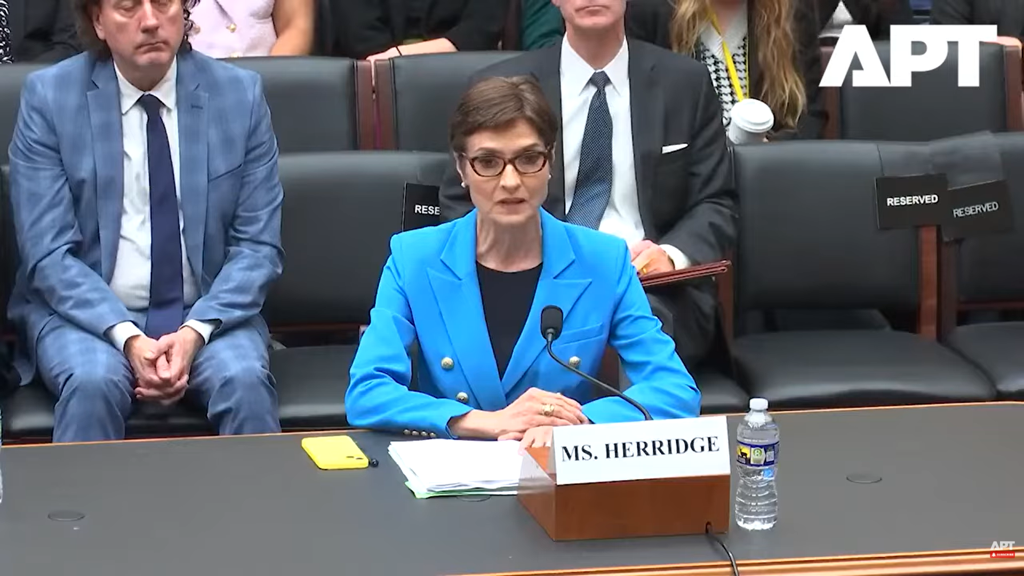
Catherine Herridge, formerly Fox News’ Chief Intelligence Correspondent, is at the center of a legal dispute stemming from her reporting on Yanping Chen, who ran the University of Management and Technology (UMT) in Virginia. Herridge’s stories drew on an FBI counterintelligence probe into Chen, including details from a public search warrant affidavit and interviews with a former UMT employee and an expert on the Chinese military. The reports alleged Chen had lied on immigration forms about her military background and included images of Chen in a Chinese PLA uniform.
Following the Fox News coverage, the Department of Defense suspended tuition payments to UMT on national security grounds. Chen filed a Privacy Act lawsuit against several federal agencies, alleging that leaks of her records to Fox News caused financial harm by prompting the DoD action. Although Herridge was not a defendant, Chen subpoenaed her to identify the source of leaked documents and photographs.
Herridge refused to reveal her sources during a court-ordered deposition. U.S. District Judge Christopher Cooper held her in civil contempt, imposing an $800-per-day fine, later stayed pending appeal. The D.C. Circuit upheld the contempt order, and the Supreme Court declined to pause the fines, which Herridge paid until further proceedings were put on hold.
Senators and Media Groups Intervene
On Friday, Sens. Ted Cruz, Mike Lee, and Cynthia Lummis filed an amicus brief with the Supreme Court, arguing that the lower courts failed to consider the national security implications of compelling Herridge to disclose her sources. The senators warned that such rulings could deter whistleblowers from coming forward, undermining congressional oversight of the executive branch. Their brief emphasized, “Congress’s oversight of the Executive Branch depends in part on the press.”
"A rule that lets any investigation’s subject unmask those sources through civil discovery will dry up that reporting, and with it impede Congress’s critical oversight of executive agencies."
— Sens. Cruz, Lee, and Lummis, amicus brief
Several media organizations also submitted briefs supporting Herridge, stressing the importance of source confidentiality to investigative journalism. Herridge’s Supreme Court petition argues that lower courts have inconsistent standards for when journalists can be compelled to reveal sources, and that the high court has not addressed the issue in over fifty years, and then only in the criminal context.
National Security and Privacy Act Concerns
The senators’ brief, available via the Supreme Court docket, specifically cited the Nvidia case as an example of why source protection matters. They noted that if the current precedent stands, subjects of national security investigations could use the Privacy Act to force journalists to reveal government sources, potentially deterring future disclosures.
While the Privacy Act generally protects only U.S. citizens and lawful permanent residents, and Alice Huang is not a U.S. citizen, the senators argued that the principle at stake could affect future cases involving national security reporting. The Supreme Court has not yet indicated whether it will grant review of Herridge’s petition.
Supporters of the court’s current approach argue that the Privacy Act provides necessary safeguards for individuals’ personal information and that courts must balance privacy rights with press freedom. No response from the Department of Justice or the agencies involved was included in the available filings.
The next step is for the Supreme Court to decide whether to hear Herridge’s appeal, a decision that could set a new standard for reporter-source confidentiality in civil cases.