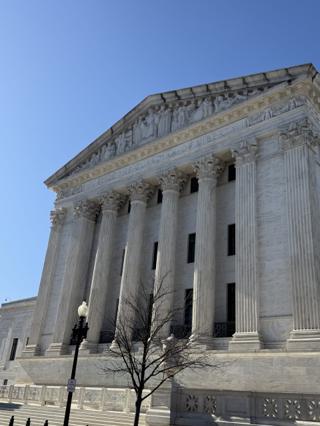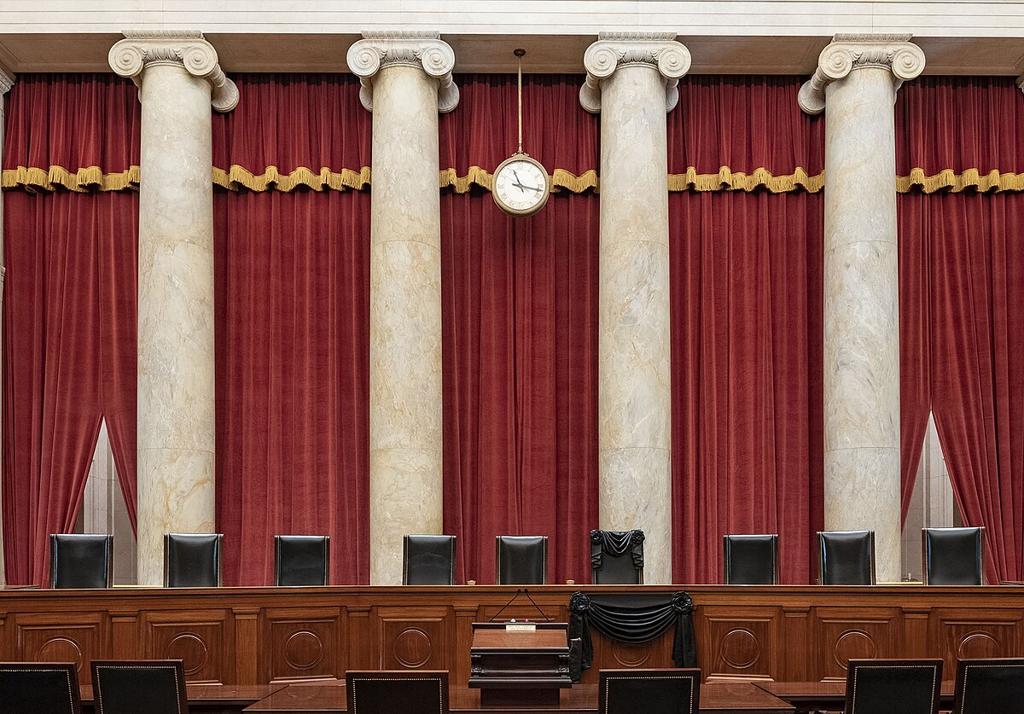
The U.S. Supreme Court expressed skepticism regarding President Trump's use of emergency tariffs during oral arguments in two significant cases on Wednesday. The cases, Learning Resources, Inc. v. Trump and Trump v. V.O.S. Selections, Inc., challenge the legality of tariffs imposed under the International Emergency Economic Powers Act (IEEPA). This act allows the president to address threats to national security or the economy by declaring a national emergency.
During the proceedings, U.S. Solicitor General John Sauer defended the administration's position, arguing that the IEEPA grants the president broad authority to enact tariffs. However, justices from both sides of the ideological spectrum raised concerns about this interpretation. Chief Justice John Roberts noted that the IEEPA had "never before been used to justify tariffs," emphasizing that the power to impose taxes traditionally resides with Congress.
Justice Elena Kagan questioned Sauer's assertion that tariffs could be viewed as regulatory measures rather than taxes. She stated, "One would naturally think that tariffs constitute a power to impose taxes, the power to regulate foreign commerce," suggesting that these powers are not inherent to the presidency.
Sauer contended that the administration's tariffs are regulatory in nature, arguing, "These are regulatory tariffs. They are not revenue-raising tariffs. The fact that they raise revenue is only incidental." However, Kagan and Justice Sonia Sotomayor countered this claim, with Sotomayor asserting that tariffs are indeed a form of taxation, which should fall under congressional authority.
Justice Ketanji Brown Jackson expressed skepticism about the IEEPA's intent, suggesting it was designed to limit presidential power. She challenged Sauer on how the government's argument could withstand that assumption, highlighting the tension between executive authority and legislative power.
Roberts further explored the implications of the major questions doctrine, which could affect the administration's argument. He remarked, "It seems it might be directly applicable," indicating that the court may be inclined to scrutinize the president's authority in this context.
Justice Neil Gorsuch raised a hypothetical scenario, questioning whether the president could impose a significant tariff on gas-powered cars under the same rationale. Sauer acknowledged that such a move could be possible, stating, "This administration would say that’s a hoax, it’s not a real crisis … but that’d be a question for Congress under our interpretation, not the courts."
The justices' inquiries suggest a cautious approach to the administration's claims, with several justices emphasizing the importance of congressional authority in matters of taxation and tariffs. A ruling on these cases is not expected until later in the court's 2025-2026 term.