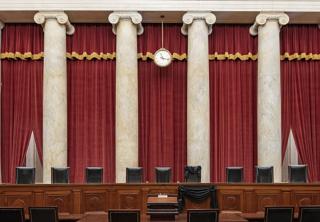
The Supreme Court is currently deliberating on the extent of presidential authority under the International Emergency Economic Powers Act (IEEPA), particularly regarding the imposition of tariffs. This case raises critical questions about whether tariffs can be considered a legitimate tool for regulating imports during national emergencies.
Legal Arguments on Tariffs and IEEPA
The plaintiffs argue that the IEEPA does not explicitly authorize tariffs, despite its provision allowing the president to 'regulate ... importation' of property during emergencies. Solicitor General John Sauer countered this assertion by referencing the court's ruling in Soto v. United States (2025), which clarified that Congress does not need to use specific terms to delegate powers. Instead, the context and purpose of the legislation are paramount.
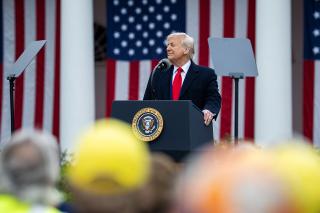
"Without tariffs, the U.S. would be at a disadvantage in global trade."
— Donald Trump, former President
During oral arguments, the government posed a pivotal question: if a president can prohibit all imports, how can they not impose even a minimal tariff? The government maintains that 'regulate ... importation' naturally includes tariffs, which have historically been recognized as a fundamental means of controlling imports since the founding of the United States.
Sauer's arguments drew upon Chief Justice John Marshall's reasoning in Gibbons v. Ogden (1824), which acknowledged that duties are often imposed for the regulation of commerce. Under IEEPA, the president's powers include the authority to prohibit imports in emergencies, suggesting that if the president can ban trade entirely, they should also have the authority to moderate it through tariffs.
Historical Precedents and Economic Implications
The legal debate is underscored by historical precedent. In Federal Energy Administration v. Algonquin SNG (1976), the court interpreted 'adjust imports' in the Trade Expansion Act to include duties and license fees, reinforcing the notion that tariffs are tools for adjusting trade behavior rather than merely revenue-generating measures. Both sides in the current case acknowledge that IEEPA allows for various unlisted instruments, with the dispute centering on whether tariffs qualify.
The plaintiffs concede that IEEPA permits embargoes, quotas, and asset freezes, yet their argument hinges on the absence of the term 'tariff.' They recognize that the president can restrict trade through these measures, indicating a broader acceptance of the act's scope. The government's position is that terms like 'regulate ... importation' inherently encompass tariffs, which are a traditional means of controlling trade.
Tariffs as a Measured Approach
The implications of this legal debate are significant. The IEEPA grants the president the authority to impose total trade bans, often seen as extreme measures. Historical examples, such as Thomas Jefferson's Embargo Act of 1807 and the U.S. embargoes on Japan in 1941, illustrate the potential consequences of such actions, which can lead to severe economic and diplomatic fallout.
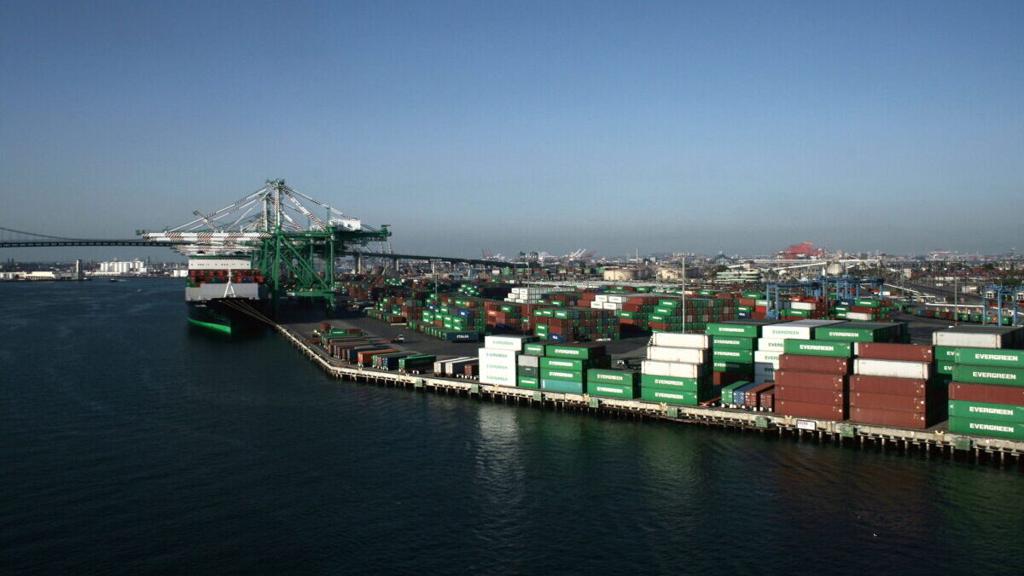
In contrast, tariffs are viewed as a more measured approach to trade regulation. Economists argue that while quotas and tariffs can achieve similar import levels, tariffs are superior in two key areas. First, tariffs generate revenue for the U.S. Treasury, while quotas often benefit foreign producers. For instance, Japan's voluntary export restraints in the 1980s led to higher prices for American consumers while enriching Japanese automakers.
Second, tariffs are more effective at preventing circumvention. Quotas can lead to 'quota leak,' where goods enter the market through indirect means, undermining the intended restrictions. Tariffs, however, apply uniformly and are harder to evade, providing sustained diplomatic leverage.
Former President Donald Trump has emphasized the importance of tariffs, stating that without them, the U.S. would be at a disadvantage in global trade. Under the current rules of the World Trade Organization, many trading partners impose higher tariffs on U.S. goods than the U.S. does on theirs, further complicating the trade landscape.
Ultimately, the Supreme Court's decision could determine whether the U.S. can effectively use tariffs as a tool for protecting its economic and national security interests, rather than resorting to more extreme measures like embargoes or less effective quotas. Legal precedent, economic reasoning, and historical context all suggest that the authority to impose tariffs is a vital component of the president's powers under IEEPA.