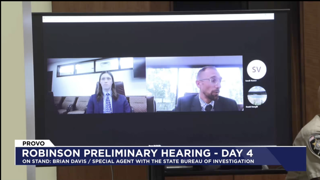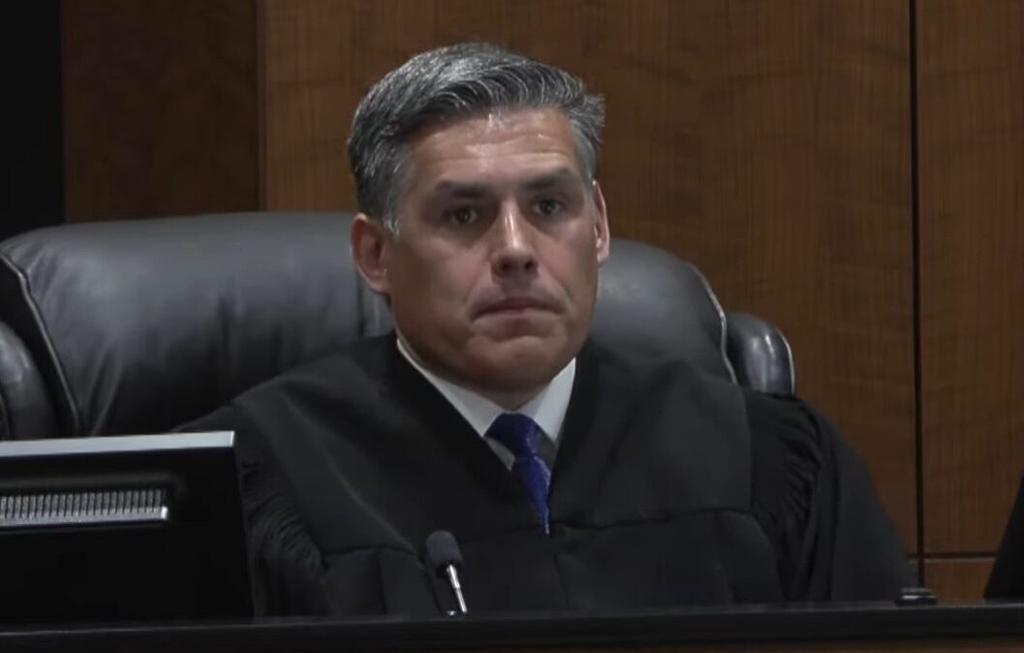
A Utah judge is reviewing whether Tyler Robinson will stand trial for the capital murder of conservative activist Charlie Kirk, following the close of a five-day preliminary hearing on Friday. Judge Tony Graf is expected to rule after a final meeting with prosecutors and defense counsel scheduled for September 1, as both sides await a decision on whether the evidence meets the threshold for probable cause.
The case centers on whether forensic and DNA evidence presented by state investigators is sufficient to send Robinson to trial for Kirk's killing, amid public scrutiny of the court's pace and transparency.
The hearings have drawn national attention due to Kirk's prominence as a political commentator and founder of Turning Point USA, as well as the high-profile nature of the alleged assassination. The Kirk family's push for a prompt resolution and the court's handling of public access have further fueled debate over the proceedings' fairness and efficiency.
DNA Evidence and Expert Testimony
On the final day of hearings, the defense called Caitlin Oliver, a forensic biologist with the Bureau of Alcohol, Tobacco, Firearms, and Explosives (ATF), to testify about DNA analysis related to the firearm and ammunition allegedly used by Robinson. Defense attorney Michael Burt questioned Oliver on the reliability of forensic science, referencing standard operating procedures and scientific literature to highlight limitations in DNA certainty.
Oliver acknowledged that DNA analysis cannot determine with absolute certainty whose DNA is present on an item, explaining that forensic scientists instead use statistical models to estimate the likelihood of a match. She stated that the number of DNA contributors on an object cannot be precisely known, nor can testing reveal the specific activity that led to DNA transfer.
Despite these limitations, Utah State Bureau of Investigation Sgt. Jennifer Faumuina, who led the evidence response team, testified that DNA profiles from the rifle's trigger and trigger guard were “at least 1 trillion times more likely” to have originated from Robinson than from four unrelated individuals. Similar statistical strength was reported for DNA found on the rifle's stock and bolt.
The prosecution has emphasized the strength of this forensic evidence, arguing that the DNA results provide overwhelming support for Robinson's involvement in the killing. The defense, meanwhile, has sought to cast doubt on the reliability of DNA evidence in general, highlighting the scientific community's ongoing debate over the interpretation of complex DNA mixtures and transfer scenarios.
The testimony of both Oliver and Faumuina has underscored the challenges that courts face in evaluating forensic evidence. While statistical models can provide compelling probabilities, they do not offer absolute certainty, and the possibility of secondary DNA transfer or contamination remains a subject of discussion among experts.
"As difficult as these last few days have been, it brings our family comfort to know that the world has witnessed the overwhelming evidence of what occurred to Charlie that day. Nothing will ever undo the loss of our beloved Charlie. As this case moves into its next phase, we pray that truth will continue to be heard through a process that is fair, transparent, and grounded in the facts."
— The Kirk family, statement
The Kirk family has remained vocal throughout the proceedings, issuing statements emphasizing their desire for a transparent and fact-based process. Their public comments have resonated with supporters, many of whom have followed the hearings closely, both in person and through media coverage.
Courtroom Access and Public Scrutiny
The proceedings have been marked by debate over courtroom transparency. Judge Graf initially allowed public and livestream access to much of the hearing, but restricted video capture of exhibits after unauthorized filming occurred on Thursday. Graf stated the court may revisit this decision when the case reconvenes in September.
Some observers, including TPUSA’s Andrew Kolvet and Fox News commentator Kayleigh McEnany, have criticized the length of the preliminary hearings, noting that similar proceedings are often resolved more quickly in other jurisdictions. The Kirk family filed a motion after Friday’s session urging the court to issue a probable cause determination “no later” than September 1, citing what they described as “overwhelming evidence.”
Judge Graf has also faced criticism online for rulings that limited the Kirk family's ability to release certain exhibits to the courtroom gallery. Supporters of the court’s approach argue that maintaining order and protecting the integrity of evidence are necessary for a fair process. Graf has not publicly addressed the criticism beyond his courtroom statements.
The issue of public access has become a focal point for both supporters and critics of the court's approach. While some argue that transparency is essential in a case of such public interest, others maintain that strict controls are necessary to prevent the release of sensitive evidence and to ensure that the proceedings are not disrupted by outside influences.
The court's decision to restrict video capture of exhibits followed an incident in which unauthorized filming took place during the presentation of key evidence. Judge Graf explained that this step was taken to protect the integrity of the process and to comply with existing court rules. However, he also indicated that the restrictions could be revisited in the future, depending on how the proceedings unfold.
What Happens Next
The next scheduled step is a meeting between Judge Graf, prosecutors, and Robinson’s defense on September 1, after which Graf will decide whether the case proceeds to trial. The Kirk family and their supporters continue to press for a swift resolution, while Robinson’s attorneys maintain that the forensic evidence is subject to scientific uncertainty.
The outcome of Graf’s decision will determine whether Robinson faces a full capital murder trial for the killing of Charlie Kirk, a case that has drawn significant national attention due to Kirk’s political profile and the broader debate over forensic evidence in high-stakes criminal prosecutions.
If Judge Graf finds that the evidence presented during the preliminary hearing meets the standard for probable cause, Robinson will be formally charged and the case will proceed to trial. If not, the charges could be reduced or dismissed, though prosecutors would have the option to refile if new evidence emerges.
The court retains the option to revisit its restrictions on public access to exhibits when proceedings resume in September, according to Graf’s latest statement. Observers expect that the next phase of the case will continue to draw intense public and media scrutiny, given the stakes involved and the ongoing debate over the role of forensic science in the criminal justice system.
As the legal process moves forward, both sides are preparing for the possibility of a lengthy trial, with the defense expected to challenge the prosecution's forensic evidence and the state likely to call additional expert witnesses. The Kirk family has reiterated their hope for a resolution that is both timely and just, while Robinson's legal team insists that every aspect of the evidence must be carefully scrutinized before any determination of guilt is made.
The case remains a focal point for national discussion about the intersection of politics, criminal justice, and scientific evidence, and the outcome of Judge Graf's ruling in September will likely have implications beyond the immediate parties involved.