A Tucson resident has filed a federal lawsuit against the city and two police officers, alleging that he was threatened with arrest for evangelizing at the Winterhaven Festival of Lights and forced into a designated 'free expression zone' outside the event. The suit claims the city's policy violates both the First Amendment and the Arizona constitution by banning religious speech and issue-based leafleting on public streets during the festival.
Explainer Free Speech Battles: Navigating Rights and Censorship in Modern Society
The case centers on whether the city can restrict religious expression at a public event held on city streets, with the plaintiff arguing that such restrictions unlawfully suppress protected speech.
The dispute comes amid ongoing national debates over the limits of free speech at public events, especially those with city permits but held in open public spaces. The lawsuit seeks to secure the plaintiff's right to evangelize at future festivals, obtain nominal damages for past violations, and require the city to pay attorney's fees.
Lawsuit Details and Allegations
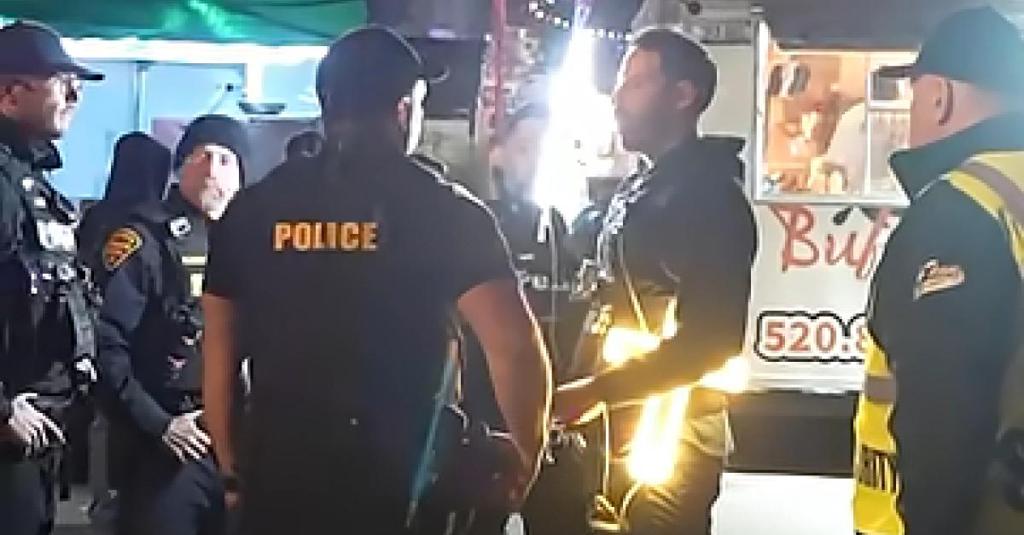
David Hoffman, represented by First Liberty Institute and co-counsel from Gibson, Dunn & Crutcher and Holtzman Vogel, alleges that Tucson's policy grants "unfettered discretion to private citizen permittees" to decide what speech is allowed on public streets. The complaint states that police officers repeatedly threatened Hoffman with arrest for sharing his Christian faith, whether through conversation or preaching, unless he moved to a "free expression zone" located outside the main festival area.
According to the lawsuit, the festival's policies are inconsistent and confusing. While the event website claims advocacy for religious and other ideological purposes is permitted if not stationary or using displays, the FAQ page and event signage explicitly ban "political and religious messaging, proselytizing," and pamphlet distribution. Signs at the event direct those wishing to engage in such activity to a zone near one entrance, physically separating speakers from festival-goers and requiring them to "shout and raise [their] voice" over traffic.
Hoffman alleges that on multiple nights, officers told him that "preaching" and "sermonizing" were prohibited regardless of volume, and escorted him out of the festival. An unnamed festival organizer reportedly told Hoffman that "no political, no religious" conversations were allowed, citing city policy and instructions from the city manager's office. Officer Matt Alexander is alleged to have confirmed that Hoffman would be arrested if he did not leave when asked by organizers, referencing the city's permit as justification.
Legal Arguments and Precedents
The lawsuit cites Supreme Court, Arizona Supreme Court, and Ninth Circuit precedents affirming protections for religious speech in public forums, including Kennedy v. Bremerton School District, which states the First Amendment "doubly protects religious speech" through both the free exercise and free speech clauses. The complaint also references cases upholding evangelism at permitted public events and protecting Christian businesses from compelled participation in same-sex weddings.
First Liberty Institute argues that the city's enforcement of the ban only began after Tucson required a permit for the festival and police began enforcing the prohibition against religious speech. The law firm says the city's written and posted policies contradict each other and the instructions given to Hoffman by officers and festival staff.
"Censoring a Christian message during a public Christmas event is malicious, unconstitutional, and absurd. The government cannot ban only religious messages."
— Nate Kellum, senior counsel, First Liberty Institute
Co-counsel Matt Scorcio of Gibson, Dunn & Crutcher added that Tucson cannot limit free speech to "remote, isolated areas where no one can hear or see a message."
City Response and Next Steps
Tucson officials did not respond to queries from First Liberty Institute or media requests for comment. The police department also did not provide a statement. According to First Liberty, the lawsuit was filed after the city failed to respond to a December warning letter, and the firm noted that such cases often take time due to reliance on pro bono legal work.
The lawsuit seeks a court order allowing Hoffman to evangelize at this year's festival, nominal damages for last year's alleged violations, and attorney's fees. The case does not reference a recent Supreme Court decision involving similar claims by an evangelist against a public college, but cites other relevant precedents.
The Winterhaven Festival of Lights is held on public streets but is organized by a private group with a city permit. The event's policies regarding advocacy and solicitation have changed over time, with the most restrictive language appearing just before the most recent festival.