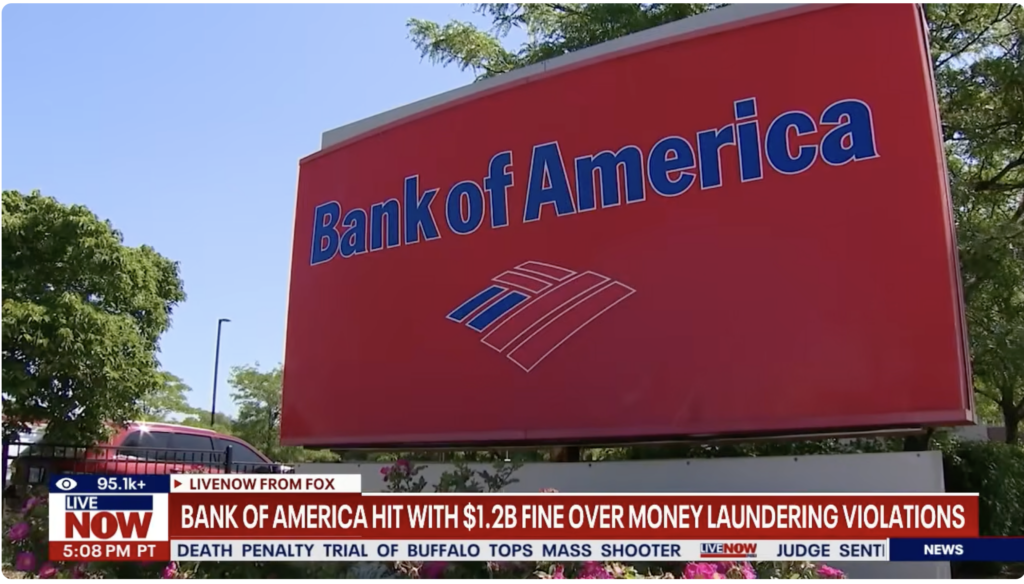
Major U.S. banks, including Bank of America, JPMorgan Chase, Citibank, U.S. Bank, and Wells Fargo, denied financial services to several right-of-center organizations and individuals between 2020 and 2025, according to a new report from the Office of the Comptroller of the Currency (OCC). The OCC’s 45-page report, titled Debanked: Guaranteeing Fair Banking for All Americans, found that these banks often cited "reputation risk" as grounds for closing accounts—a practice now prohibited by new federal regulations.
Explainer Legal Battles Over Gender Identity Policies and School Bathroom Laws Explained
The report’s findings have intensified an ongoing debate over whether banks have used subjective or politically motivated criteria to deny services based on customers’ political or religious affiliations. The issue has raised concerns about fairness, free speech, and equal access in the U.S. financial sector.
The OCC’s investigation was prompted by an executive order signed by President Donald Trump in August 2025. The order directed federal agencies to ensure that no American is denied access to financial services due to constitutionally protected beliefs or political views. This move followed years of complaints from advocacy groups and individuals who said their accounts were closed without clear explanation or recourse.
OCC’s Findings on Bank Practices
The OCC reviewed nearly 100,000 complaints and conducted transaction testing of hundreds of individual bank decisions. The report found that banks made "inappropriate distinctions among customers in the provision of financial services of their lawful business activities" and often required escalating reviews and approvals for certain customers. According to the OCC, banks relied on both traditional and non-traditional sources—including negative news, background screenings, and the opinions of advocacy organizations such as the Southern Poverty Law Center (SPLC)—to inform risk determinations. The OCC concluded that reliance on such sources introduced subjectivity and potential bias into the decision-making process.
The OCC’s final rule now prohibits regulators from using reputation risk as a basis for supervisory action. The rule aims to ensure that banking decisions are made on individualized, objective, and risk-based analyses, rather than on political or social preferences. The OCC emphasized that banks must provide services to customers engaged in lawful activities and cannot deny access based on personal or organizational beliefs.
Impact on Religious and Political Groups
The OCC report highlighted several cases in which religious and political groups were affected. Christian organizations such as Timothy Two Project International and Indigenous Advance Ministries reported having their accounts abruptly closed by Bank of America, despite longstanding relationships and consistent business practices. Steve Curtis, international director of Timothy Two Project, wrote that his group was "surprised and confused by the bank’s decision," noting their accreditation with the Evangelical Council for Financial Accountability. The closures, according to these groups, came without clear explanations and disrupted their operations.
JPMorgan Chase’s WePay subsidiary also denied payment processing to the GOP-affiliated Defense of Liberty, forcing the group to cancel an event. The bank later reversed its decision after public pressure from Missouri officials. In a statement, a JPMorgan spokesperson said the bank’s policies prohibit discrimination based on political or religious views and acknowledged that the WePay process "did not meet our expectations. We identified it, corrected it, and the business no longer operates."
Jeremy Tedesco, special counsel at Alliance Defending Freedom, commented on the broader implications:
"It’s important for Americans to understand a politicized banking industry is bad for a free society. We don’t want banks calling balls and strikes on whose views are allowed in the public square and whose aren’t."
Regulatory and Political Response
The OCC’s review was driven by the Trump administration’s executive order, which mandates fair access to banking for all Americans. The OCC’s bulletin formalizes the prohibition on using reputation risk as a regulatory tool and sets out requirements for banks to base decisions on objective criteria.
Jeremy Tedesco of Alliance Defending Freedom said that while recent reforms are significant, lasting change will require continued litigation, legislative action, and internal reforms within banks. He warned that protections could be rolled back if political control in Congress shifts, highlighting the ongoing nature of the debate.
While critics argue that banks have targeted right-leaning groups, major institutions have stated that their policies do not allow discrimination based on political or religious views. The OCC’s new rules are designed to enforce this standard across the industry, aiming to ensure that all Americans have equal access to financial services regardless of their beliefs or affiliations.
The OCC report concludes that the use of subjective criteria, such as reputation risk, in banking decisions undermines public trust and can have significant consequences for individuals and organizations. The new regulations seek to restore confidence in the fairness and neutrality of the U.S. banking system, but the issue is likely to remain a point of contention as political and social debates continue.