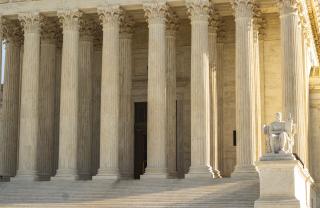
The U.S. Supreme Court on Friday issued a 6-3 decision to temporarily restore a Department of Homeland Security (DHS) program that allows state and local governments to verify the citizenship status of registered voters. This move pauses a lower court injunction that had blocked the initiative, marking a significant development in the ongoing debate over election integrity and federal involvement in voter roll maintenance. The ruling, delivered in a per curiam opinion, grants the government's emergency request to stay a June order by D.C. District Judge Sparkle Sooknanan, who had halted the program’s use for election integrity purposes.
Explainer Understanding the Supreme Court’s Impact on Law and Liberty
The Supreme Court’s decision comes amid heightened national attention on how states maintain accurate voter rolls and the extent to which the federal government should provide tools to identify noncitizens among registered voters. The case has drawn sharp lines between those advocating for stricter verification measures and those warning of potential privacy violations and overreach.
Background of the Legal Dispute
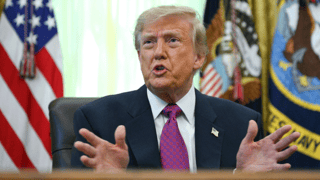
At the heart of the legal fight is a revised version of DHS’s Systematic Alien Verification for Entitlements (SAVE) database. The SAVE program was overhauled following a March executive order by President Trump. This order directed DHS and the Social Security Administration (SSA) to develop systems enabling bulk verification of voters’ citizenship and immigration status. The changes included granting access to Social Security numbers and records of U.S.-born citizens, according to the White House and court documents. The administration argued that these modifications were necessary to help states and localities ensure that only eligible citizens remain on voter rolls.
Opponents, led by the League of Women Voters and other organizations, challenged the revised program in court. They argued that the changes violated the Social Security Act, the Privacy Act, and the Administrative Procedures Act, raising concerns about the confidentiality of personal information and the legality of bulk data sharing between federal agencies. In June, Judge Sooknanan issued an injunction halting the program’s use for voter verification, prompting the administration to seek emergency relief from higher courts.
Supreme Court’s Reasoning
In its unsigned opinion, the Supreme Court found that the plaintiffs likely have standing to challenge the program but are unlikely to prevail on the merits. The majority cited provisions of the Illegal Immigration Reform and Immigrant Responsibility Act (IIRIRA), which they said expressly authorize DHS to request and receive citizenship and immigration information from other agencies, including SSA. According to the Court, these provisions likely undermine the plaintiffs’ claims that the program violates the Social Security Act, the Privacy Act, or the Administrative Procedures Act.
The justices also considered the risk of irreparable harm if the injunction remained in place. They determined that the balance of equities favored the administration, noting that preventing the program’s use could hinder states’ efforts to maintain accurate voter rolls ahead of upcoming elections. The stay will remain in effect until the U.S. Court of Appeals for the District of Columbia rules on the appeal and, if necessary, until the Supreme Court decides whether to hear the case on the merits.
Dissent and Criticism
Justice Ketanji Brown Jackson, joined by Justices Sonia Sotomayor and Elena Kagan, dissented from the majority’s decision. In her dissent, Jackson argued that the majority misinterpreted the IIRIRA and that nothing in the statute authorizes the modified SAVE system or overrides the confidentiality provisions of the Social Security Act and the Privacy Act. She wrote that the government had not shown it complied with those laws in making the changes to SAVE.
"[N]othing in §1373 authorizes the modified SAVE system or overrides the provisions of the Social Security Act and the Privacy Act that Respondents say the Government has violated."
— Justice Ketanji Brown Jackson, Supreme Court Justice
Jackson also questioned the majority’s assessment of the other factors supporting a stay. She suggested the ruling would have limited short-term impact, as states would likely only conduct individualized voter roll maintenance with the revised system before the November elections. The dissent underscored ongoing concerns about privacy and statutory compliance, emphasizing the need for careful judicial review before expanding federal data-sharing initiatives.
Broader Context and Next Steps
The Supreme Court’s intervention follows a series of lower court decisions, including a 2-1 ruling by the D.C. Circuit Court of Appeals that denied the administration’s initial request to pause Judge Sooknanan’s injunction. After that setback, the Trump administration sought emergency relief from the Supreme Court, arguing that the revised SAVE program was essential for supporting state efforts to ensure voter eligibility and prevent noncitizens from remaining on voter rolls.
Supporters of the program contend that it is a necessary tool for election integrity, helping states identify and remove ineligible voters. They argue that the federal government has a responsibility to assist states in maintaining accurate voter rolls, especially in light of concerns about noncitizen registration. Critics, however, warn that the program risks violating privacy protections and federal statutes, particularly regarding the sharing and use of sensitive personal information. They also caution that the system could lead to erroneous removals of eligible voters, potentially disenfranchising citizens.
The Supreme Court’s stay will remain in effect pending the outcome of the appeal in the D.C. Circuit and any subsequent Supreme Court review, should a petition for certiorari be filed and granted. If the Supreme Court denies review or issues a final decision on the merits, the stay will terminate. Until then, states and local governments may continue to use the revised SAVE program for voter verification purposes, although the ultimate legality of the program remains unresolved.
The case highlights the ongoing tension between efforts to secure the electoral process and the need to protect individual privacy and statutory rights. As the legal battle continues, the outcome could have significant implications for how federal and state governments collaborate on voter roll maintenance and the broader landscape of election law in the United States.