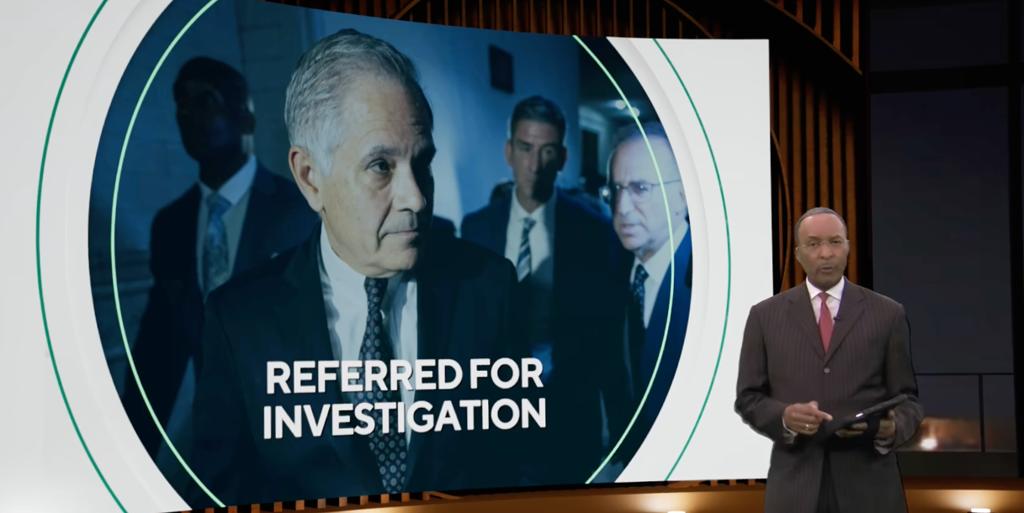
A federal judge has formally referred Philadelphia District Attorney Larry Krasner and his top deputy, Matthew Stiegler, to the U.S. Department of Justice for a potential criminal investigation. The referral, detailed in a recent court memorandum, alleges possible "false statements, false declarations made under oath, perjury, obstruction of justice, and conspiracy" by Krasner’s office in connection with a high-profile habeas corpus case.
The judge’s request for a DOJ probe comes amid ongoing controversy surrounding Krasner’s tenure as district attorney. His office’s handling of certain cases, particularly those involving claims of wrongful conviction, has drawn criticism from state officials and sparked debate about prosecutorial conduct and criminal justice reform in Philadelphia.
Allegations in the Johnson Case
The current controversy centers on the case of Dennis Johnson, who was convicted of murder in 2009. After exhausting his appeals in state court, Johnson sought federal habeas corpus relief—a legal process that allows prisoners to challenge the legality of their detention in federal court. The federal court asked the Philadelphia District Attorney’s Office, now led by Krasner, whether it opposed Johnson’s request for relief.
Krasner’s office responded that it did not oppose granting relief, effectively conceding that Johnson’s conviction may have been flawed. This position was taken without an independent review of the case’s facts or evidence. The DA’s office instead relied on the claims presented by Johnson’s lawyers, including those associated with the Innocence Project. According to court documents, the assigned prosecutor did not conduct her own research but followed the direction of Matthew Stiegler, who supervised habeas corpus responses. Stiegler reportedly told her, "if it's good enough for the Innocence Project, it's good enough for me."
Several years later, four prosecutors from the DA’s office sought to withdraw the earlier concession, arguing that it contained "material misstatements." The Pennsylvania Attorney General’s Office, which is led by a Republican, also intervened, telling the court that Philadelphia prosecutors had made "significantly misleading statements" to Magistrate Judge Lynne Sitarski during the habeas proceedings.
Judge Diamond’s Findings
U.S. District Court Judge Paul Diamond responded by holding an evidentiary hearing to examine the conduct of Krasner’s office. Multiple prosecutors, including Stiegler, testified about how the decision not to oppose Johnson’s habeas petition was reached. Judge Diamond’s memorandum described Stiegler’s testimony as "often contradictory, evasive, or outright dishonest."
The court found that Stiegler, a former public defender and ACLU attorney, had worked closely with Johnson’s legal team and agreed not to challenge their claims without sufficient independent investigation. The judge concluded that the DA’s office had failed in its duty to the court and had potentially misled federal judges about the facts of the case.
Response from Krasner and Officials
District Attorney Larry Krasner, through a spokesperson, strongly disputed the court’s findings. In a statement, Krasner said:
"I respectfully and vigorously disagree with the court’s findings of fact and conclusions of law. I look forward to appealing to the higher court as soon as the law allows. This remains a pending matter, which limits for now my and my office’s ability to respond in the media."
— Larry Krasner, Philadelphia District Attorney
The Pennsylvania Attorney General’s Office has not commented publicly on the case or on Krasner’s alleged repeated characterization of officials in that office as "Nazis."
Broader Context and Next Steps
The judge’s referral to the Department of Justice marks a significant escalation in the scrutiny of Krasner’s leadership and the practices of the Philadelphia District Attorney’s Office. The case has become a flashpoint in ongoing debates over criminal justice reform, prosecutorial discretion, and the responsibilities of elected prosecutors. It also highlights the tensions between local and state officials regarding the handling of high-profile criminal cases.
The Department of Justice has not yet indicated whether it will open a formal investigation into Krasner or his office. The outcome of any potential DOJ probe could have significant implications for the future of the Philadelphia District Attorney’s Office and for broader discussions about accountability and reform in the criminal justice system.
For more information about habeas corpus proceedings, see the U.S. Courts glossary.