The Nebraska Supreme Court is set to review the constitutionality of a state law that permits U.S. citizens living abroad, who have never resided in Nebraska or the United States, to vote in Nebraska elections. The Republican National Committee (RNC), joined by two Nebraska voters, is appealing a lower court decision that upheld the law, arguing it undermines election integrity and dilutes the votes of state residents.
Explainer Unpacking U.S. Election Law: Integrity, Controversies, and Legal Battles
The case highlights a growing national debate over absentee voting rights for Americans overseas, with the RNC seeking to restrict what it calls 'Never Resident' voting laws that it says weaken state election safeguards.
Nebraska is among 38 states that allow some form of absentee voting by U.S. citizens who have never lived in the state, according to the Federal Voting Assistance Program. The law under challenge allows a U.S. citizen abroad, who has never resided in the United States and has a parent registered to vote in Nebraska, to register and vote in the county where the parent is registered, provided the individual has not registered to vote in any other state.
The Legal Challenge
The RNC, along with Nebraska voters Jack Riggins and Pamela Dingman, filed suit after the May state primary, contending that allowing non-resident citizens to vote dilutes the votes of Nebraskans. The RNC has filed similar lawsuits in seven states, including battlegrounds like Arizona and Nevada, as well as Colorado, New Jersey, Virginia, and Nebraska.
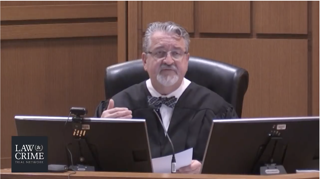
Lancaster County District Judge Ryan Post upheld the law in an August 12 opinion, writing that "A statute is presumed to be constitutional, and all reasonable doubts are resolved in favor of its constitutionality." Judge Post cited Article VI, Section 1 of the Nebraska Constitution, which states that eligible voters must be U.S. citizens, at least 18 years old, and have "resided within the state and the county and voting precinct" where they cast a ballot. Nebraska Constitution Article VI-1
The RNC appealed, arguing the law conflicts with the state constitution's residency requirements. RNC election integrity communications director Ally Triolo said, "This loophole allows certain people who have never lived in the state to vote, weakening the safeguards that protect election integrity. We’re fighting to close it, protect the ballot box, and uphold the law."
"The RNC is taking this fight all the way to the Nebraska Supreme Court because Nebraska elections should be decided by Nebraska voters, period."
— Ally Triolo, RNC election integrity communications director
The Law and Its Impact
Nebraska's law, enacted in 2005, specifies that a U.S. citizen abroad who has never resided in the United States and has a parent registered to vote in Nebraska may register and vote in one county where the parent is registered. State records show 116 overseas Nebraska voters are registered under the law, with six voting in the May 12 state primary, according to the Nebraska Examiner.
The RNC emphasizes that its lawsuits do not target longstanding absentee voting rights for military personnel or diplomats, and says it supports the Uniformed and Overseas Citizens Absentee Voting Act.
Elections in Nebraska have been decided by narrow margins. In 2024, a Denton Village Board of Trustees race ended in a tie, resolved by lottery, according to the Public Interest Legal Foundation. Nationally, the Foundation reports 1,376 elections since 1992 initially resulted in a tie, and 531 were decided by a single vote.
Responses and Broader Context
Nebraska Democratic Party Chairwoman Jane Kleeb criticized the lawsuit, saying, "Nebraska Republicans are so afraid of voters—because of their radical, failed policies—that they’re now trying to deny Americans the right to vote." The office of Nebraska Secretary of State Bob Evnen declined to comment, citing pending litigation.
A similar law in North Carolina was struck down by the Wake County Superior Court in June, barring people born overseas who never lived in the state from voting in state elections. The Federal Voting Assistance Program lists 38 states with provisions allowing some form of voting by U.S. citizens who never lived in the state, typically based on a parent or legal guardian's connection to the state.
The Nebraska Supreme Court's decision could set a precedent for other states with similar laws, potentially leading to review by the U.S. Supreme Court.