Kansas voters will face a significant decision this August as they consider a constitutional amendment that could fundamentally change the way state Supreme Court justices are selected. The proposed amendment would end the current system, in which a bar-controlled commission nominates candidates for the governor to appoint, and instead restore the public’s ability to directly elect Supreme Court justices. This right was originally removed in the late 1950s following a political controversy that led to the creation of the current commission-based system.
Explainer Understanding the Supreme Court’s Impact on Law and Liberty
For decades after Kansas achieved statehood, voters directly elected Supreme Court justices. That changed after the so-called “triple play” incident in the 1950s, when then-Gov. Fred Hall resigned after losing his primary election, allowing his lieutenant governor to become governor and appoint Hall to the Supreme Court. The public outcry over this maneuver led to a 1958 constitutional amendment establishing the current commission, which was intended to insulate the judiciary from political influence. However, critics now argue that the system has shifted power away from voters and toward legal and political elites, particularly those with specific policy interests.
Supporters of the amendment argue that the existing process is dominated by attorneys and political insiders, rather than serving the broader interests of Kansans. They claim that the commission’s makeup and the governor’s role in appointments have resulted in a judiciary that does not reflect the will of the people. According to amendment proponents, the current system allows special interests, particularly those related to abortion policy, to wield outsized influence over judicial nominations.
Amendment Faces Strong Opposition
A coalition of groups, including Planned Parenthood, the American Civil Liberties Union (ACLU), and Unite for Reproductive and Gender Equity (URGE), is actively opposing the amendment. According to reporting in The Federalist, these organizations are spending millions of dollars, much of it from out-of-state sources, to urge Kansans to vote against the measure. They argue that the commission system helps keep partisan politics out of the courts and protects judicial independence. Opponents warn that moving to direct elections could inject partisanship and campaign fundraising into the judiciary, potentially undermining the impartiality of the state’s highest court.
Campaigns urging a “no” vote have focused on the risks of politicizing the judiciary. They contend that the current system, while not perfect, is designed to ensure that justices are selected based on merit rather than political popularity or campaign contributions. These groups have not directly addressed criticisms regarding the composition of the nominating commission or the influence of donors on the selection process.
Supporters of the amendment, such as Kansans for Life, counter that the process is already politicized and heavily influenced by donors with specific policy agendas. Jeanne Gawdun, director of government relations for Kansans for Life, has argued that recent appointments to the court reflect the interests of pro-abortion groups and Democratic donors. She points out that six of the seven current justices were appointed by Democratic governors and that a majority of the nominating commission’s members are donors to pro-abortion leftist causes.
"While a majority of Kansans are likely to support reasonable regulations and restrictions on abortion, the current Supreme Court nominating process is likely to continue promoting justices who have an interest in seeing abortion expand in the state. After all, the judges are often nominated by donors to the abortion industry."
— Jeanne Gawdun, director of government relations for Kansans for Life
Criticism of Recent Appointments
Recent appointments to the Kansas Supreme Court have become a focal point in the debate. Governor Laura Kelly, a Democrat nearing the end of her second term, recently appointed Judge K. Christopher Jayaram to the court. Jayaram was one of three candidates selected by the commission. As a district court judge, he previously blocked longstanding abortion regulations, including informed consent requirements and a 24-hour waiting period under the state’s “Woman’s Right to Know” Act.
Supporters of the amendment argue that such appointments demonstrate the influence of advocacy groups and donors on the commission’s selections. They also point to the 2019 Kansas Supreme Court decision, which recognized a constitutional right to abortion, as evidence of the court’s current direction and the impact of the commission-based system.
The Larger Debate Over Judicial Selection
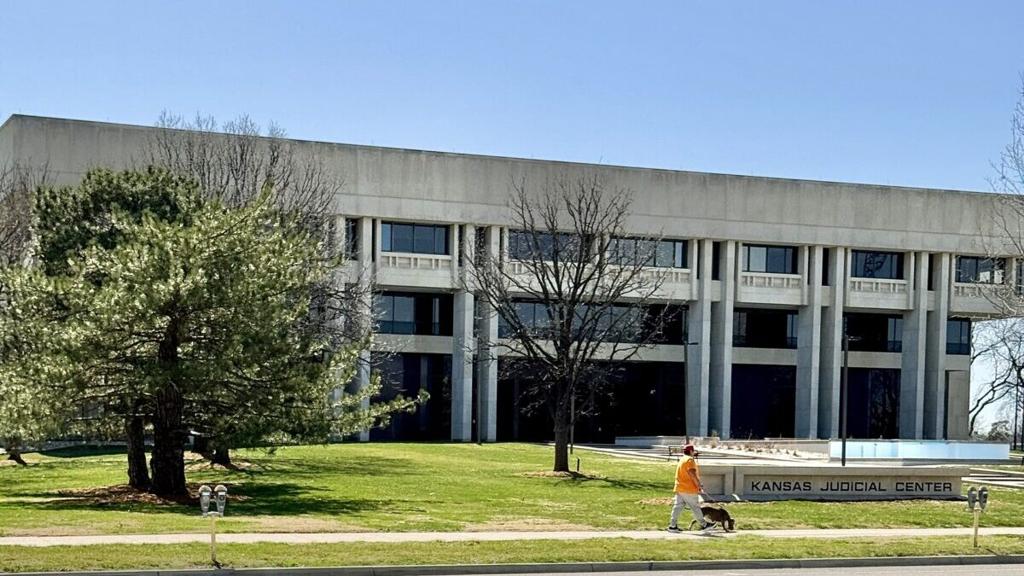
The Kansas Judicial Center in Topeka, constructed in the late 1970s, remains the seat of the state’s judiciary. The upcoming vote is widely seen as a pivotal moment in the ongoing debate over how best to balance judicial independence with public accountability. While critics of the amendment warn that direct elections could increase politicization and threaten the impartiality of the court, supporters argue that returning to elections would give Kansans a direct voice in shaping the judiciary and reduce the influence of special interests.
The outcome of the August vote will determine whether Kansas continues with its current bar-controlled commission or shifts to direct elections for Supreme Court justices. The debate has drawn national attention, with both sides emphasizing the potential long-term impact on the state’s legal and political landscape. As the vote approaches, Kansans are being asked to weigh the merits of judicial independence against the principle of public accountability, with the future of the state’s highest court hanging in the balance.