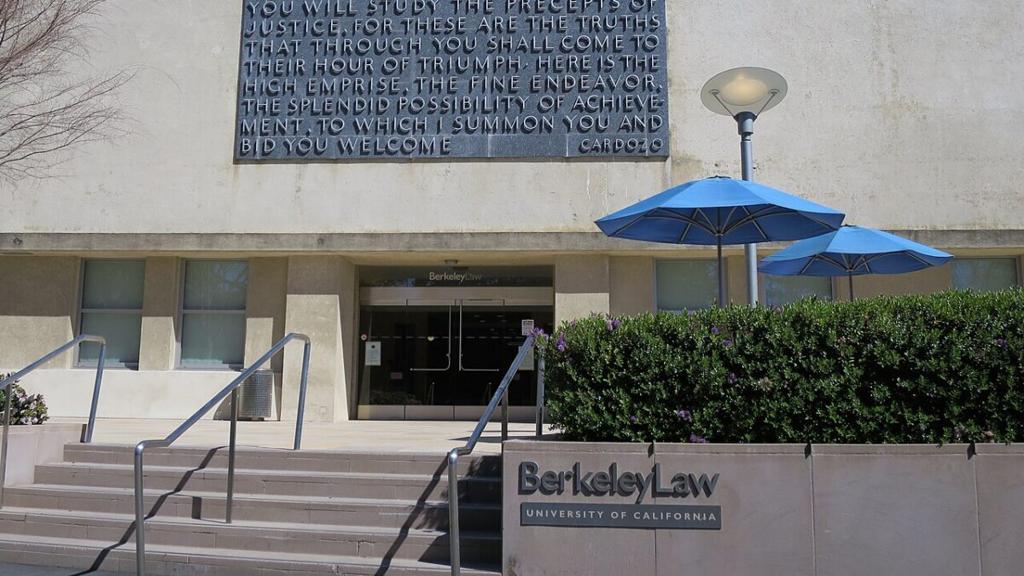
Federal investigators from the Justice Department and Department of Education have concluded that the University of California, Berkeley School of Law discriminated against white and Asian applicants in its admissions process for the entering classes of 2024 and 2025, in violation of Title VI of the Civil Rights Act of 1964. The findings, announced on Sept. 9, follow a joint investigation into the law school's practices after the Supreme Court's decision in Students for Fair Admissions v. Harvard restricted the use of race in college admissions.
Explainer The Controversy Over DEI In Education: Legal Battles and Policy Shifts
The investigation's outcome intensifies scrutiny on how elite universities comply with federal law and Supreme Court rulings, as the Biden administration expands oversight of race-conscious admissions nationwide.
The Justice Department and Department of Education determined that Berkeley Law gave black applicants significantly higher odds of admission than similarly qualified white and Asian applicants. According to figures cited in the findings, black applicants in 2025 had 5.8 times the odds of admission compared to white applicants with similar LSAT scores and undergraduate GPAs; in 2024, the disparity was 6.5 times. Median admitted LSAT scores for Asian and white applicants were 172, while for black applicants they were 164 and 167, respectively. The agencies said these disparities resulted from an application prompt asking how an applicant's perspective would contribute to diversity, which investigators described as a racial proxy. DOJ press release
Details of the Federal Findings
The Justice Department stated that Berkeley Law's conduct violated both Title VI and the Supreme Court's 2023 ruling in Students for Fair Admissions v. Harvard, which barred federally funded institutions from using race as a factor in admissions. The agencies allege that Berkeley Law sorted applicants by "primary identity" and used essay prompts to indirectly factor race into admissions decisions. The DOJ called this a deliberate attempt to circumvent the Supreme Court's restrictions.
"Too many top schools are more concerned about the demographics of their incoming classes than turning out doctors who can do the job."
— Harmeet K. Dhillon, Assistant Attorney General, DOJ Civil Rights Division
The federal findings mirror recent actions against other elite institutions. In August, the DOJ announced similar findings against Duke Law School. Earlier, the department opened investigations into medical schools at Yale, UCLA, and UC Davis, and in June expanded its review to 15 additional medical schools, including Harvard, Johns Hopkins, and Stanford. DOJ Duke Law findings DOJ expands investigations
Broader Context and Next Steps
The investigation into Berkeley Law is part of a broader federal effort to enforce compliance with Title VI and the Supreme Court's mandate against race-based admissions. Title VI prohibits discrimination on the basis of race, color, or national origin in any program receiving federal funding. Title VI overview
The Justice Department indicated that consequences for Berkeley Law will likely be civil rather than criminal. Possible remedies include a settlement requiring new admissions policies, reviewer training, an outside monitor, and years of compliance reporting. The DOJ may sue if the university does not agree to these terms. Criminal charges would require evidence of obstruction or false statements during the investigation, not discrimination alone.
Berkeley Law officials have not publicly responded to the findings. The DOJ's actions have drawn criticism from some advocates of race-conscious admissions, who argue that considering applicants' backgrounds is essential for diversity. However, the agencies maintain that the law prohibits using race or its proxies as a plus factor in admissions.
The Supreme Court's decision in Students for Fair Admissions v. Harvard left room for schools to consider how race shaped an applicant's personal story, but not to use race itself or a stand-in for it as an admissions factor. The DOJ findings allege that Berkeley Law crossed this line by structuring its application process to favor certain racial groups.
The outcome of the DOJ's negotiations with Berkeley Law will likely influence how other universities structure their admissions processes in the wake of increased federal enforcement.