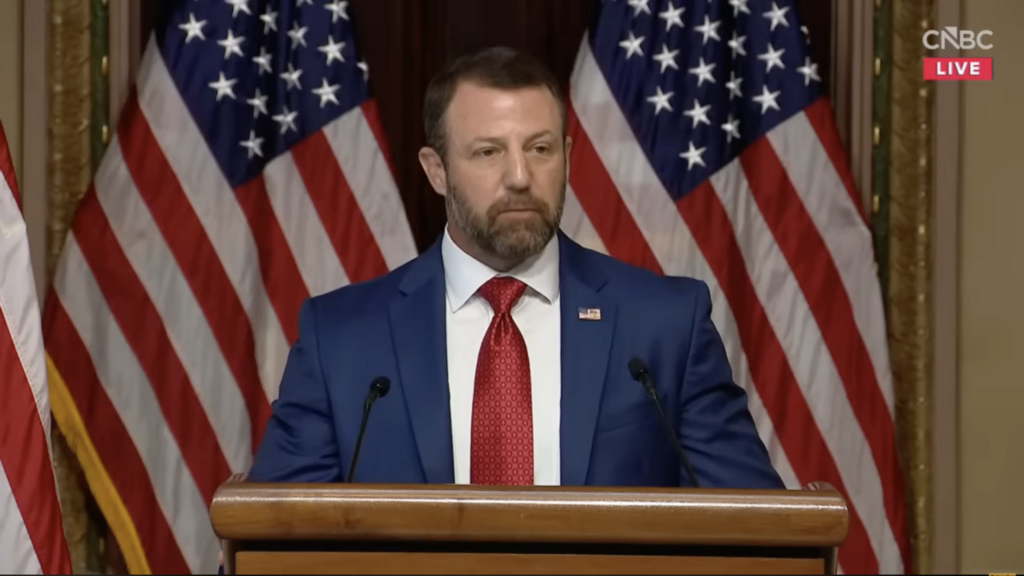
The Department of Homeland Security (DHS), led by Secretary Markwayne Mullin, is facing criticism following reports that senior agency officials have met with business groups lobbying for less aggressive enforcement of immigration laws against employers. These meetings, including a notable one in July with the Essential Worker Immigration Coalition, represent a shift from the agency’s previous approach under former secretary Kristi Noem, who had largely rebuffed such outreach. The change in tone and policy has been reported by both The Washington Post and The Federalist.
Explainer Inside U.S. Immigration and Customs Enforcement: Law Enforcement, Controversies, and National Security
At the center of the controversy is a debate over whether DHS should cooperate with business interests seeking to maintain access to unauthorized labor, or instead prioritize enforcement actions against employers who violate federal immigration law. The meetings come at a time when business groups, including the Essential Worker Immigration Coalition and the U.S. Chamber of Commerce, have renewed their efforts to influence DHS policy after a period of heightened immigration enforcement and workplace arrests.
DHS Meetings With Business Groups
According to reporting by The Federalist, DHS officials met in July with the Essential Worker Immigration Coalition, which represents major trade associations and the U.S. Chamber of Commerce. The Washington Post noted that this was the first such meeting since President Donald Trump took office, following a period when business groups had little access to the agency due to increased enforcement by Immigration and Customs Enforcement (ICE).
A lobbyist told The Washington Post that under former secretary Noem, DHS was “unapologetic” about removing unauthorized workers. In contrast, Secretary Mullin has reportedly brought Senate staffers with business ties into DHS and has moved to "mend relations" with business groups. The Essential Worker Immigration Coalition has argued that aggressive enforcement could result in labor shortages and economic disruption, particularly in industries that rely heavily on immigrant labor.
The business coalition has also advocated for expanded access to immigrant labor and amnesty measures. They argue that the U.S. economy depends on immigrant workers for essential industries such as agriculture, construction, and hospitality. Business leaders maintain that sudden or aggressive enforcement actions could disrupt supply chains and lead to higher costs for consumers.
Legal Standards and Enforcement
Federal law under 8 U.S.C. § 1324a prohibits employers from knowingly hiring or continuing to employ unauthorized immigrants. Employers found in violation of this statute can face civil fines and, in cases involving at least 10 unauthorized hires in a 12-month period, potential criminal penalties including prison time. The law also requires employers to verify the work eligibility of employees and maintain compliance with documentation requirements, such as the I-9 employment eligibility verification form.
Critics of the recent DHS meetings argue that business groups are openly admitting their reliance on unauthorized labor and are seeking government protection rather than compliance with existing visa programs. They warn that if employers believe there will be no consequences for hiring unauthorized workers, the incentive to comply with the law will erode, potentially undermining the integrity of the U.S. immigration system.
"That the DHS — under Mullin’s ‘leadership’ — is even entertaining such discussions is wrong and should be grounds for Mullin’s removal."
— The Federalist editorial
Impact on American Workers and Policy Debate
The policy debate over immigration enforcement and employer accountability has significant implications for American workers. A 2010 report by the U.S. Commission on Civil Rights, titled The Impact of Illegal Immigration on the Wages and Employment of Black Workers, found that unauthorized immigration has tended to depress wages and employment rates for low-skilled American citizens, particularly black men. The Economic Policy Institute estimated in 2022 that at least 8 million unauthorized immigrants participate in the U.S. labor force, highlighting the scale of the issue.
Supporters of increased enforcement argue that holding employers accountable would reduce demand for unauthorized labor and help protect American workers from wage suppression and job displacement. They contend that strict enforcement of existing laws would encourage employers to hire from the legal workforce and invest in training and wages for American workers.
On the other hand, business groups maintain that immigrant labor is essential for certain sectors of the economy. They argue that abrupt or sweeping enforcement actions could harm businesses, lead to labor shortages, and disrupt economic growth. These groups continue to advocate for expanded legal pathways for immigrant labor and relief from punitive enforcement measures, emphasizing the need for comprehensive immigration reform.
As of now, DHS and Secretary Mullin have not publicly responded to the criticism regarding the recent meetings or outlined any changes to enforcement policy. The Essential Worker Immigration Coalition and the U.S. Chamber of Commerce remain active in their efforts to influence DHS policy, seeking to balance enforcement with the economic realities faced by American businesses.