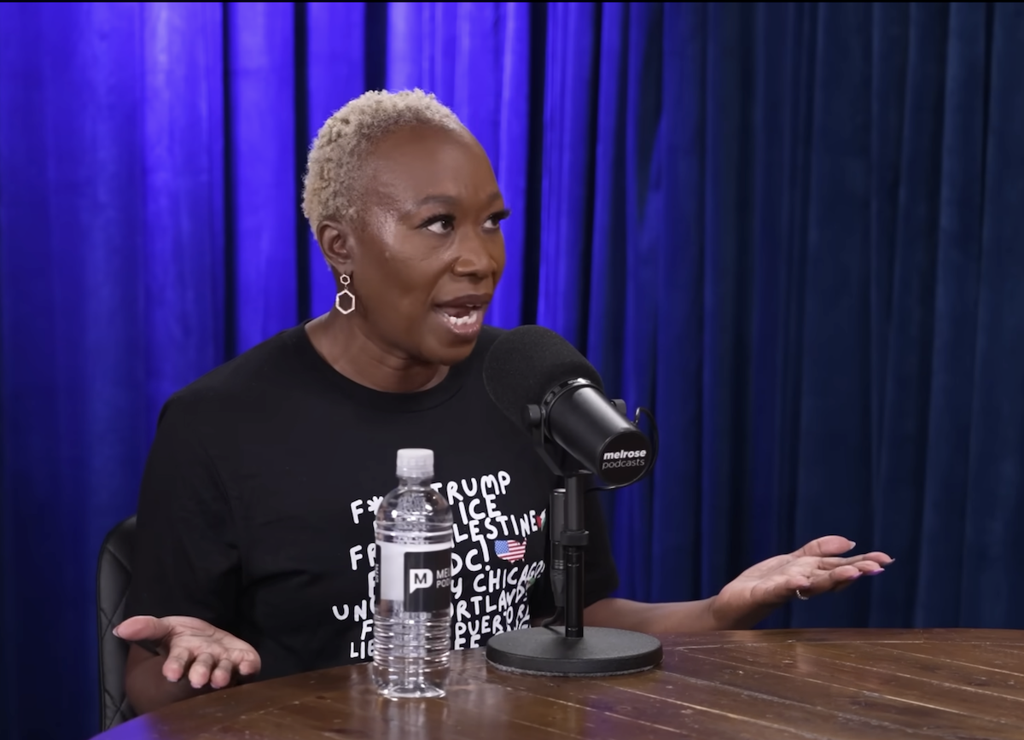
Joy Reid, former MSNBC host, sparked controversy during a recent episode of the podcast "I’ve Had It" where she made provocative comments regarding Vice President J.D. Vance and the widow of a recently assassinated political figure. Reid, along with podcast hosts Jennifer Welch and Angie Sullivan, discussed the implications of Vance's marriage and speculated about his personal life in a manner that many found objectionable.
During the conversation, Reid remarked, "They can’t have the successor to MAGA be the guy with the brown, Hindu wife," referring to Vance's spouse, Usha. She further suggested that Vance was "throwing his wife under the bus" in a bid to align himself more closely with certain political narratives.
Welch chimed in, describing Vance's interactions with Erika Kirk, the widow of Charlie Kirk, as "the weirdest sh-t I’ve ever seen." This comment followed a public appearance where Vance and Kirk were seen embracing, which Reid and her co-hosts interpreted in a sensational manner.
Reid continued to elaborate on her views, stating, "Wouldn’t it be the most perfect fairytale — MAGA fairytale — if he finally sees the light that he needs a white queen instead of this brown Hindu?" This line drew criticism for its racial undertones and implications regarding Vance's political identity.
The podcast episode has drawn attention not only for its content but also for the broader implications of such discussions within political discourse. Critics argue that such remarks contribute to a culture of divisiveness and sensationalism in political commentary.
Eddie Scarry, a columnist for The Federalist, highlighted the episode on social media, suggesting that it reflects a troubling trend among some left-leaning commentators who engage in what he termed "perverse, depraved scenarios." He noted that this is not an isolated incident, referencing past comments made by Virginia Democrats and other public figures that have similarly crossed lines of decorum.
The conversation has reignited discussions about the responsibilities of public figures in their commentary and the potential impact of their words on political discourse. As the political landscape continues to evolve, the reactions to Reid's comments may influence how similar discussions are approached in the future.