Ohio’s Proof-of-Citizenship Voter Registration Laws: Preserving Electoral Integrity Amid Legal Battles
Ohio’s proof-of-citizenship voter registration law balances election integrity with federal regulations. Explore its background, challenges, and implications.
Additional reporting by April Clark, Oliver Brown
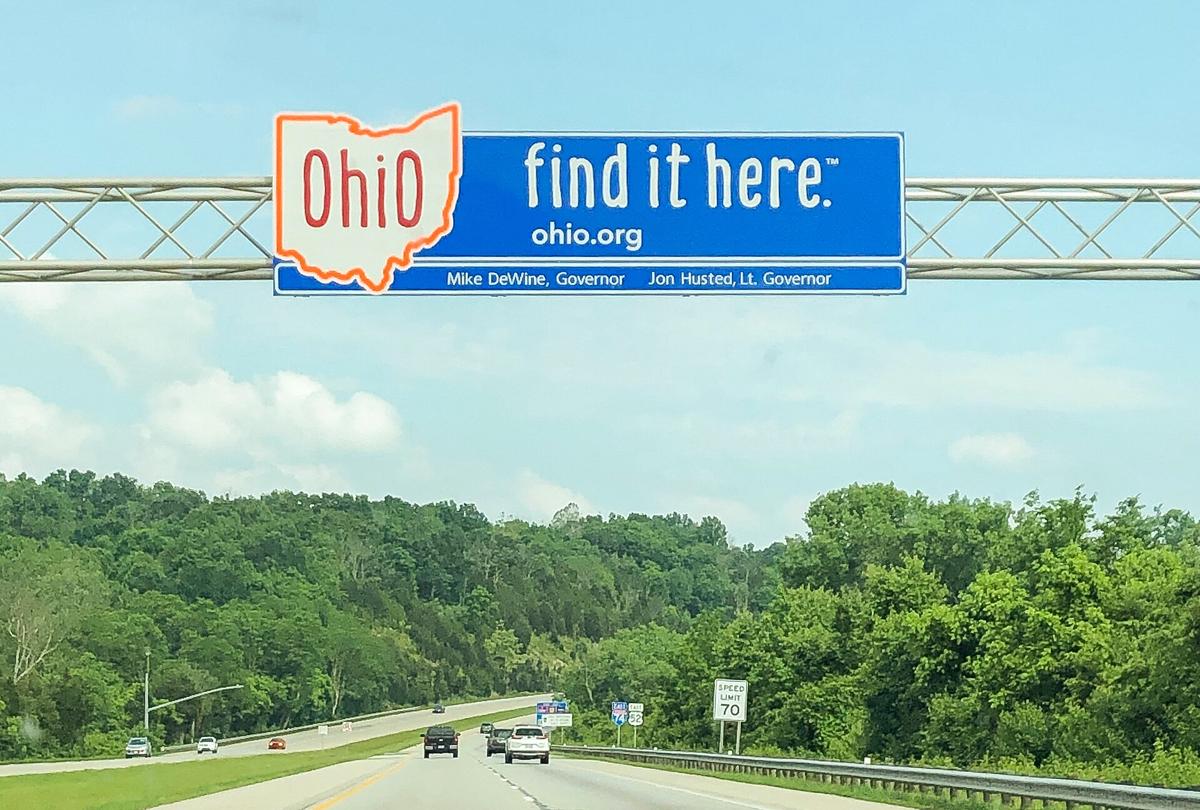
Ohio has become a focal point in the nationwide conversation about election integrity, voter access, and state sovereignty over election administration. At the heart of the controversy lies House Bill 54, enacted in 2025, which requires individuals registering to vote at Ohio’s Bureau of Motor Vehicles (BMV) to provide verifiable proof of U.S. citizenship. This law aims to safeguard the democratic process by verifying citizenship — a requirement long-enshrined in federal election law yet increasingly contested in courts and politics.
The enactment and enforcement of this proof-of-citizenship mandate sparked intense debates, fierce legal battles, and significant media attention. Critics argue the law disproportionately burdens eligible voters and conflicts with the National Voter Registration Act (NVRA), while statewide officials defend it as a reasonable and necessary step to prevent voter fraud. Understanding the contours of Ohio’s law, its legal challenges, and its wider implications offers crucial insight into the ongoing battle over voter registration laws nationwide.
The Legal Foundations and State Motivations Behind Ohio’s Proof-of-Citizenship Requirement
"Ensuring voting is reserved for citizens is fundamental; Ohio’s proof-of-citizenship law safeguards ballots without compromising lawful access."
House Bill 54 made clear Ohio’s intention to tighten voter registration protocols at the BMV by requiring documentary proof that registrants are U.S. citizens. Acceptable forms of proof include a birth certificate, U.S. passport, or certificate of naturalization, all well-established indicators of citizenship status. The state's rationale centers on preventing noncitizens from registering to vote through motor vehicle channels, a concern echoed in other states with similar provisions.
Ohio’s move was motivated by concerns over election security and public confidence. Proponents argue that in an era of interstate voter fraud allegations and increasing political polarization, it is reasonable for states to utilize existing documentation requirements to verify voter eligibility. The BMV, as a frequent point of voter registration, provides a logical checkpoint for such verification without unduly burdening most citizens, who already carry these documents for other purposes.
Federal law, particularly the NVRA, requires states to offer voter registration opportunities at motor vehicle agencies but prescribes only an attestation of citizenship, not documentary proof. Ohio’s HB 54 therefore walked a fine line by imposing a stricter standard than many states, intensifying debates about federalism, voter access, and the limits of state discretion. This delicate balance has been scrutinized in court and remains central to discussions about state autonomy in election regulation.
The underlying vision driving Ohio’s law is rooted not just in procedural formality but in restoring public trust in elections, which some conservatives argue has been eroded by instances of voter fraud and lax verification protocols nationwide. The law’s proponents point out that requiring proof of citizenship—already necessary for many other government benefits—should not be viewed as an undue barrier but as a reasonable safeguard.
The Federal Court Battles Illuminating Election Law’s Complex Interplay
Following the law’s implementation in mid-2025, advocacy groups challenged it in federal court, arguing that the proof-of-citizenship requirement contravenes the NVRA’s intent to simplify voter registration and lower barriers for eligible voters. District Judge Solomon Oliver Jr. issued a preliminary injunction in August 2026 to halt enforcement, citing concerns that Ohio’s additional documentation demands would exclude lawful voters relying on attestation alone without documentary proof.
However, Ohio appealed and received a favorable ruling from the Sixth Circuit Court of Appeals in September 2026, which lifted the injunction. The appellate court emphasized Ohio’s authority to adopt measures that enhance the integrity of its election system, especially in light of concerns about voter fraud and the maintenance of public trust. This ruling reinstated Ohio's requirement, signaling judicial recognition of state latitude in calibrating voter registration protocols and providing important legal cover for similar laws in other states.
The state’s success in court demonstrated how federal law and state action can clash but also coexist. While the NVRA aims to streamline voter registration nationally, it does not categorically prohibit states from verifying citizenship through documentary evidence, especially where motor vehicle registration offers a convenient enforcement point. This layered legal landscape underpins many ongoing legal contests across the country, revealing the complex tug-of-war between federal mandates and state election autonomy.
Examining the appeals court opinion reveals a judicial inclination to afford states broad discretion where tangible concerns about election security exist. Despite critics’ accusations of potential voter suppression, the court regarded documentary proof as a reasonable extension of state responsibility, underscoring the importance of electoral integrity in a polarized era. This decision has provided Ohio with a model for defending conservative election laws amid judicial scrutiny.
Impacts on Voter Access, Government Accountability, and Political Dynamics
On-the-ground effects of Ohio’s law include requiring individuals at the BMV to bring citizenship documents when registering to vote — a change that some voter advocates criticize as an obstacle that disproportionately affects minority and economically disadvantaged communities without ready access to such documents. These concerns fuel arguments about the potential suppression of the franchise despite Ohio’s well-documented intention of preventing illegal voting.
Nonetheless, Ohio government officials and conservative voices argue that these requirements are minimal inconveniences starkly overshadowed by the imperative to prevent noncitizens from participating in U.S. elections. The paperwork demanded aligns with typical background documentation standards in many government areas, reinforcing the notion that citizenship must be confirmed to protect sovereignty and the electoral system's integrity.
Further, the law’s enforcement has catalyzed important government accountability by spotlighting the need for clear documentation standards. Transparency advocates stress that in the absence of strict checks, the risk of election fraud and public cynicism around election outcomes grows, potentially destabilizing democratic processes. Ohio’s policy, embraced by many conservatives, exemplifies actionable steps states can take to secure elections responsibly.
Politically, Ohio’s proof-of-citizenship law has heightened partisan engagement. Democratic critics emphasize inclusivity and minimizing barriers to voting, framing the law as a hidden voter suppression tactic. Meanwhile, conservatives praise the move as a necessary bulwark against fraud and a restoration of proper electoral standards. This dichotomy highlights how election laws increasingly serve as focal points for broader ideological battles involving voting rights, federalism, and governmental authority.
Ohio’s proactive defense of its proof-of-citizenship law, including the appeals court victories (see court reaffirmation), demonstrates a commitment to election integrity amid a political environment where election issues remain deeply polarized. The law’s fate also influences wider dynamics, including federal-state relations, with states continuously testing the boundaries of their rights versus federal statutory mandates.
Related Policy Developments and Broader Trends in Ohio’s Election Law
Ohio is concurrently addressing other aspects of election regulation that align with its proof-of-citizenship stance. For instance, it recently enacted laws requiring that all mail ballots be returned by Election Day (reflecting voter integrity concerns) and banned ranked-choice voting (targeting electoral complexity), illustrating a pattern of measures aimed at creating clear, verifiable election systems.
Such policies reveal a consistent strategy championed by Ohio conservatives to simplify election mechanics and reduce opportunities for confusion, mistake, or manipulation. The ban on ranked-choice voting, for instance, reflects skepticism about less transparent or more complicated voting mechanisms that some claim undermine straightforward democratic processes.
Additionally, Ohio’s law enforcement and political leaders have taken outspoken positions on immigration and voting eligibility, including responses to incidents involving unauthorized immigrants and criticisms of policies in other states (such as criticism of drive-only licenses). These efforts reflect an interconnected conservative agenda prioritizing law enforcement, border security, and election integrity, linking voting laws to broader public safety and rule-of-law concerns.
Ohio also navigates contemporary cultural and legal issues, such as its tightening of gender marker policies with adherence to state law (an example of legal alignment), showing that election law is part of a broader context of conservative governance emphasizing lawful documentation and regulatory consistency. These interconnected reforms underscore a governance philosophy that favors clear rules anchored in legal standards, resisting ad hoc or expansive interpretations that could weaken institutional integrity.
The National Significance and What Lies Ahead
Ohio’s developments resonate far beyond state lines, contributing to a national debate about how states regulate voter registration. The appellate court’s decision to permit proof-of-citizenship mandates at the BMV could embolden other states seeking to implement or defend similar laws, reinforcing a legal theory supportive of robust state controls and preventive measures against fraud.
The ongoing legal tussles over Ohio’s proof-of-citizenship law also underscore the continuing tension between federal statutory protections designed to ease voter registration and state efforts to safeguard electoral integrity. As the Supreme Court has yet to issue a definitive ruling on this specific clash, Ohio’s case sets a vital precedent whose ripples will be felt in future litigation and legislation.
Critics will continue to push for broader voter access and reduced documentation requirements to prevent disenfranchisement, while advocates on the right emphasize the dangers of lax registration protocols. These competing visions frame Ohio as a battleground state not only politically but legally in the fight over election rules. This dynamic interplay will shape the evolution of election law doctrine and policy nationwide.
In the months and years ahead, attention will focus on enforcement practices at BMVs, public awareness about documentation requirements, and whether courts uphold Ohio’s law amid evolving judicial interpretations. Political developments, such as advocacy campaigns or legislative amendments, will further shape the law’s practical effects and public reception.
Overall, Ohio’s proof-of-citizenship voter registration law exemplifies the conservative commitment to upholding the rule of law in elections and combating irregularities — priorities essential to preserving constitutional governance and electoral legitimacy in America.
Frequently asked questions
What documents are required under Ohio’s proof-of-citizenship law?
Ohio requires applicants to submit official documents like a birth certificate, U.S. passport, or certificate of naturalization when registering to vote at the BMV.
Why was the law challenged in court?
Critics argued it conflicted with the National Voter Registration Act by imposing unnecessary barriers beyond the required citizenship attestation.
What did the courts ultimately decide about the law?
While a federal district judge initially blocked the law, the Sixth Circuit Court of Appeals later reinstated it, affirming Ohio’s right to require documentary proof at BMVs.
Does the law apply to all voter registrations in Ohio?
No. It specifically applies to voter registration done through motor vehicle agencies, not necessarily mail or other methods.
How does this law impact voters without easy access to citizenship documents?
Opponents say it may disenfranchise individuals who lack immediate access to required documentation, while supporters say these are minimal, reasonable requirements.
Is Ohio alone in requiring proof of citizenship for voter registration?
Several other states have or have considered similar laws for BMV voter registrations, contributing to a broader national debate.
How does this law fit into Ohio’s broader election reform efforts?
Ohio’s proof-of-citizenship law is part of a series of conservative measures aimed at reinforcing election security, including mail ballot deadlines and banning ranked-choice voting.
Timeline of our coverage
- 2026-09-24 — Appeals Court Reinstates Ohio Proof-of-Citizenship Voter Registration Law
- 2026-09-24 — Federal Appeals Court Allows Ohio Proof-of-Citizenship Voting Law for Midterms
- 2026-09-22 — Senate Democrats Block Husted’s Data Center Utility Bill After House Passes 417-3
- 2026-09-08 — U.S. Marshals Recover 79 Missing Children in Ohio’s Largest Operation
- 2026-09-08 — Ohio Senators Demand Action After Fatal Crash Involving Unauthorized Immigrant
- 2026-09-07 — Armed Man Arrested After Alleged Attack on Ohio Democratic Governor Candidate at State Fair
- 2026-09-02 — Ohio Senator Criticizes Connecticut’s ‘Drive-Only’ Licenses After Fatal Crash
- 2026-08-20 — Ohio BMV Tightens Gender Marker Policy, Citing State Law
- 2026-07-26 — DeWine, GOP Governors Back Pledge to Shield Ratepayers from Data Center Costs
- 2026-07-22 — BLM Advances Fracking Lease Sale in Ohio's Wayne National Forest
- 2026-06-23 — Ohio Man Petitions Supreme Court Over In-Home Prayer Group Restrictions
- 2026-06-05 — House Hearing Reveals $1.2 Billion in Medicaid Fraud in Ohio
- 2026-03-19 — Ohio and Indiana Ban Ranked-Choice Voting in New Legislation
- 2026-01-28 — Ohio Attorney General Candidate Promises to Convict Trump
- 2025-12-22 — Ohio Enacts Law Requiring All Mail Ballots to Be Returned by Election Day
- 2025-11-12 — Ohio Doctor Suspended for Allegedly Administering Abortion Drugs to Girlfriend
- 2025-11-10 — Federal Appeals Court Tells Schools They Cannot Coerce 'Preferred Pronoun' Use
The Bottom Line
- It reinforces the legal principle that only citizens may register and vote, a cornerstone of election integrity.
- It highlights the tension between federal laws designed to expand voter access and states’ rights to verify eligibility.
- It shapes how Ohio and possibly other states manage voter registration processes via motor vehicle agencies.
- The outcome influences public trust in elections, impacting political stability and democratic legitimacy.



Sources
- Ohio Revised Code § 3503.11 - Registering to Vote With Registrar of Motor Vehicles
- U.S. Supreme Court
- Ideastream.org: Federal Judge Blocks Enforcement Of Ohio Proof Of Citizenship Requirement For Voter Registration
- Democracydocket.com: Federal Court Blocks Ohio Law Requiring Proof Of Citizenship For Voter Registration
- News.ballotpedia.org: Federal Judge Temporarily Blocks Ohio Documentary Proof Of Citizenship Requirement (Sep 01, 2026)
- Statenews.org: Judge Puts Proof Of Citizenship Requirement For Voters Registering At Ohio Bmvs On Hold
- Ohio.news: Federal Judge Blocks Ohio Proof Of Citizenship Requirement For Bmv Voter Registration
- Voz.us: Federal Appeals Court Clears Ohio To Require Proof Of Citizenship To Register To Vote Again
- Ohiocapitaljournal.com: Circuit Court Allows Ohio Bmv To Require Proof Of Citizenship For Voter Registration (Sep 24, 2026)