Campaign Finance Laws and Enforcement: Protecting Electoral Integrity in America
Explore the essentials of U.S. campaign finance laws, enforcement challenges, and recent election controversies threatening transparency and fairness.
Additional reporting by Liam Walker

Campaign finance lies at the heart of American elections, influencing who can compete effectively and how voters receive information. The system’s goal is to promote transparency and fairness in political contests by regulating the money raised and spent to sway election outcomes. Given the colossal sums now circulating, understanding the laws governing campaign donations and expenditures is vital for any citizen concerned with preserving the integrity of our democracy.
For conservative observers, campaign finance oversight is not merely bureaucratic but a frontline defense against corruption, undue influence, and electoral manipulation. With federal statutes such as the Federal Election Campaign Act (FECA) and the Bipartisan Campaign Reform Act (BCRA) forming the backbone of regulatory frameworks, the Federal Election Commission (FEC) has the task of enforcing complex rules to maintain a level playing field. However, evolving tactics, loopholes, and political pressure continually test the system.
Foundations of Federal Campaign Finance Regulations
"Robust campaign finance enforcement is essential to protect election integrity from covert tactics and unchecked spending."
The architecture of campaign finance regulation in the United States centers primarily on the FECA, enacted in 1971 and amended several times since. This landmark statute requires detailed public disclosure of contributions and expenditures, sets limits on individual and organizational donations, and establishes public financing options for presidential campaigns. The Bipartisan Campaign Reform Act (also known as McCain-Feingold), passed in 2002, introduced further restrictions, particularly on soft money contributions and issue advocacy ads.
At the helm of enforcement is the Federal Election Commission, created in 1975, which monitors compliance, investigates potential violations, and levies fines. The FEC also sets regulatory guidelines for political action committees (PACs) and super PACs, which have grown to dominate the fundraising landscape. From an electoral integrity standpoint, these regulations aim to curtail undue influence by wealthy donors or special interests, increasing transparency so voters understand who funds various campaigns.
Despite these intentions, critics—especially on the left—argue for even tighter controls, claiming big money dominates politics regardless of legal limits. Conservatives often caution against overregulation, emphasizing free speech rights and warning that excessive restrictions can chill political participation. The Supreme Court’s landmark Citizens United v. FEC decision underscored this tension by allowing unlimited independent expenditures by corporations and unions, reshaping how campaigns are financed.
Contemporary Challenges and Enforcement in Campaign Finance
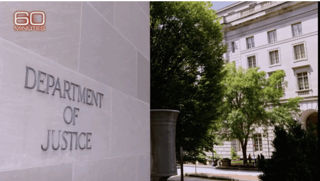
Recent elections highlight persistent enforcement challenges that threaten the effectiveness of campaign finance laws. Allegations that Democratic operatives in Alaska recruited a candidate with the same name as Republican incumbent Dan Sullivan exemplify how confusing tactics can influence voter behavior without technically breaking explicit fundraising rules. The Alaska U.S. Attorney’s Office and Department of Justice have opened investigations into whether such schemes violated election laws, underscoring ongoing concerns about the limits of current regulations.
Another layer of complexity arises with coordination between outside groups and campaigns. A recent complaint filed by the American Accountability Foundation alleges improper coordination by the nonprofit 907 Initiative in that same Alaska Senate race. Coordination between supposedly independent entities and official campaigns is illegal when it involves sharing strategic information or directing spending, as it circumvents contribution limits and disclosure requirements.
These cases underscore the need for robust enforcement of existing laws while also pushing lawmakers to clarify or update regulations to account for evolving campaign strategies. Conservative calls for transparency emphasize the importance of holding all parties accountable, regardless of political affiliation, to prevent the erosion of voter trust. Our reporting shows how campaign finance investigations often become partisan battlegrounds themselves, complicating efforts at reform.
The Role and Influence of PACs and Outside Spending
Political action committees (PACs) and their independent expenditure counterparts, super PACs, have radically transformed campaign finance dynamics. These organizations can raise and spend vast sums to support or oppose candidates without directly coordinating with campaigns, leveraging loopholes created post-Citizens United. Super PACs, in particular, operate with little limit on donations and have become indispensable tools for campaign messaging and influence.
Nevertheless, concerns over these groups operating in near-anonymity have spurred scrutiny from lawmakers and watchdogs. For example, Congressional committees recently accused popular fundraising platforms like ActBlue of lax controls on foreign donations, spotlighting vulnerabilities in the system that could allow foreign entities to indirectly sway U.S. elections. Similarly, outside spending fueled by out-of-state or special-interest money raises questions about the influence of non-constituents on local races, as seen in our coverage of the Georgia House race with unprecedented external funding.
From a conservative perspective, while acknowledging the constitutional protections around political speech, there is broad support for transparency that exposes the true sources of campaign dollars. This includes advocating for thorough public disclosure of donations and spending. Efforts to shield donors undermine voter confidence and can enable corrupting influences hidden behind layers of nonprofits or shell entities.
Supreme Court and Legislative Impact on Campaign Finance Landscape
Judicial decisions and legislative amendments significantly shape campaign finance policy. Supreme Court rulings like Citizens United and more recent decisions have struck down key provisions, such as limits on discounted political advertising rates for GOP groups, which we reported the Court recently lifted. These rulings reflect an increasing prioritization of First Amendment protections over campaign finance restrictions — a victory for free speech advocates who argue that spending money to communicate political messages is a form of protected expression.
However, these decisions also fuel ongoing debate over the balance between free expression and preventing undue influence. Conservatives typically champion these rulings as safeguards against government overreach, emphasizing the dangers of bureaucratic micromanagement of political activity. At the same time, there remains a cautious recognition that transparency and enforcing clear laws are essential to prevent outright fraud or deception in elections.
On the legislative front, Congress frequently considers reforms to tighten disclosure rules or adjust contribution limits. Yet, partisan gridlock often stifles meaningful changes, leading to calls for reforms from independent groups and enforcement agencies. As shown in our coverage of multiple races involving questionable funding practices—including investigations into Chinese-linked donations in Iowa—there is no shortage of pressure for stronger and more consistent enforcement.
Campaign Finance’s Broader Impact on Electoral Integrity and Democracy
Campaign finance laws and their enforcement carry profound implications for the integrity of American elections. Money’s role in shaping access, messaging, and ultimately election outcomes cannot be overstated. When loopholes allow for manipulation or when enforcement agencies fail to act decisively, the result is voter cynicism and diminished confidence in democratic institutions.
Conversely, effective regulation safeguards the voice of the average voter by preventing an unequal playing field dominated by wealthy interests or foreign influences. Conservatives value campaign finance integrity not just to protect electoral fairness but also to defend the principles of individual liberty and accountable governance. We recognize legitimate concerns from opponents about potential abuses but urge vigilance against regulatory overreach that curtails political advocacy.
Recent examples, such as the scrutiny of online gambling money funneled into Kansas and Georgia elections or allegations of improper corporate PAC donations haunting Scranton’s mayoral race, highlight the urgency of robust systems backed by enforcement. Maintaining public disclosure standards and enforcing coordination rules can deter the increasingly sophisticated tactics campaigns and allied groups employ to sway outcomes.
Reform Prospects and What Voters Should Watch
Looking ahead, the future of campaign finance lies at a crossroads. On one hand, mounting electoral controversies and revealed abuses intensify calls for comprehensive reform, ranging from greater transparency mandates to new limits on spending by outside groups. On the other, constitutional protections for political speech constrain regulatory expansion and require lawmakers to tread carefully.
For voters, paying close attention to ongoing federal investigations and legislative proposals is critical. Monitoring diverse campaigns, including battleground race spending, helps citizens discern the influences shaping their ballots. Our reports on the Alaska Senate race's federal complaint and the Senate GOP super PAC reallocating funds exemplify how money flows impact competitive races, warranting scrutiny.
Ultimately, preserving election integrity demands a commitment from officials, watchdogs, and voters alike to uphold transparency rules, investigate violations promptly, and resist manipulative tactics that undermine democratic choice. A well-informed electorate that understands campaign finance’s role is better positioned to demand accountability and reject covert influence.
Campaign finance regulation is no mere technicality—it's a critical safeguard for the health and legitimacy of our republic. Conservatives see this as a battleground for protecting political speech while ensuring elections reflect the genuine will of the people, not shadowy money interests.
——
For continued coverage and expert analysis on campaign finance, explore our detailed features on related topics such as the scrutiny over China-linked donations and investigations into donor transparency failures. Our reporting maintains a commitment to exposing how money shapes politics in today's America.
Frequently asked questions
What is the Federal Election Commission and what does it do?
The FEC is an independent regulatory agency that enforces federal campaign finance laws, oversees disclosure of contributions, and administers public financing programs to promote transparency in elections.
How do campaign finance laws affect political donations?
They set limits on how much individuals, PACs, and organizations can donate and require disclosure of funding sources to prevent corruption and inform voters.
What was controversial about the Alaska Senate race in campaign finance terms?
Allegations arose that Democratic operatives recruited a candidate with the same name as a Republican incumbent to confuse voters and possibly siphon votes, prompting federal investigations.
How do super PACs influence campaigns?
Super PACs can raise and spend unlimited funds independently of campaigns, heavily influencing elections through advertising and messaging but are prohibited from coordinating directly with candidates.
Why is transparency in campaign finance important?
Transparency ensures voters know who finances political messaging, helps deter illegal activities, and maintains trust that elections reflect genuine voter preferences.
What role does the Supreme Court play in campaign finance regulation?
The Court interprets constitutional limits on campaign finance laws, often balancing free speech protections against regulations intended to reduce corruption and increase fairness.
Can foreign entities legally contribute to U.S. campaigns?
No, federal law prohibits foreign nationals and entities from making contributions or expenditures in U.S. elections to protect sovereignty and prevent external influence.
What are common enforcement challenges faced by campaign finance regulators?
Regulators struggle with identifying illegal coordination between campaigns and outside groups, tracking the true source of funds, and staying ahead of new manipulation tactics.
Timeline of our coverage
- 2026-11-02 — Alaska Senate Race Faces Federal Complaint Over Alleged Coordination
- 2026-10-23 — Georgia House Race Draws Unprecedented Out-of-State Funding for Democrat
- 2026-10-06 — National Progressive Funding Targeted Wyoming GOP Primary, Records Show
- 2026-10-02 — Senate GOP Super PAC Halts North Carolina Ads, Redirects Funds to Kansas
- 2026-10-02 — McKinney Officials Face Scrutiny Over Ties to Islamic Association Ahead of Mosque Vote
- 2026-09-25 — Iowa House Race Sees Both Sides Face Scrutiny Over China-Linked Donations
- 2026-09-18 — House Committees Accuse ActBlue of Lax Controls on Foreign Donations
- 2026-09-04 — Supreme Court Lifts Limits on GOP Access to Discounted Political Ad Rates
- 2026-09-03 — Trump Commits $400 Million to Boost Republicans in Battleground Races
- 2026-08-21 — Green Energy PAC Targets Republicans With Pro-Trump Messaging
- 2026-08-17 — FBI Documents: Alleged Chinese Spy Sold Access to Rep. Eric Swalwell
- 2026-08-13 — Online Gambling Firms Pour Money Into Kansas and Georgia State Elections
- 2026-08-05 — Scranton Mayor’s Campaign Faces Scrutiny Over Indirect Corporate PAC Donations
- 2026-07-16 — Sherrod Brown Outraises Jon Husted in Ohio Senate Special Election
- 2025-11-20 — House Dem Indicted For Bankrolling Campaign With FEMA Funds
- 2025-11-14 — Grassley: DOJ Partisans Killed Probe Into Clinton, DNC
The Bottom Line
- Campaign finance laws ensure elections remain free from undue influence by wealthy or foreign interests.
- Transparent disclosure of political donations empowers voters to make informed decisions.
- Effective enforcement deters fraud, coordination violations, and manipulative campaign tactics.
- Conservative principles of free speech require protecting political spending as expression but demand accountability.


Sources
- Federal Election Campaign Act of 1971
- Bipartisan Campaign Reform Act of 2002
- Federal Election Commission: Introduction to Campaign Finance and Elections
- FEC
- Wisevoter.com: Alaska Senate Race Campaign Finance Complaint (Oct 30, 2026)
- En.wikipedia.org: Campaign Finance In The United States
- Axios.com: Alaska Ballot Sullivan Peltola Doj Lawsuit (Oct 30, 2026)
- Axios.com: Alaska Senate Race Dan Sullivan Trump (Oct 29, 2026)
- Findlaw.com: U S Campaign Finance Laws