A renewed dispute has emerged over the application of a Civil War-era statute, Section 241, as legal experts and advocacy groups debate its use in high-profile political investigations involving both President Donald Trump and Democratic officials.
Explainer Redistricting Battles: How Maps Shape American Political Power
The core issue centers on whether invoking Section 241 is a legitimate legal tool or a partisan weapon. Both sides accuse the other of exploiting the statute for political advantage, raising questions about the boundaries of federal law in the context of political investigations and election oversight.
Background on Section 241
Section 241, originally enacted during the Reconstruction era, was designed to protect voting rights by criminalizing conspiracies to "injure, oppress, threaten, or intimidate" individuals in the free exercise of their constitutional rights. Over the years, the statute has been used in cases involving voter suppression, ballot-box stuffing, and other election-related crimes. Its broad language has allowed for a range of applications, but its use in modern political investigations has become increasingly controversial.
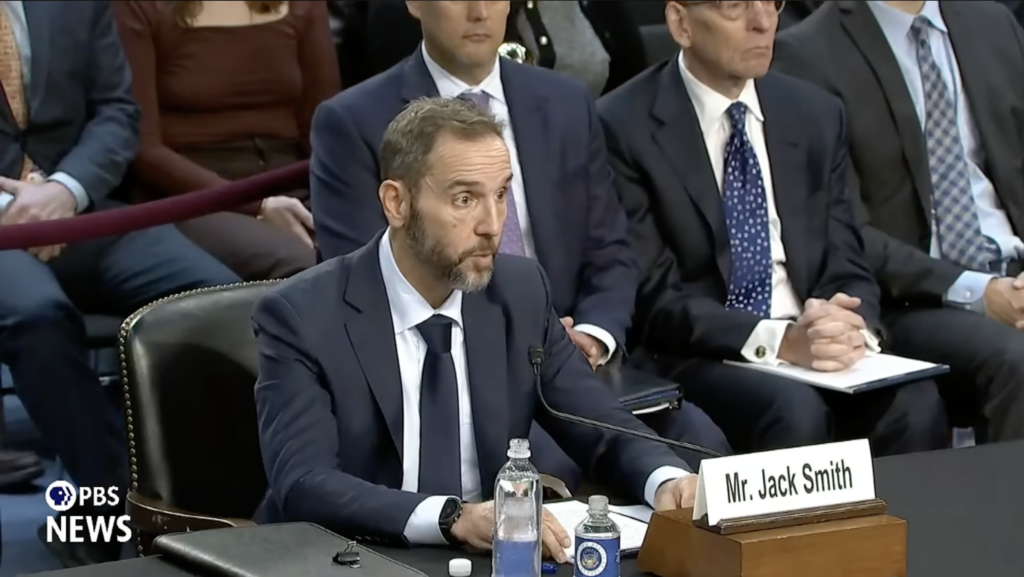
Recently, special counsel Jack Smith invoked Section 241 to charge President Trump with conspiracy against rights. The indictment alleges that Trump’s actions to contest the 2020 election results would have disenfranchised millions of voters, constituting a violation of their civil rights. This move has drawn both support and criticism from legal experts and political figures.
Support for Smith’s Approach
According to reporting by Politico, many legal experts, including former Obama White House attorney Ian Bassin and former Department of Justice civil rights prosecutor Kristy Parker, have supported Smith’s use of Section 241. Parker, writing in a New York Times op-ed, argued that bringing civil rights charges against Trump was not an overreach by the Justice Department. She emphasized that the statute was intended to protect the fundamental right to vote and that the facts alleged in the indictment fit within the law’s historic purpose.
"Bringing civil rights charges against the former president is not overreach by the Justice Department."
— Kristy Parker, former DOJ civil rights prosecutor
Supporters of Smith’s approach point to Supreme Court precedent involving ballot-box stuffing as evidence that Section 241 can be applied to election-related crimes. They argue that the statute’s broad language is intended to address a variety of schemes to undermine voting rights, and that the charges against Trump are consistent with its original intent.
Criticism and Warnings of Political Retaliation
However, the same Politico article noted that Trump administration officials have warned Democrats that their own use of subpoenas and investigations could be scrutinized under Section 241. These warnings have been framed as potential "political payback," suggesting that the statute could be used to target political opponents in retaliation for investigations into Trump and his allies.
Critics of this approach, such as former Obama ethics czar Norm Eisen, argue that the Trump administration’s threats lack a factual predicate comparable to Smith’s case against Trump. Eisen insisted that Section 241 "requires an actual factual predicate, an actual evidentiary predicate of the kind that you had with Donald Trump’s assault on the rightful outcome of the 2020 election." He described the Trump team’s warnings as "just a naked tit for tat" rather than a legitimate legal argument.
Advocacy Groups and Legal Battles
The debate has intensified as advocacy groups like Democracy Defenders Fund, co-founded by Eisen, have intervened in related legal battles. The group has joined lawsuits on behalf of the NAACP and other organizations after the Trump DOJ sued California over a list of more than 20,000 alleged noncitizens on voter rolls. Democracy Defenders Fund argued in court filings that the DOJ’s evidence was unreliable and that the effort was aimed at disenfranchising eligible voters. These filings, referenced in Contrarian News and statements from the group, highlight the ongoing legal struggle over voting rights and federal oversight.
Democracy Defenders Fund has also threatened legal action against the Trump administration over efforts to remove career DOJ and FBI officials. In a letter reported by the Daily Caller News Foundation, the group warned that such actions could violate due process rights and threaten national security. The organization has further backed lawsuits opposing Trump’s order on birthright citizenship and challenging the Department of Government Efficiency, reflecting its broader focus on civil rights and government accountability. The group did not immediately respond to requests for comment on its latest legal threats.
Ongoing Legal and Political Dispute
The Supreme Court precedent cited by Politico, involving ballot-box stuffing, has been used to argue that Section 241 can apply to election-related crimes. However, critics note that this precedent does not directly establish a basis for Smith’s use of the statute against Trump, describing the charge as "novel." Despite this, supporters maintain that "many experts embraced it," reflecting a divide in the legal community over the statute’s reach.
Supporters of the Trump administration argue that Democrats have previously promised to use congressional investigations as a form of political retaliation, and warn that such actions could be subject to the same legal scrutiny under Section 241. Critics, including Eisen and Democracy Defenders Fund, maintain that these warnings are unfounded and represent an attempt to intimidate political opponents rather than a genuine legal threat.
The dispute over Section 241’s application continues as both parties prepare for further legal and political battles. Upcoming court hearings and potential lawsuits are expected to keep the statute at the center of debates over election law, civil rights, and the boundaries of political accountability.