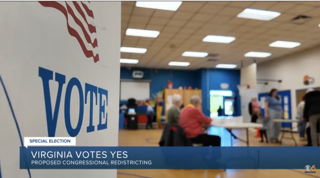
Voters in 35% of Virginia's cities and counties will face a significant decision this November: whether to authorize a 1% increase in local sales and use taxes, with all proceeds dedicated to school capital projects. This referendum, made possible by recent amendments to Virginia law, has generated considerable debate over the transparency of school spending and the broader economic implications of raising sales taxes at the local level.
Explainer Virginia's Legal Battles Over Gun Control, Abortion, and Redistricting Explained
The General Assembly recently approved changes to Sections 58.1-605.1 and 58.1-606.1 of state law. These amendments now allow every locality in Virginia to place the sales tax question on the ballot for voters to decide. If approved, the additional 1% sales tax must be used exclusively for new school construction, renovation, or other capital projects. The law specifically prohibits using these new revenues for existing debt service, aiming to ensure that funds are directed toward tangible improvements in school facilities.
School Funding and Transparency Concerns
The push for a local sales tax increase has reignited longstanding concerns about the transparency of school capital budgets in Virginia. Critics point to research from the Cicero Institute, which found that “public school capital budgets are not universally transparent.” The clarity of online postings varies widely between districts, and meeting agendas often provide little detail about project bidding processes or the specifics of proposed expenditures. As a result, allocations for school maintenance or upgrades are sometimes approved with minimal public scrutiny or debate.
A recent incident in Henry County has become a focal point in the transparency debate. After receiving permission in 2021 to impose a 1% sales tax for new school construction, the county’s board of supervisors used the first year’s $2.6 million in revenue to pay down debt from previous projects. This move surprised many voters, who had expected the funds to be used for new construction. In response to such concerns, the latest statutory changes now require that any new tax revenues be directed only to new projects, not to paying off existing debts.
Economic Impact and Political Debate
The economic impact of a higher sales tax is a central issue in the current debate. Research published in the Journal of Risk and Financial Management found that “taxes exert a negative influence on local economies,” noting that a 10% increase in sales taxes is associated with a 4.5% decrease in nonfarm proprietor employment rates. Critics argue that increasing sales taxes could disproportionately affect lower-income residents, since sales taxes take a larger share of their income compared to wealthier individuals. This regressive nature of sales taxes has become a key talking point for opponents of the measure.
Some city officials in localities such as Richmond, Staunton, and Martinsville have argued in favor of the tax, suggesting that a portion of the revenue will come from visitors and non-residents who shop or do business in their jurisdictions. This approach, sometimes described as “make the other guy pay,” has drawn attention from both sides of the political spectrum. State Senator Ryan McDougle, R-Hanover, has been a vocal critic of the sales tax increase. He points to alternative funding sources, such as casino revenues, as preferable ways to support school construction. “We’ve been able to take money from casino operations and, over a three-year period, put almost $500 million, that’s half a billion dollars, toward school construction. That’s the way we tackle the problem, not raising taxes on Virginians,” McDougle told Channel 8 News.
Supporters of the proposed tax argue that additional, dedicated funding is essential to address the backlog of needed repairs and upgrades in school facilities across the state. They contend that relying on local sales tax revenue provides a direct and transparent way to fund these projects. However, critics question why increased overall tax collections—up 14% in March, with $40 billion collected in 2025—are not sufficient to meet these needs. Despite these concerns, state officials and supporters of the measure have not directly addressed the issue of whether existing revenues could be reallocated to cover school capital expenses.
Broader Fiscal Context
The debate over the local sales tax increase comes at a time when Virginia residents are already facing rising costs in other areas. Higher electric bills, attributed to the Virginia Clean Economy Act and the state’s participation in the Regional Greenhouse Gas Initiative, have added to the financial pressures on households. These broader economic challenges have fueled ongoing tensions over government spending priorities and the overall affordability of living in Virginia.
The upcoming referendum will give voters a direct say in whether to approve what critics call a “regressive tax”—one that takes a higher percentage from lower-wage earners—or to reject the measure and potentially leave school capital projects without a dedicated funding source. The outcome of the vote will likely shape the future of school infrastructure investment and local tax policy in Virginia for years to come.