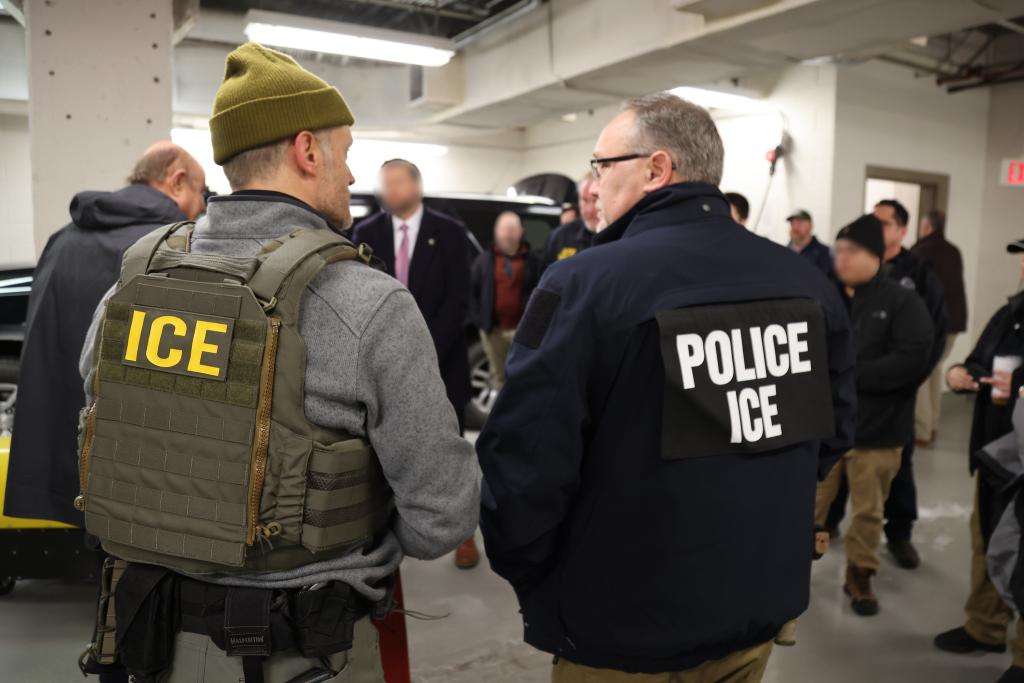
The Department of Justice’s Office of Legal Counsel (OLC) has issued a new legal opinion requiring all state agencies—not just those administering welfare programs—to report the presence of people in the country illegally to the Department of Homeland Security (DHS) as a condition for receiving federal welfare funds. This directive, which applies to states participating in the Temporary Assistance for Needy Families (TANF) and Supplemental Security Income (SSI) programs, affects the distribution of $16.4 billion in federal funds annually.
The move intensifies the ongoing conflict between federal authorities and states that have declared themselves "sanctuaries" for unauthorized immigrants. It raises the stakes for states over access to federal welfare funding and the enforcement of immigration laws.
The OLC opinion, published Tuesday, clarifies that all 50 states, the District of Columbia, and several U.S. territories must comply with the reporting requirement under a 1996 welfare reform law. The Justice Department stated that this new interpretation overturns a 1998 opinion from the Clinton administration, which had limited the reporting obligation to agencies directly administering TANF and SSI. The OLC now asserts that the law covers all state agencies, regardless of their specific role or whether they directly handle welfare benefits.
Scope of the Reporting Requirement
According to the DOJ, the revised guidance means that states such as California, New York, and Virginia—recently declared sanctuary states—must provide information about known unauthorized immigrants to DHS or risk losing federal welfare funding. The requirement applies broadly to any state agency that becomes aware of an individual’s unlawful presence, not just those that administer welfare programs directly. This expansion is intended to ensure that DHS receives all information it is entitled to under federal law.
Assistant Attorney General T. Elliot Gaiser emphasized the clarity of the obligation for any state choosing to participate in TANF or SSI. In a press release, Gaiser stated:
"When a state chooses to participate in TANF, it accepts the obligation to report illegal aliens in the United States. Tax dollars intended to help vulnerable Americans should not perversely encourage illegal entry into the United States, but rather should reinforce our laws and our borders."
Joshua Craddock, Deputy Assistant Attorney General and author of the opinion, noted that the guidance does not impose new obligations but restores what the DOJ sees as the original meaning of the statute. Craddock also clarified that states will not face retroactive penalties for having relied on the previous 1998 interpretation. However, he warned that future noncompliance could result in the loss of program funding for states that fail to report the presence of unauthorized immigrants as required.
Reversal of Clinton-Era Policy
The OLC opinion explicitly withdraws the 1998 guidance, rejecting the argument that congressional inaction since then amounts to approval of the narrower interpretation. The opinion maintains that legislative inaction does not change the "plain meaning" of the statute and that it would be constitutionally problematic to treat it as such. The DOJ’s official statement reiterates that the new guidance is intended to ensure DHS receives information it is legally entitled to under federal law.
The Clinton administration had previously rolled back the "public charge" rule, which for decades barred immigrants likely to become dependent on government assistance. Critics of that policy shift argue that it increased welfare use among immigrants, including those in the country illegally. The new OLC opinion marks a return to a stricter interpretation of federal welfare law, aiming to limit access to benefits for unauthorized immigrants and reinforce federal immigration enforcement efforts.
Welfare Use and Enforcement Focus
Recent analysis from the Center for Immigration Studies, based on the 2022 Survey of Income and Program Participation, found that 59 percent of households headed by an unauthorized immigrant use at least one welfare program. This compares to 52 percent of legal immigrant households and 39 percent of native-born households. The DOJ’s new opinion comes amid a broader federal crackdown on welfare fraud, including efforts to withhold Supplemental Nutrition Assistance Program (SNAP) funds from states that do not share immigration status data with the federal government.
Supporters of sanctuary policies have not issued a formal response to the DOJ’s latest directive. The Justice Department maintains that the policy change is necessary to uphold federal law and ensure that welfare programs serve their intended beneficiaries. The OLC’s position is that the reporting requirement is a longstanding statutory obligation, now clarified to apply to all relevant state agencies.
The full OLC opinion is available on the Justice Department’s website.