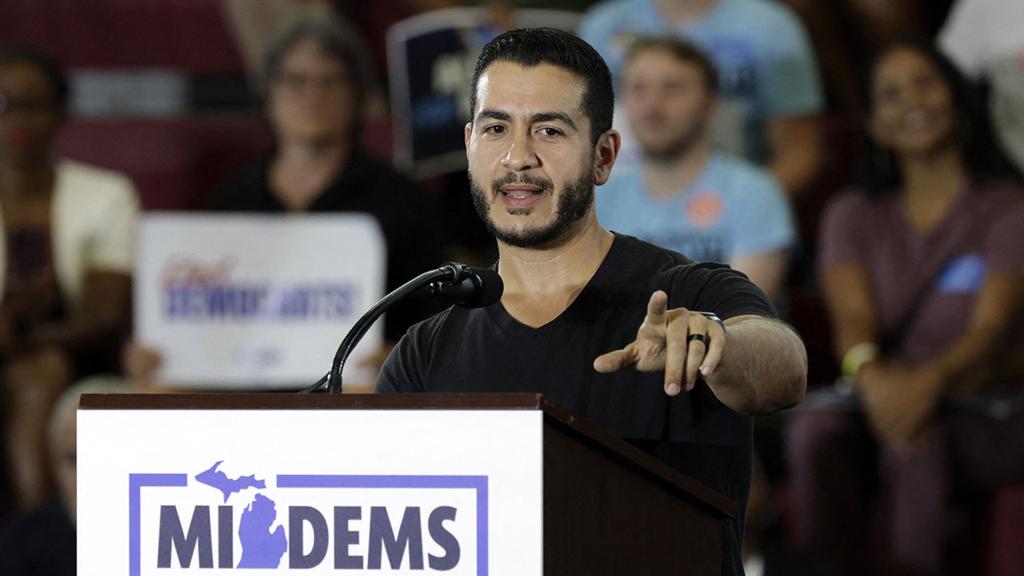
The Department of Health and Human Services (HHS) has issued a strong rebuke to Michigan Democratic Senate nominee Abdul El-Sayed after he drew a comparison between transgender medical procedures for minors and circumcision during a recent Fox News interview. The exchange has brought renewed attention to the ongoing national debate over parental rights, government oversight, and the ethics of medical interventions for children, particularly those related to gender identity.
Explainer Transgender Rights and Policies: A Comprehensive Overview of Ongoing Debates
The controversy began when El-Sayed appeared on Fox News with host Jesse Watters, who questioned his stance on "sex changes for minors." El-Sayed, referencing the Right to Try Act, argued that the government should not interfere in medical decisions made between parents, doctors, and their children. When pressed further about parental consent for such procedures, El-Sayed responded by asking Watters if he was circumcised. He elaborated, "Circumcision’s different than castration," but maintained, "It’s a problem that you think that you get to decide what happens between a parent, a doctor, and a patient... circumcision is surgery on a kid’s ding-a-ling, so if you really want to bring that up, you can."
El-Sayed did not directly equate circumcision and transgender procedures but invoked the example of circumcision to highlight his position that parents and doctors, rather than the government, should make medical decisions for minors. He subsequently shifted the conversation to economic issues, criticizing the focus on transgender care in political discourse and arguing that topics like gas prices and health care are of greater concern to Michigan families.
HHS and Watchdog Responses
HHS press secretary Grace Davis Jamison responded to El-Sayed’s remarks on Tuesday, calling the comparison a "gross distortion." Jamison emphasized the agency’s position that sex-rejecting procedures, which alter healthy reproductive anatomy and can result in irreversible harm, are fundamentally different in both scope and consequence from circumcision, which is considered a routine and limited medical procedure. She stated, "Comparing sex-rejecting procedures, which alter healthy reproductive anatomy and can result in irreversible harm, to a routine, limited medical procedure is a gross distortion of their fundamentally different scope and consequences."
The HHS position is rooted in findings from the Trump administration, which published a peer-reviewed study concluding there is "extremely weak evidence" supporting benefits from sex-rejecting procedures for those seeking a transgender identity. The agency has also conducted investigations into allegedly improper medical billing for experimental transgender procedures, which are often referred to by supporters as "gender-affirming care."
Jamison reiterated that the Trump administration and HHS "stand firm that children must be protected from sex-rejecting medical interventions with lifelong consequences and will continue to put the health and well-being of children ahead of political ideology."
Medical watchdog group Do No Harm also weighed in, condemning El-Sayed’s comparison. Dr. Stanley Goldfarb, chairman of the group, described the analogy as "a weak and dishonest attempt to muddy the waters on a politically toxic issue," arguing that "sex-rejecting interventions, particularly genital surgeries, are high-risk and cause lasting harm to kids."
Campaign and Advocacy Group Responses
El-Sayed’s campaign did not directly address the comparison to circumcision when contacted for comment. Campaign spokesperson Cole Wozniak stated, "Abdul has been clear that parents know what’s best for their families, and these decisions should be made by them and their doctors, not the government." Wozniak also criticized Fox News for focusing on the issue, suggesting that it was an attempt to distract from economic concerns affecting Michigan families.
The Daily Signal reported that several advocacy and professional organizations, including the Human Rights Campaign, the World Professional Association for Transgender Health, and the American Academy of Pediatrics, were contacted for comment on the controversy but did not respond by the time of publication.
The debate over medical interventions for transgender minors remains highly contentious, with advocates on both sides citing concerns about children’s health, parental rights, and the role of government in regulating medical care. The exchange between El-Sayed and federal officials underscores the deep divisions that persist on this issue, as well as the broader political and cultural debates shaping the 2024 election landscape.
As the discussion continues, both supporters and opponents of transgender medical procedures for minors are likely to keep pressing their cases in the public sphere, with policymakers, advocacy groups, and medical professionals all playing a role in shaping the future of related legislation and medical guidelines.