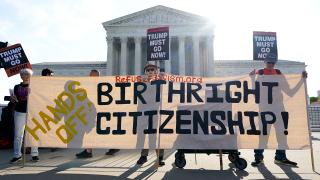
Conservative leaders and legal scholars are calling for Congress and the White House to take assertive steps to challenge the Supreme Court's recent 5-4 decision in Trump v. Barbara, which upheld citizenship for anyone born on U.S. soil. The ruling, seen by critics as a setback for efforts to restrict birthright citizenship, has prompted a renewed push for legislative and statutory solutions.
Explainer Understanding the Supreme Court’s Impact on Law and Liberty
The debate centers on whether Congress can override the Court's interpretation of the 14th Amendment and reshape the rules governing citizenship, especially for children born to people in the country illegally.
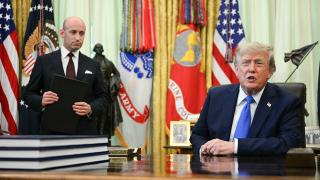
The Supreme Court's decision in Trump v. Barbara followed years of legal and political battles over an executive order from former President Donald Trump that sought to exclude children of foreigners born in the U.S. from automatic citizenship. The case has become a flashpoint in the broader fight over immigration policy and the separation of powers among the branches of government, with some conservatives arguing that the judiciary has overstepped its role.
Legislative Proposals and Legal Strategies
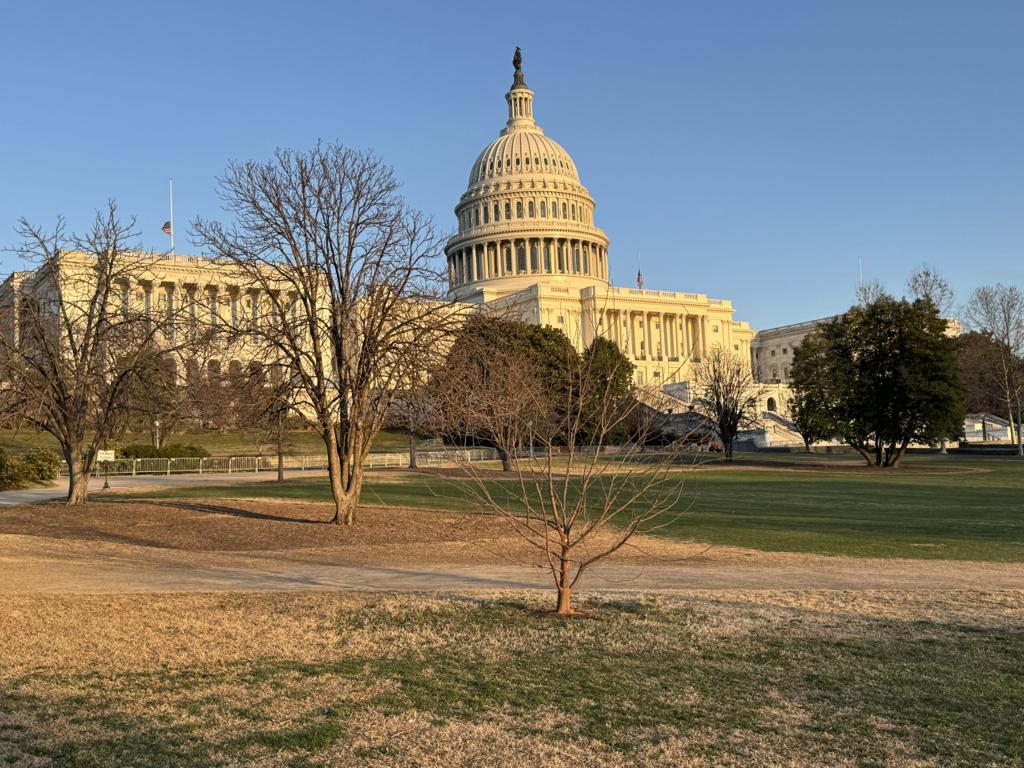
At a Capitol Hill event, John Eastman, Director of the Claremont Institute Center for Constitutional Jurisprudence, argued that the close 5-4 split shows progress for opponents of birthright citizenship. Eastman, who has advocated against birthplace citizenship since the 1990s, said, "think about how far we have moved the discussion, not just in the legal community, but nationwide in just a relatively few short years."
Iowa Solicitor General Eric Wessan suggested that legislative action—rather than executive orders—could more effectively challenge the Court's stance. Wessan pointed to the Citizenship Act of 2026, introduced by Sen. Jim Banks, R-Ind., which would define the ongoing border crisis as an "invasion" and block children born to unauthorized immigrants from obtaining citizenship. Wessan argued that the Supreme Court would face greater difficulty overturning a law passed by both houses of Congress.
Elle Rogers Bernstein, general counsel for Banks, emphasized that the definition of "invasion" is a political question for Congress, not the courts. She said, "Does Congress have the courage to say that our country has been invaded by 15 million illegal aliens and counting?"
Additional Legislative Efforts
Other lawmakers are advancing related bills. Sen. Eric Schmitt, R-Mo., has introduced the American Citizenship Act, which would limit birthright citizenship to children with at least one American parent and revoke citizenship improperly granted to children of diplomats. Bernstein and Ethan Harper, chief counsel to Schmitt, discussed further measures, including restricting noncitizens from holding public office, ending certain visa programs, and increasing penalties for employers who hire unauthorized immigrants.
Bernstein advocated for a multi-pronged approach: "Let’s do a constitutional amendment, let’s test cases, let’s try to end the technicalities of birthright tourism."
Court’s Limits and Future Challenges
Wessan identified areas where the Supreme Court left open the possibility for future legislative action, including regulating birth tourism and redefining statutory terms. He noted that the majority opinion in Barbara did not explicitly address all scenarios, leaving room for Congress to act.
Roger Severino, Vice President of Economic and Domestic Policy at the Heritage Foundation, argued that the decision was an "originalist debate," and predicted it would not lead to a series of precedents like Griswold, Roe v. Wade, or Obergefell.
"While the chief wanted to close the door firmly shut on reassessing the constitutionality of birthright citizenship, they really left the door ajar, and there’s a lot of room for creativity in what to do next."
— Eric Wessan, Iowa Solicitor General
Supporters of the Supreme Court's decision have not publicly responded to the latest legislative proposals, and the White House has not issued a statement on the new bills. The debate is expected to intensify as lawmakers consider changes to filibuster rules and as multiple bills move through Congress.
Harper noted that the current moment is forcing a national conversation about the definition of American citizenship, with demographic changes and immigration policy at the forefront. The next steps will depend on Congress's willingness to act and the Court's response to future challenges.