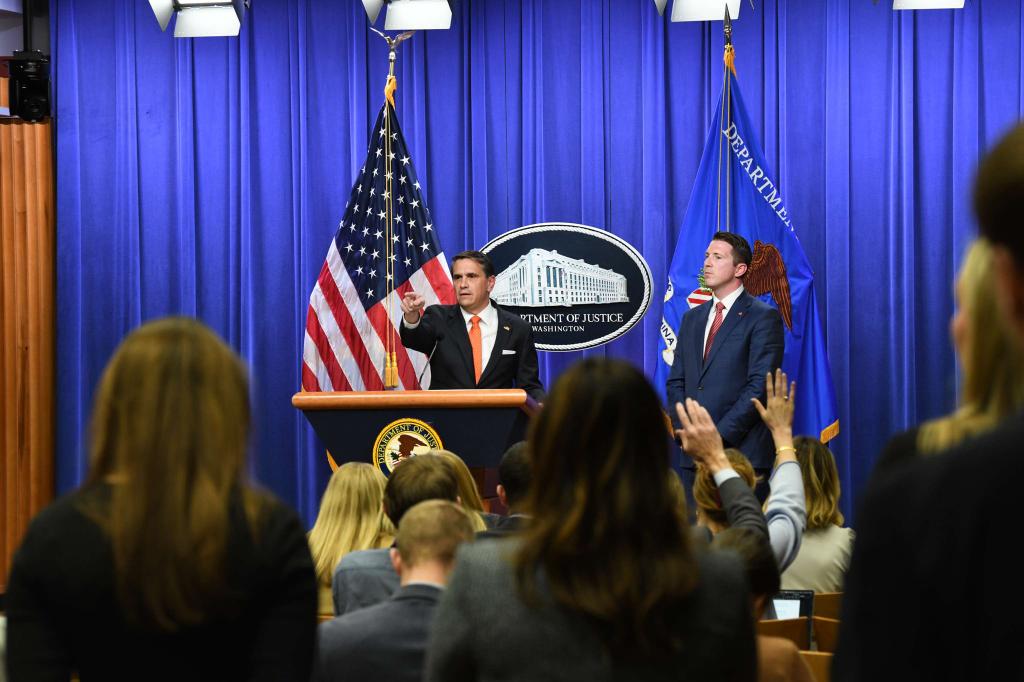
In a recent press conference, Acting Attorney General Todd Blanche addressed growing concerns regarding the perceived political weaponization of the Department of Justice (DOJ). He emphasized the critical need for accountability among those accused of misconduct within the department. Critics of the DOJ argue that without holding individuals accountable for past abuses—such as those related to the Russia collusion investigation—the cycle of politicization will continue unabated.
The core tension in this ongoing debate lies in whether prosecuting those involved in alleged abuses is necessary to restore public trust in the DOJ. Supporters of accountability assert that failing to act against past misconduct will only embolden future abuses, creating a dangerous precedent. On the other hand, opponents caution that such actions could further politicize the department, complicating its mission to uphold the law impartially.
The discussion gained significant traction during a recent exchange between Blanche and CNN reporter Paula Reid. Reid questioned how he would balance the pressure to prosecute perceived political enemies with the administration's promise to end the weaponization of the DOJ. Blanche responded, "When you talk about weaponization... you talk about ending weaponization as if that’s a bad thing for us to do." This exchange underscores the complexity of the issue at hand and the challenges faced by the DOJ in navigating political pressures.
Media's Role in the Narrative
Critics contend that the media has played a significant role in shaping the narrative surrounding the DOJ's actions. They argue that major news outlets have downplayed or ignored instances of alleged weaponization, such as the FBI's investigation into former President Donald Trump and the subsequent legal challenges faced by his allies. Some observers believe that this perceived complicity undermines the media's credibility when reporting on these critical issues.
Blanche pointed out that many journalists who now criticize the DOJ's actions were previously silent or supportive during the Obama and Biden administrations. He noted, "For four years, some of you same people sat here with the last administration when you saw a weaponization of this department the likes of which had never been seen in history." This statement highlights the shifting dynamics of media coverage and public perception regarding the DOJ's actions over different administrations.
Calls for Accountability
The call for accountability has resonated with segments of the public who are frustrated by what they perceive as a lack of consequences for those involved in past abuses. High-profile figures such as James Comey, John Brennan, and Merrick Garland have been named by critics as individuals who should face scrutiny for their roles in the alleged politicization of the DOJ. These calls reflect a broader sentiment that accountability is essential for restoring faith in the institution.
Rachel Bovard, a conservative commentator, recently stated, "There are only three reasons politicos respect norms and abide by the Constitution: duty, religion, and fear. Among Democrat elites today, the first two are obsolete." This perspective underscores the belief that without the threat of accountability, future abuses may go unchecked, leading to a further erosion of public trust in the justice system.
Despite these criticisms, some media outlets and commentators argue that the DOJ must operate independently of political pressures to maintain its integrity. They caution that pursuing prosecutions based solely on political motivations could further erode public trust in the justice system, creating a cycle of distrust that could be difficult to break.
The Path Forward
As discussions continue, the future of the DOJ's approach to accountability remains uncertain. Blanche's comments reflect a recognition of the complexities involved in addressing allegations of weaponization while navigating the political landscape. Critics maintain that only through decisive action against those who have allegedly abused their power can the DOJ begin to restore its credibility and public trust.
In conclusion, the debate over the DOJ's handling of past misconduct highlights a broader concern about the politicization of law enforcement in the United States. As calls for accountability grow louder, the challenge will be finding a balance that preserves the integrity of the justice system while addressing the legitimate concerns of the public. The path forward will require careful consideration of how to uphold the rule of law without succumbing to political pressures that could undermine the very principles of justice that the DOJ is meant to uphold.