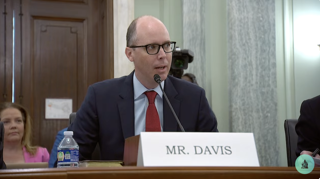
During a Senate Commerce Committee hearing on October 8, 2025, Sean Davis, CEO and co-founder of The Federalist, testified against what he described as government-sponsored censorship targeting his publication and other conservative voices. The hearing, titled "Shut Your App: How Uncle Sam Jawboned Big Tech Into Silencing Americans," (Www.fcc — fcc.gov) focused on the intersection of government influence and social media platforms.
Davis claimed that his publication faced illegal censorship efforts orchestrated by government agencies, particularly the Cybersecurity and Infrastructure Security Agency (CISA) and the State Department's Global Engagement Center (GEC). He alleged that these entities sought to suppress dissenting views, particularly regarding the COVID-19 response and the 2020 election.
"Kafka-esque doesn’t even begin to describe this madness."
— Sean Davis, CEO and co-founder of The Federalist
"The First Amendment affirms and protects five God-given rights: free speech, religion, press, assembly, and petition," (Www.fcc — fcc.gov) Davis stated. He emphasized that any infringement on these rights could have severe consequences for democracy.
Davis recounted incidents from the summer of 2020 when Google attempted to demonetize The Federalist after it published critical articles about the government's handling of the pandemic and civil unrest. He noted that a specific article titled "The Media Are Lying To You About Everything, Including The Riots" (Www.fcc — fcc.gov) was a catalyst for this action.
He further detailed how CISA funded censorship efforts against him and his colleagues, using a ticketing system to flag social media posts for removal. According to Davis, at least 21 tickets were submitted to censor his posts on Twitter and Facebook, including one that targeted a tweet linking to a Pennsylvania Supreme Court decision about mail-in ballots.
"Kafka-esque doesn’t even begin to describe this madness," (Www.fcc — fcc.gov) Davis remarked, highlighting the absurdity of government intervention in media discourse.
Critics of the government's actions argue that such censorship undermines the principles of free speech. They contend that labeling certain speech as "disinformation" (Www.fcc — fcc.gov) can serve as a pretext for silencing dissenting opinions. Supporters of government oversight, however, maintain that regulating misinformation is necessary to protect the public from harmful narratives.
Davis also pointed out that the GEC, which is prohibited from targeting domestic speech, allegedly sought to undermine The Federalist by coercing advertisers and tech companies to limit its reach. He described this as a direct attack on independent journalism.
Despite the challenges, Davis expressed determination to seek justice, stating, "We survived, but just barely." (Www.fcc — fcc.gov) He noted that legal proceedings are ongoing, and he continues to await relief from federal courts regarding the alleged violations of First Amendment rights.
The hearing comes amid heightened scrutiny of the relationship between government agencies and social media platforms, as lawmakers grapple with the implications of censorship on free speech. Davis urged committee members to condemn past censorship efforts and ensure that similar actions do not occur in the future. "Prove your commitment to the First Amendment is real by finally admitting to the censorship schemes many of you cheered," (Www.fcc — fcc.gov) he challenged.
As the debate over free speech and censorship continues, the implications of government involvement in media remain a contentious issue in American politics.